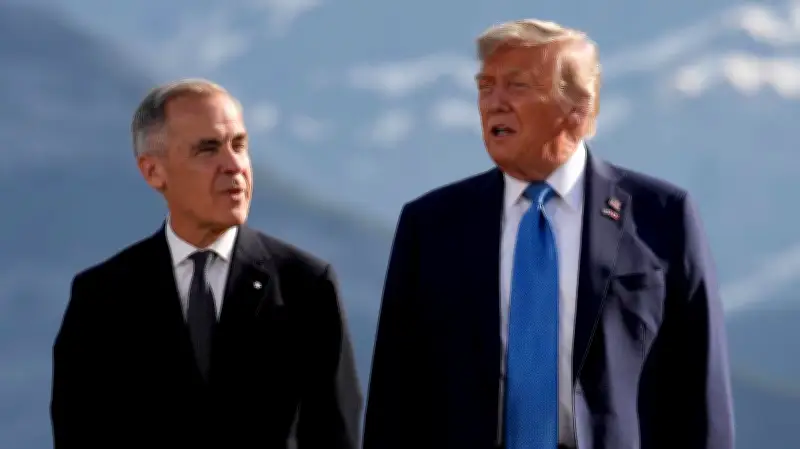
Mark Carney's ambitious push to diversify Canada's trade relationships is colliding with the stark reality of the country's deep economic dependence on the United States. As negotiations over the Canada-United States-Mexico Agreement (CUSMA) intensify, a panel of journalists and trade experts are weighing in on U.S. demands and whether Canada can avoid making costly concessions.
The Challenge of Diversification
Carney, who has been a vocal advocate for reducing Canada's reliance on the U.S. market, is finding that shifting trade patterns is easier said than done. The U.S. remains Canada's largest trading partner, accounting for over 70% of exports. Any attempt to pivot toward other markets, such as Europe or Asia, faces significant logistical and economic hurdles.
U.S. Demands in CUSMA Talks
During the current CUSMA review, U.S. negotiators are pushing for stricter rules of origin, particularly in the automotive sector, and greater access to Canada's dairy market. These demands could force Canada to make concessions that may undermine Carney's diversification goals. Trade experts warn that yielding to U.S. pressure could lock Canada into a dependent relationship for years to come.

Expert Opinions
Journalists on the panel noted that while Carney's vision is laudable, the immediate economic realities are daunting. One panelist remarked, "Canada cannot simply walk away from the U.S. market. The integration is too deep, and the costs of disentangling would be enormous." Another pointed out that diversification requires long-term investment in infrastructure and trade agreements, which may not yield results quickly.
Potential Consequences
If Canada makes significant concessions, it could strengthen the U.S. economy at Canada's expense. However, failure to reach an agreement could lead to tariffs and economic instability. The panel emphasized that Ottawa must balance its ambitions with pragmatic diplomacy to protect Canadian industries and jobs.
As the CUSMA talks continue, Carney's trade push serves as a reminder of the complex dynamics between economic sovereignty and interdependence. The outcome will shape Canada's economic future for decades to come.