Oil Tankers Attacked Near Iraq as Middle East Crisis Escalates
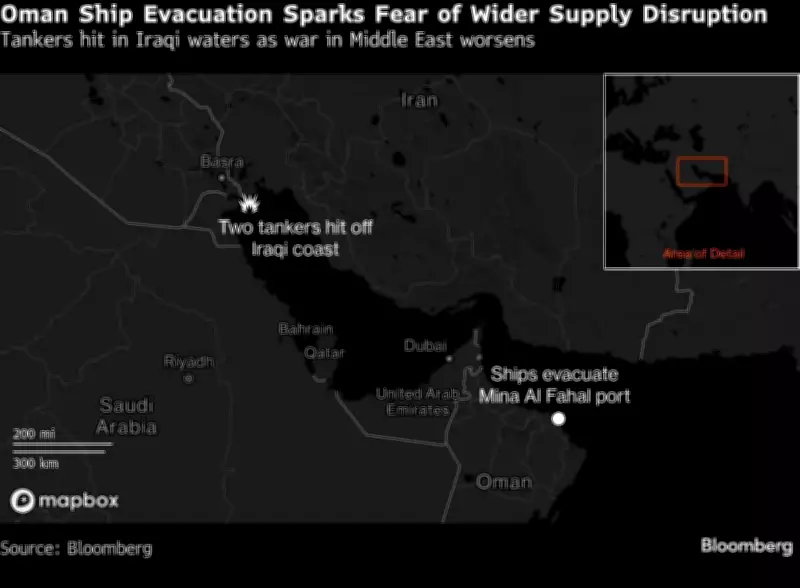
Two oil tankers were hit in Iraqi territorial waters, marking the latest in a series of attacks on vessels in the Persian Gulf that are significantly heightening risks to global energy supplies as the Middle East war deepens. The strikes have led to the suspension of operations at Iraq's oil terminals, with authorities ordering ships to leave the Mina Al Fahal oil terminal in Oman as a precautionary measure, although it has since reopened.
Details of the Attacks and Immediate Impacts
The attacked tankers were identified as the Marshall Islands-flagged Safesea Vishnu and the Malta-flagged Zefyros, according to Iraq's State Organization for Marketing of Oil (SOMO). In response, Iraq halted operations at its oil terminals, a move confirmed by the director of the General Company for Ports of Iraq via the Iraqi News agency. SOMO stated that this event negatively impacts Iraq's security and economy, posing a direct threat to maritime navigation and oil activities in its waters.
Concurrently, ships were evacuated from the Mina Al Fahal oil terminal in Oman as a safety precaution, with the port resuming normal operations after several hours, according to an emailed statement from the Gulf Mercantile Exchange. This evacuation, occurring outside the Strait of Hormuz, underscores how the conflict is expanding to threaten key ports essential for Middle Eastern oil shipments.
Broader Regional and Global Implications
Attacks on vessels have intensified recently, with the U.K. Maritime Trade Operations reporting a ship struck by an unknown projectile north of Jebel Ali in the United Arab Emirates on Thursday, and the Thai Navy confirming a cargo vessel hit on Wednesday. The Thai-flagged Mayuree Naree, a 30,000 deadweight-ton bulk carrier, was attempting to exit the Hormuz Strait at the time.
Warren Patterson, head of commodities strategy at ING Groep NV, noted that disruptions in Oman raise fears over broader regional supply, suggesting the market must now worry about more than just Strait of Hormuz oil flows. Global benchmark Brent crude surged as much as 10 percent on Thursday as the crisis deepened, with even a historic 400-million-barrel release of reserves coordinated by the International Energy Agency failing to cool the rally, indicating investor concern over the war's persistence.
Escalating Threats and Future Outlook
Drone attacks have further complicated the situation, with strikes on fuel tanks at Oman's Salalah Port on Wednesday, leading to suspended operations at its container and general cargo terminals, while other Omani ports like Duqm continue normal operations, per a report from Inchcape Shipping Services. Xu Muyu, senior crude oil analyst at Kpler Ltd., commented that while the worst-case scenario seemed to have materialized with the Strait of Hormuz closure, the naval evacuation in Oman suggests the situation could deteriorate further, pointing to increased retaliatory actions from Iran and pessimism about a prolonged conflict.
This series of events highlights the growing instability in the region, with attacks on oil infrastructure not only disrupting local economies but also posing significant risks to international energy markets, as the Middle East crisis shows no signs of abating.