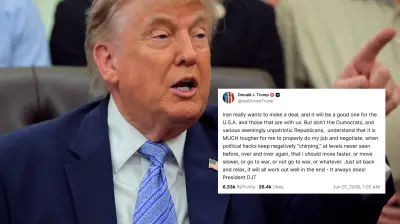








In a dramatic financial turnaround, global stock markets experienced a powerful rally on Tuesday, April 8, 2026, with the Dow Jones Industrial Average surging an astonishing 1,300 points. This remarkable upswing coincided with a sharp decline in crude oil prices, which plunged toward the $90 per barrel mark following the announcement of a ceasefire agreement involving Iran.
Market Euphoria Sweeps Trading Floors
The trading day began with palpable optimism as investors digested news of reduced geopolitical tensions in the Middle East. Market analysts attribute the explosive rally to a combination of factors, primarily the ceasefire that has alleviated concerns about potential supply disruptions in the critical oil-producing region. This development has significantly eased inflationary pressures that have been weighing on economies worldwide.
Oil's Precipitous Drop Below $100
Brent crude futures, the international benchmark for oil prices, tumbled below $100 per barrel for the first time in months, settling around $90 in afternoon trading. This represents a decline of approximately 10% in a single session, marking one of the most substantial single-day drops in recent commodity market history. The price collapse directly reflects reduced risk premiums that had been built into energy markets during periods of heightened Middle East instability.
Energy sector analysts note that the ceasefire agreement has fundamentally altered market psychology. "The geopolitical risk premium that has supported elevated oil prices for months has essentially evaporated overnight," explained commodities strategist Maria Chen. "Traders are now pricing in a more stable supply outlook from the Persian Gulf region, which accounts for nearly a third of global oil exports."
Broad-Based Market Gains
The stock market rally was exceptionally broad-based, with gains observed across multiple sectors:
- Transportation stocks led the advance as lower fuel costs promise to boost profitability for airlines, shipping companies, and logistics firms.
- Consumer discretionary companies surged on expectations that households will have more disposable income as energy expenses decline.
- Technology shares rebounded strongly as lower inflation expectations reduce pressure on interest rates, creating a more favorable environment for growth stocks.
- Industrial manufacturers benefited from both reduced input costs and improved global economic outlook.
Global Financial Centers Participate
The rally was not confined to Wall Street. Major financial centers around the world reported significant gains:
- London's FTSE 100 climbed 3.2%
- Frankfurt's DAX index advanced 4.1%
- Tokyo's Nikkei 225 rose 2.8%
- Hong Kong's Hang Seng index gained 3.5%
This synchronized global advance underscores how interconnected financial markets have become in responding to geopolitical developments. The ceasefire announcement came after weeks of intense diplomatic negotiations, with multiple nations participating in the peace talks. While details of the agreement remain confidential, early reports suggest it includes provisions for monitoring mechanisms and confidence-building measures between the involved parties.
Economic Implications and Future Outlook
Economists are cautiously optimistic about the potential macroeconomic benefits of this development. Lower energy prices typically translate to reduced production costs across numerous industries, potentially easing inflationary pressures that have challenged central banks worldwide. This could create more flexibility in monetary policy, particularly for the Federal Reserve and other major central banks that have been grappling with the dual mandate of controlling inflation while supporting economic growth.
Market volatility indicators declined sharply throughout the trading session, reflecting improved investor confidence. The VIX index, often called the "fear gauge" of Wall Street, dropped nearly 20% as traders reduced their hedging positions against potential market declines.
While celebrating today's remarkable gains, financial experts advise maintaining perspective. "One day does not make a trend," cautioned investment strategist David Rosenberg. "While today's developments are unquestionably positive, markets will continue to monitor implementation of the ceasefire and broader economic fundamentals. The true test will be whether this geopolitical de-escalation translates into sustained economic benefits."
Trading volume reached extraordinary levels, with the New York Stock Exchange reporting activity approximately 40% above its 30-day average. The surge in participation suggests both institutional and retail investors are repositioning portfolios in response to the changed geopolitical landscape. As markets closed, the Dow Jones Industrial Average stood at 38,742.65, representing a gain of 1,312 points or 3.5% for the session.