





U.S.-Iran Ceasefire Shows Cracks Ahead of Critical Pakistan Negotiations
A delicate two-week ceasefire between the United States and Iran is experiencing significant strain as both nations prepare for high-stakes talks scheduled for Saturday in Pakistan. The tensions escalated on Friday, with Washington leveling accusations against Tehran for failing to uphold commitments regarding the Strait of Hormuz, while Israel conducted strikes in Lebanon that Iran insists breach the terms of the temporary truce.
Strait of Hormuz Blockade Persists, Disrupting Global Energy Flows
There remains no indication that Iran is easing its near-total blockade of the Strait of Hormuz, a critical maritime chokepoint that typically handles one-fifth of the world's oil and liquefied natural gas shipments. This ongoing obstruction has precipitated the most severe disruption to global energy supplies in history. Tehran has pointed to Israel's sustained military actions in Lebanon, including intensive strikes earlier in the week, as a primary obstacle to progress.
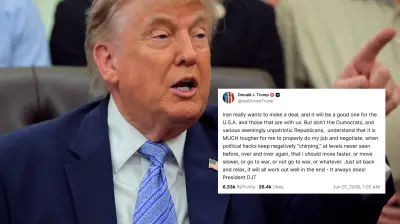
In a social media statement late Thursday, U.S. President Donald Trump criticized Iran's performance, stating it was doing a "very poor job" of permitting oil transit through the strait and emphasizing, "That is not the agreement we have!" He separately mentioned that oil would recommence flowing, though he did not specify any potential U.S. measures to enforce this.
During the initial 24 hours of the ceasefire, which Trump announced on Tuesday, traffic through the strait was drastically reduced: only a single oil products tanker and five dry bulk carriers navigated the waters, a stark contrast to the pre-war average of 140 vessels daily.
Fresh Hostilities in Lebanon Complicate Ceasefire Dynamics
Israel's military reported early Friday that it had targeted 10 rocket launchers in Lebanon after projectiles were fired toward northern Israel the previous evening. Additionally, the Iran-aligned armed group Hezbollah launched a missile at Israel, triggering air sirens; the missile was intercepted, according to Israeli media. Hezbollah asserted it aimed at Israeli military infrastructure in Haifa.
The United States and Israel maintain that the ceasefire does not extend to Lebanon, which Israel invaded last month alongside its conflict with Iran to dismantle Hezbollah. Conversely, Iran and Pakistan, serving as mediator, contend that Lebanon was explicitly included in the agreement. Iran's Parliament Speaker Mohammad Baqer Qalibaf, slated to lead the Iranian delegation opposite U.S. Vice President JD Vance, declared on social media that Lebanon and Iran's regional allies are integral to any ceasefire.
In a resolute statement, Iran's Supreme Leader Ayatollah Mojtaba Khamenei vowed retribution for the war, stating, "We will certainly not leave unpunished the criminal aggressors who attacked our country. We will undoubtedly demand compensation for every single damage inflicted."
Upcoming Talks Aim to Resolve Escalating Conflict
The two-week truce, mediated by Pakistan, was secured just hours before a deadline that Trump warned would prompt U.S. attacks on Iran's infrastructure. Authorities in Pakistan are now preparing for the inaugural round of U.S.-Iran discussions on Saturday, aimed at settling the conflict that erupted with U.S. and Israeli strikes on Iran on February 28.
Iran recently unveiled a 10-point proposal for a settlement, which includes retaining control of the Strait of Hormuz, recognition of its nuclear enrichment rights, sanctions relief, and an end to hostilities, including those against Hezbollah in Lebanon.
Israeli Prime Minister Benjamin Netanyahu affirmed that Israel would persist in targeting Hezbollah but also directed the initiation of peace talks with Lebanon as soon as feasible, focusing on disarming the group and fostering peaceful relations. A senior Lebanese official described efforts to secure a temporary ceasefire for broader negotiations as a "separate track but the same model" as the U.S.-Iran truce.
Reports indicate Israel is preparing to reduce its attacks in Lebanon, with U.S. media noting Trump's request for Netanyahu to adopt a more "low-key" approach. Talks between Israel and Lebanon are anticipated to commence in Washington next week, confirmed by a U.S. State Department official as part of "ongoing ceasefire negotiations." However, Hezbollah lawmaker Ali Fayyad rejected direct negotiations with Israel, urging the Lebanese government to demand a ceasefire as a precondition.