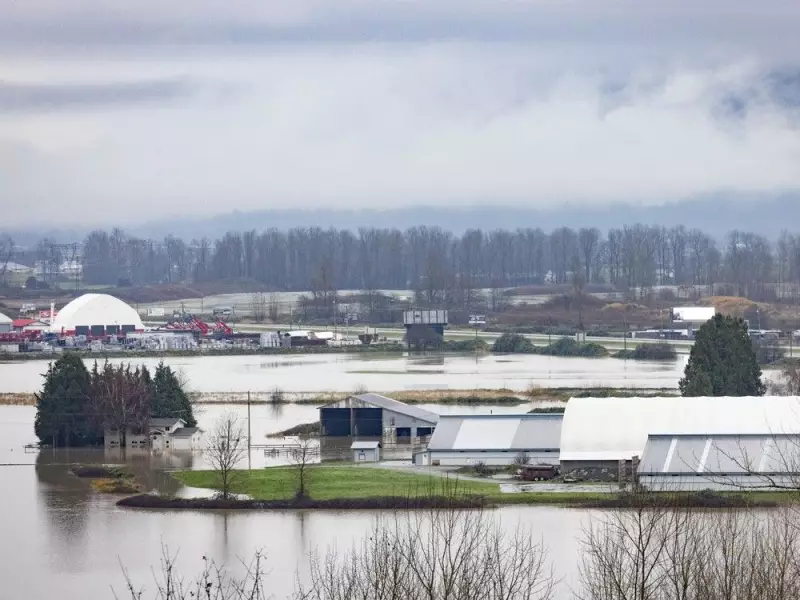
The recent flooding in British Columbia serves as a stark reminder of a critical gap in Canada's climate adaptation strategy: the protection of millions of farm animals. While reports suggest the 2025 floods were less catastrophic than those in 2021, farms were again inundated, highlighting a persistent national vulnerability.
The Scale of the Problem and Practical Hurdles
Each year, natural disasters like floods, wildfires, and hurricanes claim the lives of countless farm animals across Canada. Accurate numbers are difficult to obtain because there is no legal requirement to report animal fatalities to public authorities; losses are typically recorded simply as property damage. The challenge of protecting these animals is immense, compounded by the scale of modern farming. The average Canadian poultry farm houses over 30,000 birds, while hog farms average 1,800 pigs, making large-scale evacuations logistically daunting.
Research indicates that animal behavior itself can hinder rescue efforts. Livestock not accustomed to being outdoors may panic, and the sights and sounds of emergency responders—bright lights, sirens, and unfamiliar vehicles—can further stress and disorient animals. Even when evacuation is possible, the question remains: where do tens of thousands of animals go? They require immediate shelter, food, and water, resources that are rarely pre-positioned for such crises.

Legal and Political Obstacles to Change
A primary barrier to progress is Canada's legal framework, which classifies animals as property, not as sentient beings capable of suffering. This classification was challenged by the scientific community in the 2012 Cambridge Declaration on Consciousness and the 2024 New York Declaration on Animal Consciousness, which affirm that mammals and birds are conscious and can experience pain and fear. While Quebec recognized animal sentience in its Civil Code in 2015, it did not change their legal status as property.
Constitutionally, agriculture is an area of shared federal and provincial jurisdiction. There are no legal barriers preventing either level of government from mandating emergency management plans for farms, similar to requirements for schools, hospitals, and workplaces. However, political reluctance to add regulatory burdens on the agricultural sector has stalled action. The responsibility, argues author Sarah Berger Richardson, is national. The federal government is best positioned to establish uniform standards and help fund critical infrastructure to improve resilience.
Glimmers of Progress and the Path Forward
In the absence of government regulation, industry-led initiatives are making tentative steps. The National Farm Animal Care Council's most recent codes of practice now include recommendations for developing emergency plans and renovating facilities to ease evacuation—but only for goats and dairy cattle. These guidelines, while a positive development, are not legally binding.
The World Organisation for Animal Health (WOAH) recommends that members develop evacuation procedures for all animals. Adopting such a standard in Canada would be a significant advancement. Parallel to this, a federal petition is underway to recognize animal sentience in law, a move supported by the Canadian Veterinary Medical Association.
As climate disasters intensify in frequency and severity, the question becomes more urgent: why isn't Canada taking animal safety seriously as part of its climate resilience planning? Protecting farm animals during disasters is not just an animal welfare issue; it is a matter of food security, economic stability, and ethical responsibility. The floods in B.C. are a clear call for coordinated, national action before the next disaster strikes.