Brown vs. White Eggs: The Surprising Truth Behind Shell Color and Price
If you have ever stood bewildered in front of the grocery store egg case, staring at the myriad of confusing labels, you are certainly not alone. In today's market, egg cartons are adorned with countless terms, many of which hold little to no meaning. However, one consistent trend stands out: brown eggs almost always carry a higher price tag than their white counterparts. This often leads consumers to assume that brown eggs are organic, more nutritious, or simply superior in taste. But is this really the case? Not necessarily. Prepare to have everything you thought you knew about white and brown eggs completely scrambled.
Debunking Common Myths About Eggshell Color
We consulted with egg experts to address several misconceptions surrounding brown and white eggs. These include the widely held belief that eggshell color is determined by the color of a chicken's feathers—a theory that turns out to be not entirely accurate—as well as the nutritional differences between the two and how a chicken's earlobes can influence the price you pay at the store. Yes, you read that correctly: chicken earlobes play a role in this puzzle.
There is far more to the incredible egg than most people realize. Let's crack open some of this folk wisdom and separate fact from fiction.

True or False: Feather Color Determines Eggshell Color?
In 2006, NPR's "All Things Considered" report suggested that all white-feathered chickens lay white eggs, while all brown-feathered chickens lay brown eggs. This statement ruffled the feathers of poultry enthusiasts, who flooded the show with complaints. Deana Jones, a research food technologist at the U.S. Department of Agriculture, supports these listeners. While the feather theory can sometimes hold true, it is flawed.
"Feather color does not necessarily denote eggshell color," Jones explained. "We have some white-feathered chickens that lay white-shell eggs, but we also have some that look like they walked through a bottle of bleach that lay brown-shell eggs."
Jacquie Jacob, from the University of Kentucky's department of animal and food sciences, highlighted a significant exception. "Some breeds have different varieties with different feather colors, but they all lay the same color egg," she said. For example, Leghorn chickens can have white, brown, or black feathers, yet they all produce white-shelled eggs.
There are entire charts dedicated to explaining which hen breeds produce which egg colors. While many commercial hens have been bred so that white-feathered hens lay white eggs and brown-feathered hens lay brown eggs, there are numerous "boutique chicken" varieties, such as Araucana chickens, which lay eggs ranging from green to blue—colors not reflected in their feathers.
The Role of Chicken Earlobes in Predicting Egg Color
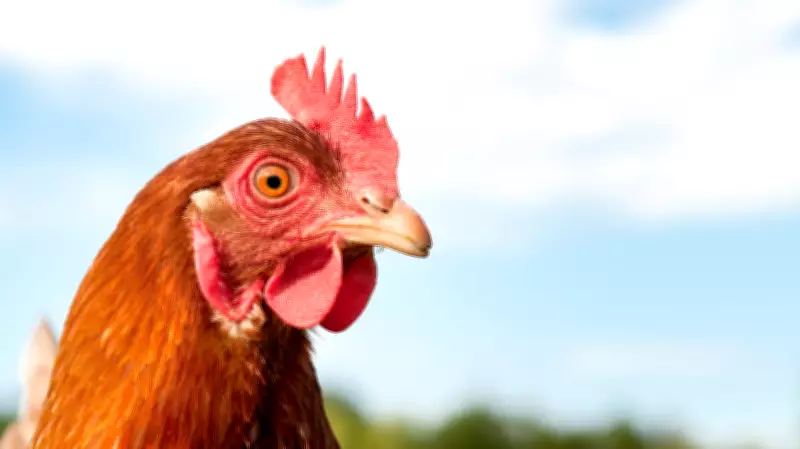
If a hen's feathers do not reliably indicate egg color, what does? The answer lies in their earlobes. "The hen's earlobes give us a more accurate assessment of the color egg they'll lay," said Jones. Although not a perfect indicator, earlobes are more reliable than feathers.
"There's always an asterisk in nature, but red earlobes generally denote brown-shell eggs, and white earlobes generally denote white-shell eggs," Jones noted. Chickens do indeed have earlobes, located just below their ears. "They have to hear," Jones explained. "A chicken earlobe looks different from ours—it's not a human ear stuck on the side of a chicken—but it still serves a purpose. Chickens are a tasty treat for some predators, so they need to be able to hear."
Backyard chicken enthusiasts often debate whether a chicken's earlobe color accurately predicts egg color, with some forums claiming it has no correlation. However, experts disagree. "The color of the shell is breed dependent," Jacob said. "It is somewhat related to earlobe color, genetically speaking, in that most breeds with red earlobes lay brown-shelled eggs, and most with white earlobes lay white-shelled eggs."

In defense of the NPR segment that caused controversy, there is a close correlation between earlobe color and feather color, especially in commercial chickens. For instance, a Barnevelder hen has dark brown earlobes and lays brown eggs, a Leghorn hen has white earlobes and lays white eggs, and a red domestic hen has red earlobes and lays brown eggs.
Why Brown Eggs Are More Expensive
Understanding how brown eggs acquire their color reveals why they cost more. The brown pigment is deposited on the shell in the hen's "shell gland pouch," often called the "paint station." According to Michigan State University Extension, a single egg takes about 26 hours to form, with a hen producing roughly one egg per day during her prime. The egg's journey begins as a yolk in the ovary, moves through the oviduct to develop egg white and shell membranes, and finally reaches the shell gland, where the shell is formed.
"That's where the egg spends the longest amount of time," Jones explained. "It puts down layer upon layer of shell as the egg sits in the shell gland, and it's in there for at least 20 hours on average to form the shell. At the very end of the shell-making process, the pigment gets added, almost like you're painting a house." All eggs start out white; those that remain white simply skip the pigment addition. "A white egg goes through the exact same process," said Jones, but "there's no pigment added at the end because a white shell-laying hen is just not genetically programmed to do that."
The key to the price difference is that "brown egg layers need to have more nutrients and energy in their body to produce an egg than the white shell layers," Jones said. "It takes more feed for a brown-shell egg layer to accommodate production of the egg."
Regional Preferences and Market Trends
In the United States, white eggs dominate the market. Marc Dresner, manager of marketing and communications for the American Egg Board, provided Nielsen data from December 2017, showing that brown eggs account for only 9.4% of fresh egg volume sold commercially. The primary reason for white eggs' popularity is their lower price, appealing to both consumers and commercial food companies.
"You don't see a lot of brown eggs being used directly in products," Dresner explained. "Food formulators that are using liquid eggs or frozen product or powdered egg product probably are using white commodity eggs for that."
Regional preferences also play a significant role. "There's a regional preference for shell color," Jones noted. Nielsen data reveals that while most U.S. regions heavily favor white eggs, New England is an exception, with 51.1% of eggs sold in December 2017 being brown. The Middle Atlantic region followed at 11.2%. Dresner speculated that this preference might be due to the availability of red hens in New England, making brown eggs more accessible locally.
Nutritional Differences: Setting the Record Straight
Despite the higher feed requirements for brown egg layers, there is no nutritional difference between comparable brown and white eggs. Whether organic, cage-free, or labeled otherwise, brown and white eggs offer identical nutritional value. The egg's content and shell are formed at opposite ends of the reproductive tract, with color deposition occurring only after nutritional content is set.
"I think there is a widespread misperception that somehow brown eggs are healthier or higher in certain nutritional properties than white eggs," Dresner explained. "A lot of people are under the misimpression that if an egg is brown, it's organic, which is also not the case."
Conclusion: Does Egg Color Really Matter?
Ultimately, whether you choose brown or white eggs depends on your priorities. If saving money is key, opt for white eggs. If nutrition is your main concern, rest assured that both types are equal. The American Egg Board remains neutral on the issue. "We are agnostic in that respect," said Dresner. "Our mandate and our mission is to promote and inform the consumer about eggs. We like all the eggs, whether they're organic, free-range, conventional commodity caged white eggs—it doesn't really matter to us. We love them all equally." It seems there is no plan to hatch a change in this stance anytime soon.