







Trump Investigates Beef Packers as Canada Stays Silent on Prices
Canada Silent as Trump Probes Beef Price Surge

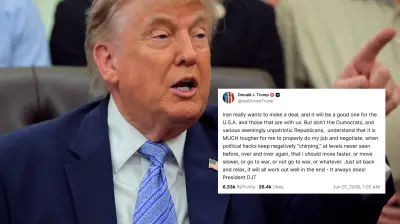
United States President Donald Trump has launched a Department of Justice investigation into major meat-packing companies, accusing them of collusion and price manipulation while Canada maintains a notably different approach to the same beef price crisis affecting both nations.

Beef Prices Soar Higher in Canada

Recent data reveals that Canadian consumers are facing even steeper beef price increases than their American counterparts. While U.S. retail beef prices have climbed between 11 and 14% year-over-year, Canadian increases range from 14 to 16%, with some premium cuts skyrocketing more than 30% since January 2025.

The price disparity becomes particularly evident at the meat counter. American consumers paid an average of US $6.32 per pound for ground beef in September 2025, representing an 11.5% annual increase. Meanwhile, Canadian shoppers faced prices of approximately CAD $14.85 per kilogram, translating to a 13-14% jump. Even after accounting for currency differences, Canadians pay slightly more for this basic protein staple.

Contrasting Political Approaches

The political response to these price surges highlights fundamental differences between Canadian and American regulatory philosophies. President Trump's directive to investigate the four dominant U.S. packers—Cargill, Tyson, JBS, and National Beef—who control over 80% of the American market represents a populist approach that plays well politically.

Meanwhile, Ottawa avoids such public confrontations. Canada's Competition Bureau operates under a legal framework that emphasizes quiet compliance and long-term guidance rather than public spectacle. Under Canadian law, proving price fixing requires explicit evidence of communication between companies—not merely parallel pricing patterns.

Canada's Concentrated Beef Industry

The Canadian beef processing sector demonstrates even greater concentration than the American market. Two foreign-owned companies, Cargill and JBS, dominate the federally inspected landscape, operating key facilities in High River, Brooks, and Guelph that handle most of the nation's cattle processing.

This concentration creates political sensitivity. In a fragile minority Parliament, scrutinizing these operations risks significant job losses in Alberta and Ontario, export disruptions, and substantial political fallout that few ministers are willing to confront.

Compounding the problem is Canada's lack of comprehensive agricultural data compared to the United States Department of Agriculture's detailed weekly reporting. Without robust empirical tools to measure market power precisely, Canadian regulators would be investigating in the dark even if they chose to act.

Cultural Divide in Regulatory Philosophy

The contrasting approaches reflect deeper cultural differences in governance. The United States tends toward enforcement and action, even when evidence might be preliminary. Canada prefers negotiation and consensus-building, encouraging voluntary codes of conduct rather than legal confrontation.

This cautious Canadian posture carries consequences. When prices rise sharply, consumers naturally question whether the system serves their interests. The Competition Bureau's limited scope and chronic underfunding fuel public skepticism, while American action makes Canadian inaction appear negligent.

However, experts caution against romanticizing Trump's approach. Investigations alone won't address underlying drivers like tight cattle supply, drought conditions, high feed costs, and global demand pressures. Both countries would benefit more from policies enhancing domestic processing efficiency and resilience to market shocks.

Canada requires better regulatory foresight, data transparency, and serious examination of how carbon pricing, labor shortages, and infrastructure costs affect competitiveness. While punishing companies without evidence provides political theater, building an environment where competition thrives delivers more substantive consumer benefits.

Dr. Sylvain Charlebois, director of the Agri-Food Analytics Lab at Dalhousie University, emphasizes that Canada needs practical solutions rather than political spectacle to address the fundamental challenges driving food inflation higher.