Canadian Farmers Confront a High-Stakes Financial Gamble Amid Soaring Input Costs
Agricultural producers across Canada are facing a daunting financial landscape, with skyrocketing fuel and fertilizer prices creating a precarious situation that threatens the viability of family farms. This economic pressure is forcing farmers to make difficult decisions that could impact food production and rural communities nationwide.
The Rising Cost of Doing Business in Agriculture
Recent data reveals that inflation has jumped to 2.4 percent, with fuel prices experiencing a particularly sharp surge. This increase directly impacts agricultural operations, where diesel powers essential machinery for planting, harvesting, and transportation. Simultaneously, fertilizer costs have reached unprecedented levels, adding another layer of financial strain to farming operations already operating on thin margins.
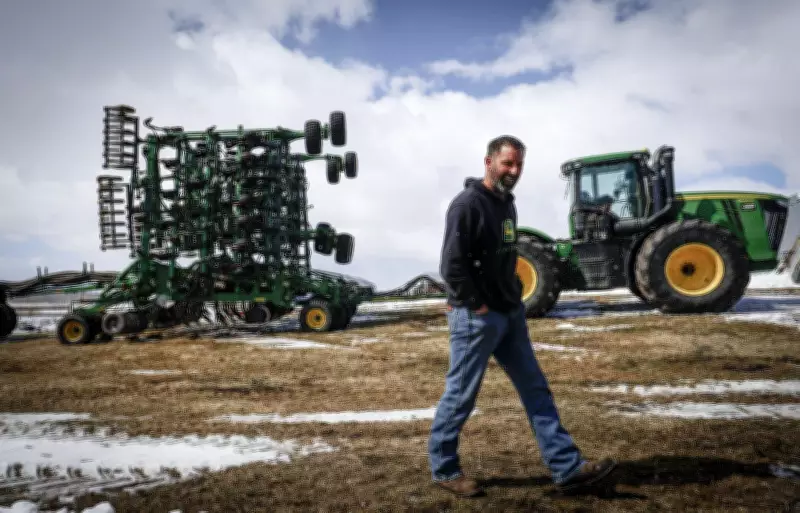
Bruce Bird, a farmer whose family has worked the land near Cremona, Alberta for over a century, exemplifies this challenge. As he walks past his seeding rig on his historic farm, he represents the countless Canadian producers grappling with these economic headwinds. The situation has become so dire that some farmers describe their financial planning as akin to gambling in Las Vegas, with unpredictable input costs creating uncertainty about future profitability.

Broader Economic Context and Agricultural Impact
The transportation sector is feeling similar pressures, with WestJet recently announcing flight capacity cuts due to jet fuel expenses, following similar moves by Air Canada. This broader context of rising energy costs extends beyond aviation to directly affect agricultural logistics and production expenses.
In Prince Edward Island, farmers are expressing serious concerns about fertilizer price hikes and their potential to drive up food prices for consumers. This creates a ripple effect throughout the food supply chain, from field to table, potentially affecting affordability and accessibility of Canadian-grown products.
Key challenges facing Canadian farmers include:- Unpredictable fuel expenses for machinery operation and transportation
- Record-high fertilizer costs impacting planting decisions and crop yields
- Thin profit margins that leave little room for error in financial planning
- The intergenerational pressure on family farms with centuries of history
- Potential impacts on food prices and security for Canadian consumers
Regional Responses and Agricultural Adaptation
While the federal government focuses on trade initiatives, including a new advisory council for Canada-U.S. trade relations, farmers on the ground are implementing practical strategies to navigate these challenges. Some are exploring alternative approaches to reduce input costs, while others are reconsidering crop selections and farming practices to improve efficiency.
The situation in Alberta is particularly noteworthy, as the province recently reached an agreement with South Korea to eliminate a 3 percent tariff on crude exports. While this trade development may benefit the energy sector, agricultural producers continue to face their own unique set of financial pressures that require targeted solutions.
As planting season progresses across Canada, farmers like Bruce Bird continue their work with cautious optimism, hoping that market conditions will eventually stabilize. Their resilience in the face of these economic challenges underscores the vital role agriculture plays in Canada's economy and food security, even as producers navigate what many describe as the highest-stakes gamble of their careers.