On a spring day in 2015, Saskatchewan farmer Adair O'Grady's life was forever altered during a routine task on his family farm near Maidstone. What began as maintenance on an air seeder turned into a catastrophic accident when his father accidentally ran him over with the massive machine.
A Life Saved by the Bright Red Helicopter
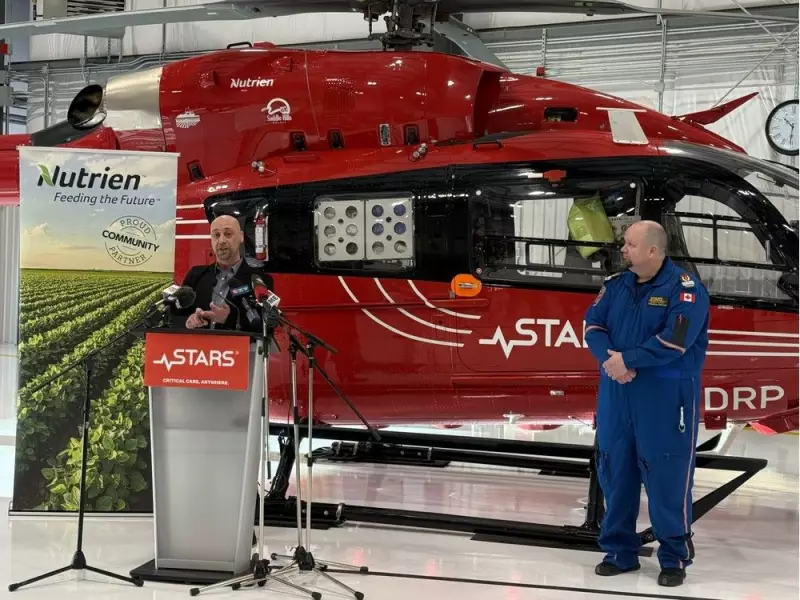
Standing inside the Saskatoon base of the Shock Trauma Air Rescue Service (STARS) years later, O'Grady, now 46, recounted the moment his "world went to black." His vitals were shutting down, and the situation was dire. The call went out to the STARS team, who swiftly mobilized their distinctive red helicopter and medical crew.
O'Grady was airlifted to Royal University Hospital in Saskatoon, where he eventually recovered. His story is one of more than 10,000 missions STARS has flown across Saskatchewan since 2012, with 921 completed last year in Saskatoon and Regina alone.

Nutrien's Major Investment in Rural Lifelines
O'Grady shared his powerful testimony on January 15, 2024, during a significant announcement. Nutrien CEO Ken Seitz revealed a new $4 million donation to STARS, bolstering the company's total financial support to over $30 million in the past decade.
An initial pledge of $27 million was instrumental in establishing STARS' critical home base in Saskatoon. Seitz emphasized the vital role the service plays for those living and working in remote areas, from potash mines to family farms.
"Living in remote areas comes with challenges," Seitz stated. "The people who put food on tables around the world often work in places where help isn't just down the road. We rely on these bright red helicopters and medical experts on board to respond."
He added that STARS crews "don't just save lives. They protect the fabric of rural communities" made up of friends, families, employees, and customers.
Funding the Future of Emergency Care
STARS CEO, Dr. John Froh, explained that the organization operates on a blended funding model with some government support. The latest $4 million contribution from Nutrien will directly assist with day-to-day operations, ensuring crews remain ready to respond.
"When you see one of these helicopters go out the door, it will contribute to everything that goes into that mission," Dr. Froh said. This includes training, technological advances, and clinical care innovations. He highlighted that STARS was the first air ambulance service in Canada to provide blood on board its aircraft.
"Each story is equally impactful and really speaks to the value of the work that we do," Dr. Froh noted, referring to survivors like O'Grady.
For O'Grady, the gratitude is profound and personal. "The team here doesn't do this just because it's a job," he reflected. "They do it because they're passionate and they care about helping people."
Today, O'Grady continues to farm, an occupation he says defines him and his story. "It's the grassroots of who I am and it's honestly the grassroots of Saskatchewan," he said. "It was built on farmers." His enduring presence on the land is a powerful testament to the lifeline STARS provides to Canada's rural heartland.