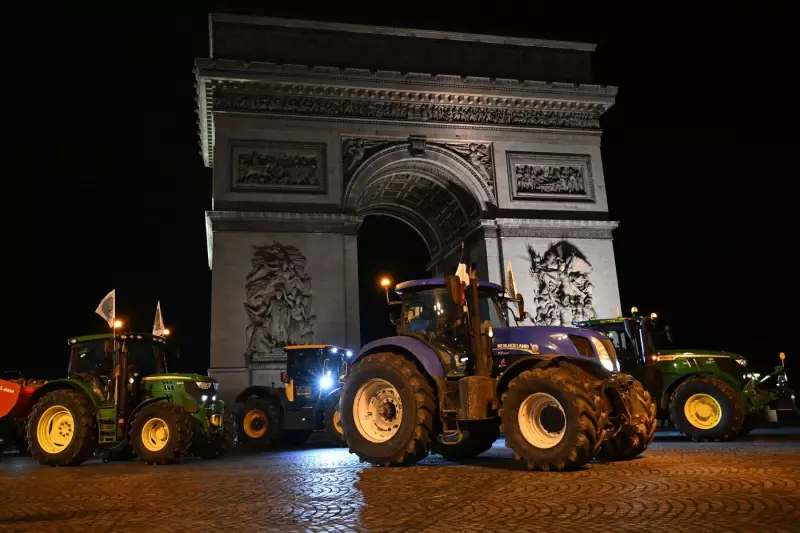
Hundreds of French farmers descended upon the heart of Paris in a dramatic display of discontent, driving a convoy of 350 tractors to the National Parliament on Tuesday, January 13, 2026. The large-scale protest was organized to voice fierce opposition to the proposed European Union trade agreement with the Mercosur bloc and to highlight the severe financial pressures facing the agricultural sector.
A Convoy of Discontent Rolls into the Capital
The protest saw a significant police presence as the long line of agricultural vehicles navigated through the city's iconic streets, passing by landmarks including the Arc de Triomphe. The demonstration remained largely peaceful, with farmers using their tractors as both transportation and symbolic barricades to draw maximum attention to their cause. The date of the protest, January 13, 2026, marks a critical moment of mobilization for the farming community ahead of potential political decisions on international trade.
Core Grievances: Trade and Livelihoods
At the core of the demonstration are two interconnected issues crippling farmer morale. First, protesters vehemently oppose the EU-Mercosur trade deal, arguing that it would flood the European market with cheaper imported agricultural goods, undermining local producers who face stricter environmental and quality standards. Second, farmers are protesting chronically low incomes, citing rising costs for fuel, fertilizer, and equipment alongside volatile commodity prices that make long-term viability nearly impossible for many family-run operations.

Organizers of the protest stated that the journey to Paris was necessary to bring their plight directly to the lawmakers whose decisions directly impact their future. They argue that current policies favor agribusiness and international trade at the expense of the traditional farming backbone of rural France.
Implications and Government Response
The scale of the protest underscores the deepening crisis in European agriculture and poses a significant political challenge for the French government. It must balance its commitments to EU trade policy with the urgent needs of a vital domestic sector. The sight of tractors surrounding Parliament is a potent image likely to resonate across the EU, where similar farmer discontent has simmered in other member states.
While no immediate policy changes were announced following the protest, the action successfully forced the issues of farm income and trade deal consequences to the top of the national agenda. Analysts suggest that such visible public pressure could lead to renewed negotiations on aspects of the Mercosur agreement or to the announcement of new national support measures for the agricultural industry.