

In the heart of Europe, a quiet but determined battle against desertification is being waged by Hungarian farmers. A volunteer network, self-dubbed the "Water Guardians," is reviving ancient agricultural practices to reclaim land succumbing to severe drought and soil degradation.
The Front Line in Kiskunmajsa
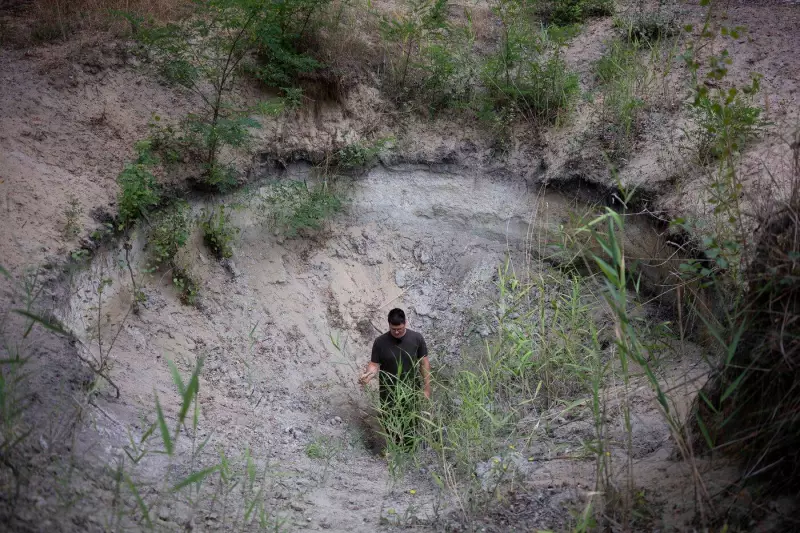
One of these guardians is Oszkár Nagyapáti, a farmer standing resolute in the changing landscape. A photograph captured on Tuesday, July 29, 2025, in Kiskunmajsa, Hungary, shows Nagyapáti in a dug-out hole, symbolizing the deep, hands-on work required for this environmental fight. The image, taken by Denes Erdos for The Associated Press, visually underscores the stark reality of the land these volunteers are striving to save.
Grassroots Response to a Climate Crisis
The movement of Water Guardians represents a critical, community-driven response to a growing continental crisis. Desertification, often viewed as a problem for more arid regions, is aggressively advancing in parts of Central Europe, including Hungary. Years of intensive farming, coupled with the increasing effects of climate change, have depleted water tables and degraded soil quality, threatening agricultural livelihoods and local ecosystems.

These volunteers are not employing high-tech solutions but are instead looking to the past. Their methods focus on simple, effective water retention and soil management techniques passed down through generations. This includes creating small-scale barriers and depressions to capture rainwater, planting vegetation that helps bind the soil, and changing cultivation patterns to reduce evaporation and erosion.
A Model of Local Adaptation
The work of the Water Guardians highlights a powerful model of local adaptation. While international agreements and national policies are crucial in the fight against climate change, the actions of individuals like Oszkár Nagyapáti demonstrate that on-the-ground, traditional knowledge is an indispensable part of the solution. Their efforts are slowly turning the tide, showing that degraded land can be healed with patience and culturally attuned practices.
This story from Hungary serves as both a warning and an inspiration. It is a stark reminder that the impacts of a warming planet are being felt right now in unexpected places. Simultaneously, it is a testament to human resilience and the enduring value of traditional ecological knowledge in crafting sustainable futures for communities under threat.






