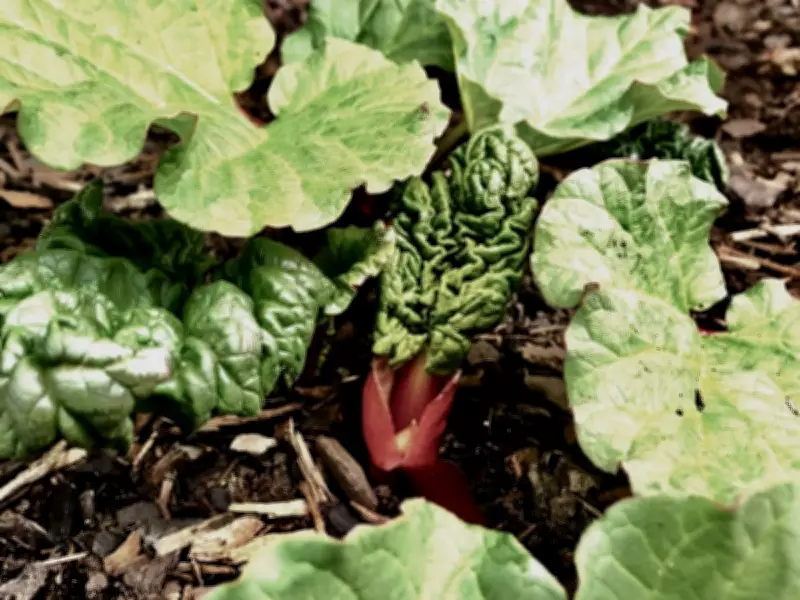
As a gardener, I delight in signs of life beginning to emerge in my spring garden. I especially relish the appearance of rosy-toned rhubarb stalks as I anticipate baking my mom's rhubarb batter pudding for a family gathering. While rhubarb is used primarily in dessert recipes, it is indeed a vegetable. Rheum rhabarbarum, from the buckwheat family, is well suited for our Ottawa gardens.
Why Rhubarb Is a Gardener's Favorite
Rhubarb, an easy-to-grow perennial, is relatively trouble-free when it comes to pests and diseases. It grows from fleshy roots (rhizomes) which produce large, edible stalks (petioles). A mature plant can be 60-90 cm tall and wide. While both the stalks and leaves contain oxalic acid, the amount in the leaves is much higher and can be toxic, so we do not eat the leaves. The leaves can, however, be safely added to home compost piles. I also place some pulled leaves around the base of the plant to act as a mulch, which conserves moisture and reduces weeds, as well as giving earwig insects something other than my garden seedlings or plants to munch on.
Starting Your Rhubarb Plants
Rhubarb can be grown from seed but that adds time before harvest. If you only want one or two plants, then a crown or plant division is the way to go. Often, we are fortunate to have friends with a shareable rhubarb patch or, in spring, we can find plants at garden centres and plant sales.

Planting and Ongoing Care
Rhubarb is best planted in the spring or fall. Choose a full sun or semi-shade location with rich soil conditions, avoiding wet locations which could cause root rot. Give your plant space to grow, allowing 90 cm between plants. Avoid planting where it is competing with shrub or tree roots. Rhubarb is a long-lived perennial that can live up to twenty years.
Choose a permanent location for your rhubarb as their large roots make them difficult to move. It makes sense to add rhubarb to a perennial bed or in a dedicated bed rather than in a vegetable garden where annual digging occurs. Mine is in a dedicated bed and garners positive comments from friends such as: “Wow, look at that rhubarb”.
Take care to plant the crowns no deeper than five cm. Water well after planting. Be attentive to watering the first season to ensure root establishment. Remember to add compost, working in gently at surface after planting. Rhubarb is a heavy feeder and benefits from a yearly application of compost or aged manure. As well, adding fall leaves to the rhubarb patch utilizes free organic matter.
Dividing Rhubarb for Continued Growth
After several years of growth, your plant normally slows down production. Dividing it in the spring is a way to propagate. It is best to dig up the entire plant and divide into sections each with two to three buds and good-sized root attached. Replant at the same depth and water well.