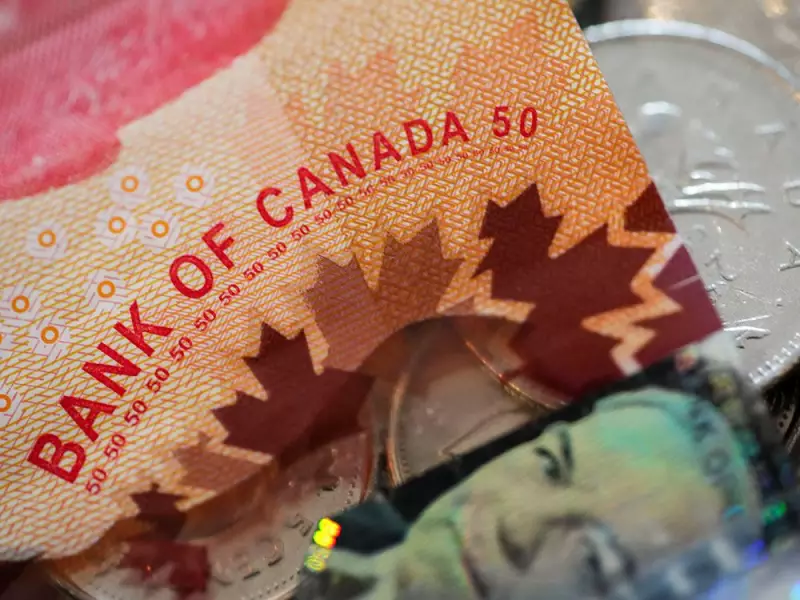
Economists across Canada's major financial institutions are forecasting a prolonged period of stability for the country's benchmark interest rate, with the Bank of Canada expected to hold its policy steady potentially through 2026. This consensus follows the latest inflation data, which shows price pressures are gradually moderating toward the central bank's target.
Inflation Data Points to a Cautious Central Bank
The latest figures from Statistics Canada, released on Monday, December 15, 2025, showed the Consumer Price Index (CPI) held steady at 2.2 per cent in November. While the overall rate was unchanged, the report contained mixed signals. Food inflation climbed at its fastest annual pace since December 2023, presenting a persistent challenge for households.
However, economists are focusing on the underlying core inflation measures, which strip out volatile items. These indicators showed meaningful signs of cooling, providing the Bank of Canada with evidence that its previous rate hikes are working to tame price growth.

Economists Forecast a Long Pause on Rate Moves
Analysts from leading banks agree that the current data landscape suggests neither a rate cut nor a hike is imminent. The prevailing view is that Governor Tiff Macklem and the Bank's Governing Council will maintain a cautious hold on the overnight rate for an extended period.
Royce Mendes, Managing Director and Head of Macro Strategy at Desjardins, stated the Bank of Canada "can take comfort" in avoiding a stagflationary environment. He pointed to downside risks for the economy and inflation in the coming months, including uncertainty around the Canada-United-States-Mexico Agreement (CUSMA).
Andrew Grantham, Senior Economist at CIBC, reinforced this outlook. "We continue to forecast the Bank of Canada to hold its overnight rate steady at its current level throughout next year," he said. Grantham noted that while core inflation measures have declined from October, they remain too high to justify a cut but not high enough to trigger another increase.
Housing Market Offers Room for Future Easing
One sector providing a clearer signal is real estate. David Rosenberg, founder of Rosenberg Research, highlighted that inflation in the residential market gives the central bank potential room to trim rates later if needed. Key metrics support this: CPI rent inflation softened to 4.7 per cent, while the homeowner's replacement cost actually deflated at a -1.6 per cent year-over-year rate.
Leslie Preston, Managing Director and Senior Economist at TD Bank, acknowledged that underlying inflation remains above the two per cent target but is "getting a lot closer in recent months." She expects some volatility ahead, citing a potential boost in December's inflation figures due to comparisons with last year's GST holiday. However, the broader trend is toward moderation, with past problem areas like rents continuing to cool.
Rosenberg offered a blunt assessment for those anticipating a hawkish turn, saying, "The bond bears and policy hawks can take a chill pill. The fact that the markets are pricing in the next Bank of Canada move as being a hike is frankly rather laughable."
The collective analysis paints a picture of a Canadian economy in a delicate transition. With inflation slowly receding but not yet definitively defeated, the Bank of Canada's path forward is one of patience, monitoring the data month by month before making any move to change the cost of borrowing for the nation.