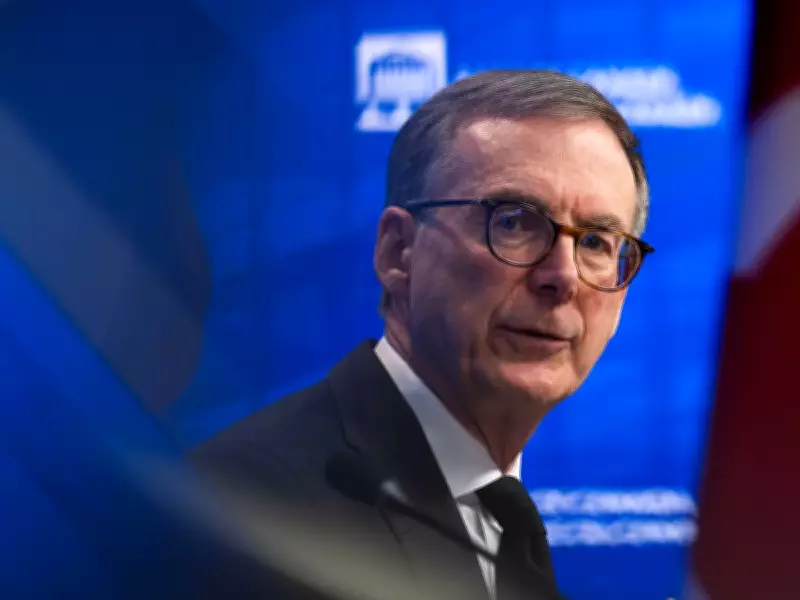
Bank of Canada Governor Tiff Macklem has issued a stark warning about mounting risks to global financial stability, pointing specifically to the rapid expansion of private credit markets and leveraged hedge fund trading in sovereign debt as significant concerns. Speaking at the Global Risk Institute in Toronto, Macklem emphasized that with economic uncertainty already elevated worldwide, the financial system cannot afford additional instability.
Geopolitical Tensions Amplify Market Volatility
Macklem noted that military actions in Iran have contributed to increased volatility in both energy and financial markets. The uncertainty surrounding the duration and broader fallout from this conflict has created additional risks to global economic growth, with current conditions "tilted to the downside" according to the central bank governor.
Non-Bank Financial Players Pose Systemic Risks
The Bank of Canada governor highlighted how non-bank financial institutions have become central to sovereign debt market functioning both globally and domestically. In Canada, these entities now account for up to 50 percent of government bonds sold at market and are major participants in secondary markets.

"While these players add liquidity and efficiency during stable periods, their leveraged sovereign debt purchases create vulnerabilities during times of stress," Macklem explained. "The scale of these trades and the speed at which they can unwind pose a genuine systemic risk."
Private Credit Market Expansion Raises Concerns
Macklem expressed particular concern about the now trillion-dollar private credit market, noting that vulnerabilities in this sector could potentially spread to the banking sector and the core financial system. Banks and insurers maintain connections to private credit through lending, sponsorship, warehousing, and risk transfer arrangements.
"This interconnectedness means that weakness in private credit could spill back to the regulated sector," Macklem cautioned. "And because private credit is increasingly global, those spillovers could travel rapidly across international borders."
Historical Precedents Highlight Vulnerabilities
The central bank governor pointed to several recent events that have exposed vulnerabilities in sovereign debt markets, including the dash for cash at the pandemic's onset, the U.K. gilt crisis in 2022, and stress in U.S. Treasury markets last spring following tariff announcements.
"Short-term funding strains could cause severe dislocations in sovereign debt markets—the backbone of our financial system," Macklem warned. "The cross-border nature of markets means that stress beginning in one jurisdiction or sector can quickly migrate to another."
Potential Contagion Scenarios
Macklem outlined a concerning scenario where a market shock leads to a spike in global interest rate volatility, causing lenders to take haircuts on investments or curtail funding. "Higher funding costs or reduced access can force positions to be unwound," he said. "Leverage can build quietly and then unwind very quickly when conditions change."
The governor emphasized that if leveraged investors are compelled to reduce their positions, they might need to sell sovereign bonds into already stressed markets, creating a self-reinforcing cycle of declining prices and deteriorating liquidity.
"Economic uncertainty is already high," Macklem concluded. "We cannot afford to add financial instability to the mix." The warning comes as global financial authorities increasingly focus on risks developing outside traditional banking systems but with potential to impact core financial stability.