Bank of Canada Survey Reveals Business Leaders' Brighter Outlook Amid Trade Tensions
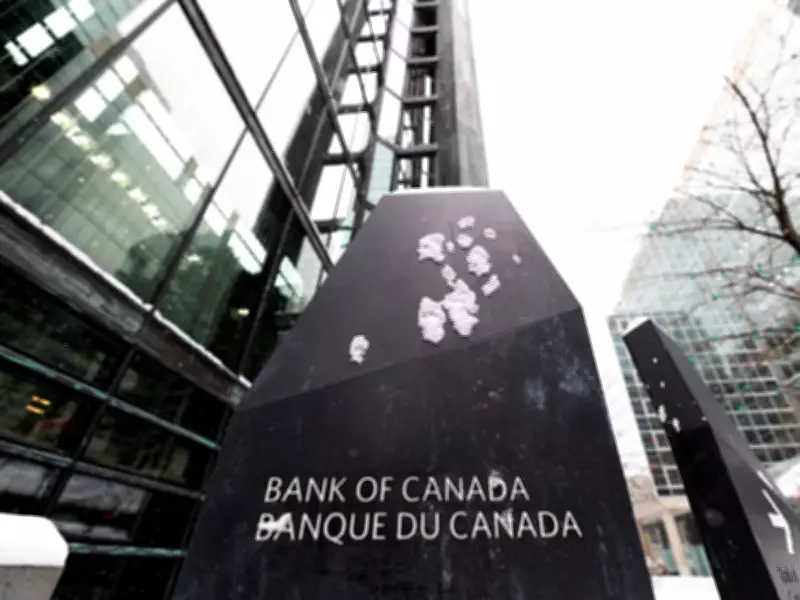
Ongoing trade tensions continue to be the primary economic liability for Canadian business and financial leaders, according to a recent Bank of Canada survey released on Monday. The quarterly survey of 27 financial market participants highlights persistent concerns about international trade disputes overshadowing other economic factors.
Trade Tensions Dominate Risk Assessment
The survey results show that 93 percent of respondents identify increasing trade tensions as the number one downside risk to Canada's growth outlook. This concern significantly outweighs other economic threats, with tightening global financial conditions cited by 41 percent of participants and weak consumer spending mentioned by 37 percent.
These findings come as the Bank of Canada has previously identified the upcoming joint review of the Canada-United States-Mexico Agreement (CUSMA) in July as a key source of uncertainty for the country's economic growth. The trade agreement, which allows most goods to flow across borders duty-free and exempts compliant Canadian goods from certain U.S. tariffs, faces potential renegotiation challenges.

Diverging Economic Projections
Interestingly, the survey reveals that business leaders maintain a slightly more optimistic outlook than the central bank's own projections. While the Bank of Canada projects economic growth of 1.1 percent in 2026 and 1.5 percent in 2027, survey respondents provided a median estimate of 1.6 percent growth by year-end 2026 and 1.9 percent by the end of 2027.
The survey was conducted between December 16 and December 30, following the Bank of Canada's December 10 decision to maintain its benchmark interest rate at 2.25 percent. The central bank held the rate steady again at its January 28 announcement as the economy navigates what it describes as a period of structural adjustment.
Interest Rate Expectations and Inflation Outlook
Survey participants unanimously believe the Bank of Canada will maintain its policy rate at 2.25 percent throughout the remainder of the year. Looking further ahead, the median expectation suggests the bank will raise the rate to 2.5 percent in 2027, with another increase to 2.75 percent anticipated in the fourth quarter of that year.
Regarding inflation, the Bank of Canada reported that its preferred measures of core inflation eased from three percent in October to approximately 2.5 percent in December. The consumer price index rose 2.1 percent on an annual average basis in 2025, with expectations that inflation will hover around two percent as trade-related cost pressures are offset by excess supply.
Market participants share similar inflation expectations, with a median forecast of 2.1 percent headline inflation by the end of both 2026 and 2027.
Political Uncertainty and Economic Implications
The survey findings emerge amid political uncertainty surrounding the future of CUSMA. While U.S. President Donald Trump praised the agreement in 2018 as the most modern, up-to-date, and balanced trade agreement, he recently described it as irrelevant and lacking real advantage last month. This shifting political landscape adds complexity to Canada's economic planning.
Despite the generally more optimistic outlook from business leaders, survey respondents still assign a 20 percent probability to a recession occurring within the next six months. This cautious optimism reflects the delicate balance between domestic economic resilience and external trade pressures that continues to characterize Canada's economic landscape.