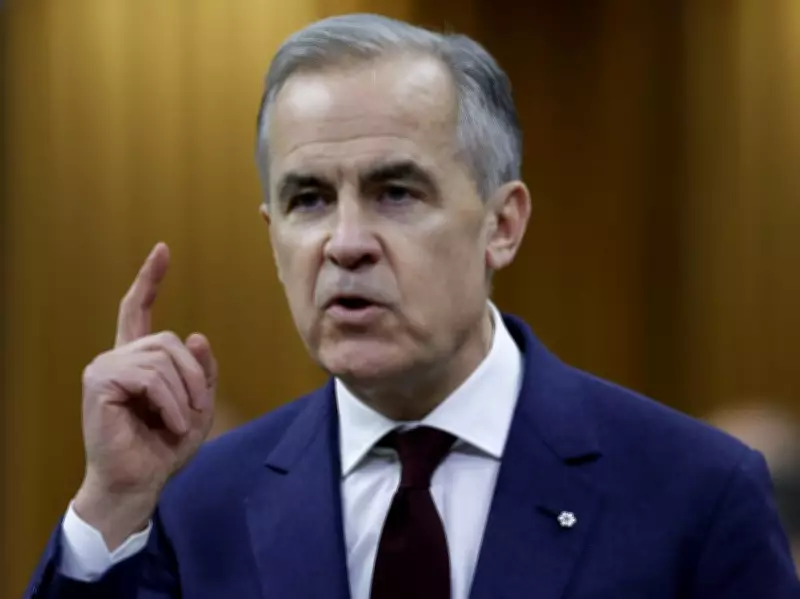
Prime Minister Mark Carney's recent ten-minute YouTube video, titled "Forward Guidance," has drawn criticism for presenting long-established central banking principles as novel innovations. The video, released on Sunday and promoted across social media platforms including X, Facebook, LinkedIn, and Instagram, is described as a "Davos 2.0" adaptation of his January speech to the World Economic Forum, now tailored for a Canadian audience.
Carney's Social Media Push and Policy Claims
In the video, Carney pledges to communicate with Canadians "regularly and directly" via social media, vowing, "I will never sugarcoat our challenges." He then revisits familiar themes, arguing that Canada's trading relationship with the United States has become a weakness rather than a strength. His proposed "Canada Strong" response includes forging new international trade agreements, strengthening the military, and providing economic relief during tough times.
Misleading Credit for Forward Guidance
Critically, Carney misleadingly takes credit for developing the policy of "forward guidance" during his tenure as Bank of Canada governor amid the 2008 global financial crisis. He asserts that the approach was "designed to assure people that however difficult the situation seemed on any given day, that we were acting, and importantly that we would continue to act, with overwhelming force against our problems until they were solved."

However, the principles of forward guidance have been a staple of central banking since the 1950s. This practice involves central banks publicly forecasting future monetary policy to guide interest rate expectations, influence borrowing decisions, and prevent market surprises. It is not a new concept, as Carney's presentation implies.
Historical Context and Recent Failures
Forward guidance does not always yield the intended results. A notable example occurred in July 2020, when current Bank of Canada Governor Tiff Macklem advised Canadians that interest rates would "be low for a long time," encouraging mortgages and major purchases. Subsequently, interest rates skyrocketed, leaving many homeowners and businesses struggling with unaffordable loan renewals.
Omissions in Carney's Narrative
Carney's video conspicuously avoids mentioning the ongoing negotiations for the Canada-U.S.-Mexico Agreement (CUSMA), set for review on July 1. During last year's election, Carney positioned himself as uniquely qualified to handle these trade talks, making this omission a potential red flag for observers.
Experts warn that despite Carney's majority mandate, significant challenges persist. His video, while clever in its digital distribution, offers little new substance and risks overstating his role in shaping monetary policy tools that have been in use for decades.