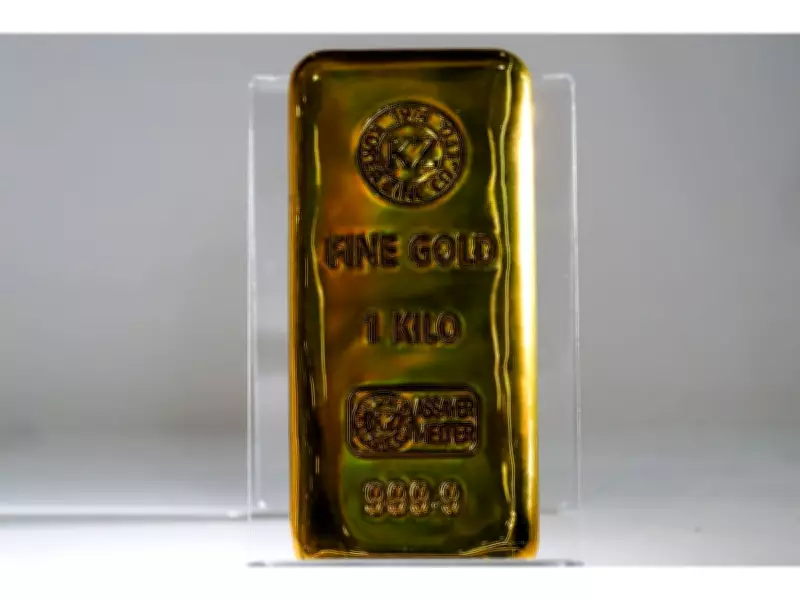
Gold prices experienced volatility as market participants carefully evaluated the uncertain path toward a ceasefire between the United States and Iran, with diplomatic negotiations scheduled to commence this weekend. The precious metal hovered near $4,755 per ounce, reflecting the delicate balance between geopolitical tensions and economic indicators.
Geopolitical Tensions Influence Market Sentiment
According to reports from the New York Post, U.S. President Donald Trump has prepared military contingencies should peace talks in Pakistan fail to yield results. These negotiations, set to begin in Islamabad, aim to establish a long-term peace agreement, with control of the strategic Strait of Hormuz remaining a critical point of leverage for Iran.
President Trump issued a stern warning to Iran regarding any potential imposition of fees on ships transiting the vital waterway, following a recent ceasefire agreement that included provisions to open the strait. This geopolitical backdrop has created a climate of uncertainty that directly impacts gold's safe-haven appeal.

Economic Factors and Inflation Data
On the economic front, Friday's U.S. data revealed mixed signals for inflation. While consumer prices recorded their most significant increase since 2022, core inflation—closely monitored by the Federal Reserve—remained relatively subdued. This nuanced picture has kept traders anticipating potential rate cuts later this year, which typically benefits non-yielding assets like gold.
Bond yields showed modest upward movement while the dollar remained largely stable, yet market participants continued to position for possible monetary policy easing. The complex interplay between inflation concerns and interest rate expectations has created a challenging environment for precious metals pricing.
Central Bank Purchases Provide Support
Gold has found substantial support from continued central bank acquisitions, with several major institutions actively expanding their reserves. Poland's central bank maintains an ambitious target of increasing its gold holdings to 700 tons, according to statements from its governor.
Meanwhile, China capitalized on lower price levels to add approximately 5 tons to its reserves in March—marking the nation's largest monthly purchase in over a year. These strategic acquisitions demonstrate how institutional buying can provide a foundation for gold prices even during periods of market uncertainty.
Market Performance and Analyst Outlook
Despite the day's fluctuations, gold remained on track for its third consecutive weekly gain, with prices showing a 1.6% increase for the period. At 4:04 p.m. in New York, spot gold traded at $4,753.78 per ounce, representing a modest 0.3% decline.
ANZ Bank analysts anticipate that recent price corrections may encourage additional stockpiling activity, projecting official central bank purchases to reach approximately 850 tons for the year. This institutional demand creates a significant counterbalance to other market forces.
In related precious metals trading, silver demonstrated strength with a 1.2% increase to $76.24 per ounce, while platinum and palladium experienced declines. The Bloomberg Dollar Spot Index recorded a slight 0.1% decrease, reflecting the complex currency dynamics influencing commodity markets.
The gold market continues to navigate multiple competing factors: diplomatic developments between major powers, evolving inflation expectations, and sustained institutional demand. As traders monitor the progress of U.S.-Iran negotiations and assess economic data, gold's role as both a safe-haven asset and inflation hedge remains firmly established in global financial markets.