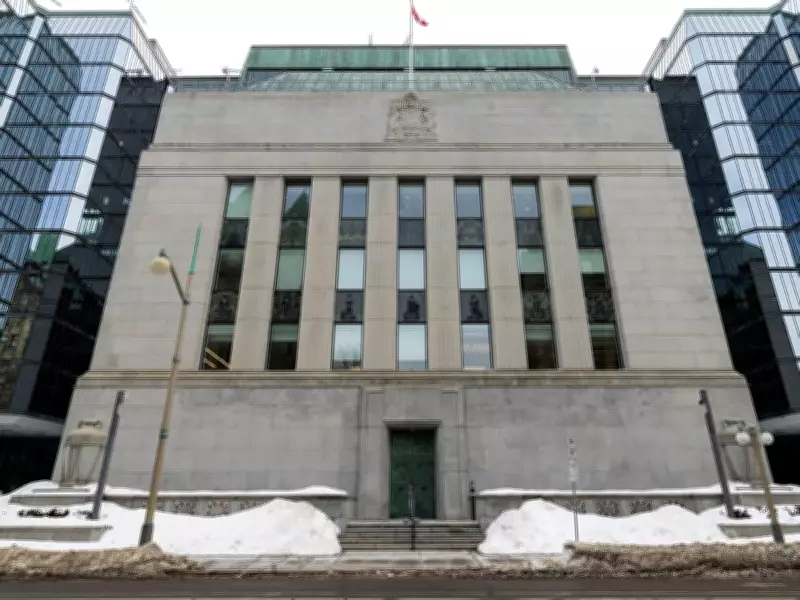
Supply-side economic shocks that simultaneously drive up prices while slowing economic growth are creating significant challenges for the Bank of Canada's inflation control efforts, according to Deputy Governor Sharon Kozicki. During a speech delivered in Oslo on Monday, Kozicki emphasized that the central bank remains committed to its two percent inflation target despite these complications.
Shifting Economic Landscape
"The world has changed dramatically over the past five years," Kozicki told her audience, noting that traditional economic models where strong growth typically pushed inflation above target have been disrupted. Instead, recent years have seen supply-side factors become primary inflation drivers, creating unprecedented policy challenges for central bankers.
Recent Shock Waves
The COVID-19 pandemic and subsequent supply chain disruptions for critical components like computer chips have demonstrated how external shocks can ripple through the economy, affecting both price stability and economic output. These events pushed Canada's inflation rate to eight percent in 2022, marking the highest level in four decades.

Although aggressive interest rate increases eventually brought inflation back toward target levels, many Canadians continue to struggle with elevated living costs. Additional pressures emerged when U.S. tariffs created employment anxieties in affected sectors, compounding economic uncertainty.
Multiple Challenges Converge
Beyond immediate supply chain issues, the Bank of Canada must now navigate a complex web of structural changes including:
- The accelerating impact of artificial intelligence on productivity and employment
- Escalating geopolitical tensions affecting global trade patterns
- Demographic shifts as Canada's population ages
- Increasing frequency of extreme weather events disrupting production
"These forces predominantly affect the supply side of our economy," Kozicki explained, noting how they influence production costs, capital efficiency, labor utilization, and ultimately the availability of goods and services throughout Canada.
Policy Framework Under Review
These considerations will be central when the Bank of Canada renews its joint agreement with the federal government later this year. This framework governs how the central bank sets interest rates to balance economic support with inflation control.
"Revisiting our framework provides an opportunity to assess whether we're adequately equipped for future challenges," Kozicki stated. "Since our last renewal, supply-side developments have gained substantially greater importance for inflation dynamics."
Inflation Target Remains Firm
Despite these evolving challenges, Kozicki made clear that the Bank of Canada has no intention of abandoning its established inflation target range of one to three percent, with two percent as the central goal. "A twenty-five-year track record has firmly established this as what Canadians expect from their central bank," she affirmed.
"We maintain confidence that two percent remains the optimal target for Canada's economic stability," Kozicki concluded, emphasizing the institution's commitment to price stability regardless of economic circumstances.