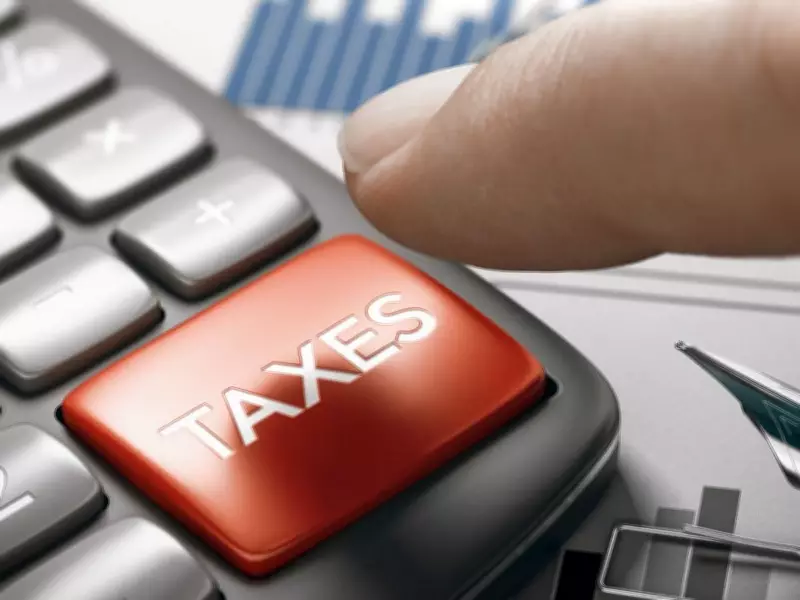
Tax Increases Could Derail Affordability Efforts, Economist Warns
With governments at all levels engaging in substantial deficit-financed spending, economist Jack Mintz warns that pressure to raise taxes will intensify, potentially undermining the very affordability agenda that politicians often promote. Mintz argues that as deficits grow, the temptation for governments to increase revenue through taxation becomes almost inevitable, despite campaign promises to the contrary.
The Spending Spree and Its Consequences
The federal government, already facing a projected deficit of $78.3 billion, has recently introduced two significant new programs. The Canada Groceries and Essentials Benefit is expected to cost $12 billion over six years, while reinstated electric vehicle subsidies and charging infrastructure funding will add another $3.8 billion over five years.
These initiatives represent just the beginning of a broader spending trend. Major upcoming expenditures include defense spending increasing to five percent of GDP, subsidies for large projects, and support for industries affected by U.S. tariffs. As federal debt accumulates, interest payments are projected to reach $61 billion in the coming year, surpassing even the Canada Health Transfer.

Provincial and Municipal Pressures
Provincial governments are facing similar fiscal challenges, with combined deficits expected to total $50 billion this fiscal year. These provinces must balance voter demands for healthcare, education, and infrastructure against budgetary constraints, making tax increases an increasingly attractive option.
At the municipal level, property tax hikes have become commonplace. In Toronto, Mayor Olivia Chow has overseen residential property tax increases of 19.6 percent from 2023 to 2026, with only modest relief offered as elections approach.
The True Cost to Households
Mintz highlights a critical disconnect between government affordability rhetoric and the reality of taxation. While many focus on grocery costs ($12,045 annually), transportation ($12,070), or household operations including communications ($6,014), these pale in comparison to the tax burden borne by average families.
"The biggest household expenditure is tax paid to governments," Mintz emphasizes. Income taxes alone average $23,681 per household, representing nearly 22 percent of the average $108,000 spent annually on goods, services, taxes, and government fees.
When sales, property, payroll, and excise taxes embedded in household expenditures are included, the total tax burden nearly doubles to approximately two-fifths of average household spending. This substantial financial obligation raises serious questions about how significant tax increases can coexist with genuine affordability initiatives.
The Political Reality of Taxation
Governments rarely campaign on explicit promises to raise taxes, except when targeting wealthy individuals and corporations. However, Mintz observes that taxes inevitably increase once governments are in power, particularly when facing mounting deficits and debt obligations.
The economist suggests that if the federal government secures a majority, possibly through a snap spring election, implementing tax hikes on unsuspecting voters would become substantially easier. This pattern extends to provincial governments as well, creating a multi-layered tax burden that directly contradicts affordability messaging.
As deficit-financed spending continues to surge across all levels of government, Mintz concludes that the affordability agenda faces a fundamental contradiction: the very policies designed to address cost-of-living concerns may ultimately be undermined by the tax increases needed to fund them.