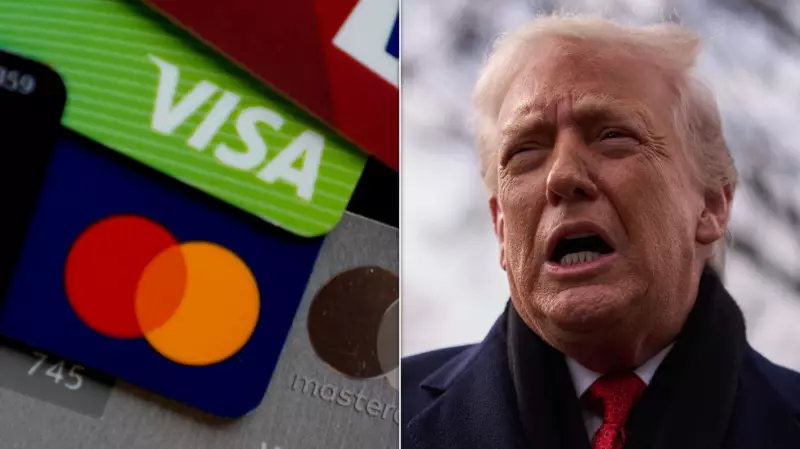
With a critical deadline set by President Donald Trump just days away, uncertainty hangs over the American credit card industry. The president's demand for a 10% cap on credit card interest rates, issued a week ago with a compliance date of January 20, has left consumer advocates, politicians, and bank executives scrambling to understand the White House's plans.
White House Expectation vs. Industry Uncertainty
So far, the administration has not detailed any consequences for companies that ignore the directive. White House Press Secretary Karoline Leavitt stated on Friday that the president has "an expectation" and "a demand" that companies cap rates at 10%, but she offered no specific enforcement mechanism. This lack of clarity has left bank lobbyists, who have spent the past week trying to decipher the administration's intentions, largely in the dark.
The push for a cap is not without precedent in policy discussions. Research from the 2024 campaign, which the White House has promoted on its official social media, suggests the move could save Americans roughly $100 billion in annual interest. The same study concluded that while the credit card industry would suffer a significant financial blow, it would remain profitable, though popular rewards programs might be scaled back.

Legal Hurdles and Political Pressure
Legislative action appears unlikely. Despite bills being introduced by both Republicans and Democrats in Congress, leadership in both the House and Senate has shown little appetite for passing a rate cap law. Furthermore, the Dodd-Frank Act explicitly prohibits at least one key federal bank regulator from setting usury limits on loans.
This leaves political pressure as Trump's primary tool, a tactic he has used before with industries like pharmaceuticals and technology. The strategy has yielded mixed results, from pledges by drug CEOs to cut prices to commitments from companies like Apple to increase domestic manufacturing.
The banking sector has little desire for a public fight with the White House, having benefited from the Trump administration's deregulatory agenda and tax cuts. The messaging from bank lobbying groups and executives has been carefully dual-tracked: they publicly push back against a cap while offering to collaborate on affordability solutions.
Bank Resistance and a Fintech Alternative
Major financial institutions are preparing to resist. JPMorgan Chase, one of the nation's largest credit card issuers with $239.4 billion in customer balances, indicated through its CFO Jeffrey Barnum that it is ready to use all resources to stop the administration. Citigroup's CFO Mark Mason stated a cap "is not something we could or would support," warning it would restrict consumer credit and harm the economy, even as he expressed a willingness to work with officials.
Trump has also endorsed a separate congressional bill targeting the lucrative swipe fees banks earn from merchants, applying further pressure on the industry.
Not every company is waiting for a mandate. Fintech firm Bilt launched new cards this week with a promise to cap interest rates at 10% on new purchases for one year. While similar to promotional rates used by other issuers, Bilt's move, as CEO Ankur Jain noted, positions the company at the forefront of a potential shift and shows one way the industry could adapt without completely dismantling its business model.
As the January 20 deadline approaches, the ultimate question remains whether Trump's demand will translate into concrete action or remain a point of political pressure with uncertain outcomes for millions of cardholders.