Weak GDP Growth Puts Bank of Canada's First Quarter Forecast Under Scrutiny
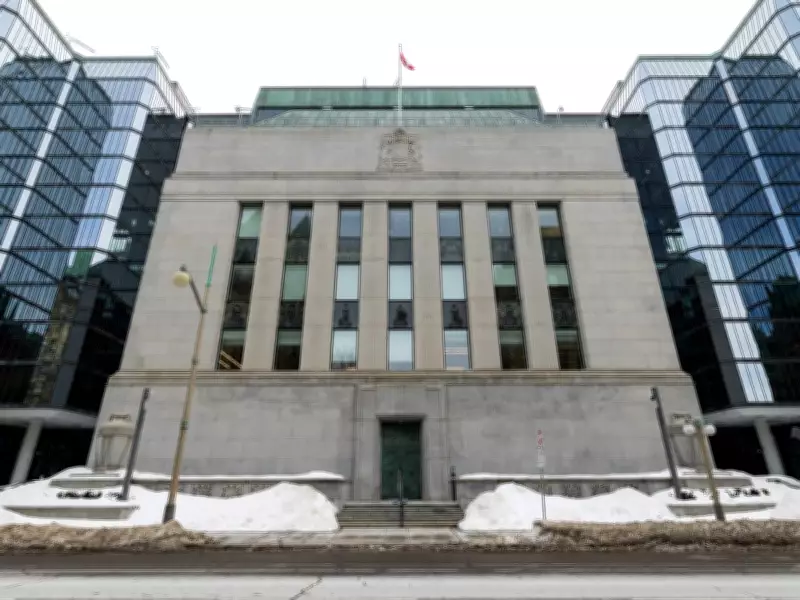
Despite stronger-than-expected gross domestic product growth in December, many economists now say the Canadian economy will likely struggle to meet the Bank of Canada's growth projections for 2026. The latest economic data reveals a complex picture that keeps discussions about potential rate cuts on the table, though most analysts agree the timing isn't quite right yet.
Quarterly Contractions and Mixed Signals
Statistics Canada reported that GDP rose 0.2 percent in December, but the economy contracted by 0.6 percent during the fourth quarter of 2025. This contraction undershot economists' estimates of a 0.2 percent decline and marked the second quarterly decline of 2025, following an earlier contraction in the second quarter. Policymakers' call for flat growth also missed the mark, creating uncertainty about economic momentum heading into 2026.
Economists now warn that the fourth-quarter decline, combined with flat GDP estimates for January, puts the Bank of Canada's forecast for first-quarter annualized gross domestic product growth of 1.8 percent in serious jeopardy. The combination of mediocre economic growth expectations and ongoing tariff uncertainties creates significant headwinds for the Canadian economy.

Economists Analyze the Data
Douglas Porter, chief economist at Bank of Montreal, noted in an analysis that "the details of the quarterly results were much firmer than the headline suggests." He attributed most of the fourth-quarter decline to a significant drop in business inventories, while pointing to several areas of economic resilience.
Consumer spending grew 1.7 percent on an annualized basis, business investment increased by two percent, and exports expanded by six percent. However, the housing sector contracted sharply by 4.4 percent, though Porter noted that government spending, particularly on defense, more than offset that decline.
December's GDP growth of 0.2 percent month-over-month exceeded Statistics Canada's earlier flash estimate of 0.1 percent. When combined with flat GDP estimates for January, this represents something of an achievement given the harsh winter weather conditions across much of Canada.
Forecast Challenges and Rate Cut Implications
Despite these positive elements, Porter described the Bank of Canada's forecast for first-quarter annualized GDP growth of 1.8 percent as "a bit of a stretch." Bank of Montreal is forecasting more modest growth of one percent for the first quarter.
"Such mild growth does keep the door slightly ajar to the possibility of Bank of Canada rate cuts, but we're not there quite yet," Porter emphasized, highlighting the delicate balance facing monetary policymakers.
Underlying Economic Weakness
David Rosenberg, president of Rosenberg Research & Associates Inc., described the fourth-quarter GDP report as full of "caveats." He noted that much of the growth in domestic demand came from government spending, meaning the private sector actually contracted during the fourth quarter.
Rosenberg also pointed out that the drop in business inventories resulted from "soggy" consumer spending, with services rather than goods accounting for most of the increase in that sector. While he acknowledged that "the good news is that the monthly December number for real GDP did beat expectations," he identified concerning weaknesses in consumer-linked areas.
Significant softness appeared in air travel, real estate, restaurants and accommodation, and retail sectors—all closely tied to consumer confidence and spending patterns. These weaknesses suggest underlying challenges that could persist even as headline numbers show modest improvement.
Looking Ahead
The mixed economic signals create a complex environment for the Bank of Canada as it navigates monetary policy decisions. While December's stronger-than-expected growth provides some optimism, the quarterly contraction and weaknesses in key consumer sectors suggest the economy faces ongoing challenges.

Economists will be closely watching upcoming data releases to determine whether the Canadian economy can build momentum or if further weakness will keep pressure on policymakers to consider rate adjustments later in the year. The balance between supporting economic growth and managing inflation remains delicate as the Bank of Canada's forecasts face increasing scrutiny from financial analysts and market participants.