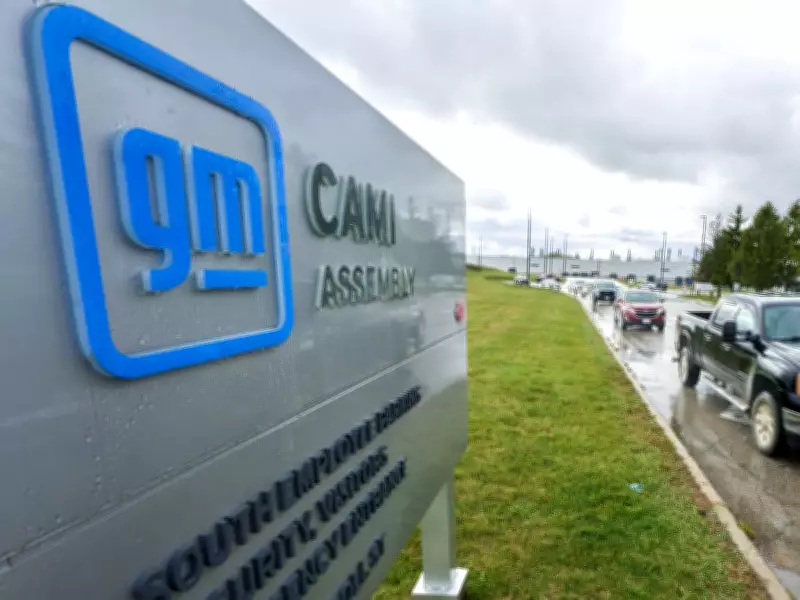
General Motors Co. has announced a $691 million investment to upgrade its propulsion plant in St. Catharines, Ontario, where it manufactures V8 engines for SUVs and pickup trucks. This move secures the plant's role in producing the company's latest generation of V8 engines, positioning it as the third North American facility capable of this task.
Investment Details and Context
The investment follows GM's February layoff of 500 workers and the elimination of the third shift at its Oshawa, Ontario plant. In 2025, the automaker also closed its Ingersoll, Ontario facility, which produced BrightDrop electric delivery vans, after spending $1 billion due to low demand. The St. Catharines upgrade will allow the plant to produce sixth-generation V8 engines, joining two US plants that received similar investments earlier.
“It gives the St. Catharines plant a key role in one of our most important segments,” said Ariane Souza Pereira, a General Motors Canada spokesperson. “I would say it’s another proof point of GM’s commitment to Canada.”

Market Uncertainty and EV Demand
Automakers face uncertain customer demand. GM expects strong demand for full-size pickup trucks in North America, justifying the investment. However, the company also leads EV sales in Canada, with first-quarter sales up 13.1% year over year. EV demand has been volatile: at the end of 2024, EVs accounted for 18.9% of new vehicle sales, but fell below 10% for most of 2025, according to S&P Global Inc. Signs suggest a rebound as gas prices rise.
Tariff and Competitive Pressures
Automakers in Canada face multiple pressures. In 2025, the US government imposed 25% tariffs on finished vehicles and non-US content, plus 50% tariffs on steel and aluminum, forcing costly supply chain changes. Chinese EV makers also pose a threat. Prime Minister Mark Carney struck a deal allowing 49,000 Chinese EVs at a 6.1% tariff rate, about 29% of 2025 EV sales in Canada, with half expected under $35,000.
Greig Mordue, a professor at McMaster University, noted that industry consensus expects EVs to eventually dominate demand, but the timeline is debated. Meanwhile, Chinese EV makers secure critical mineral supply chains and advance technology. “We have to get through a lot of rough years because we’re behind,” Mordue said, adding that the auto sector's extensive upstream and downstream jobs will likely prompt government protection.