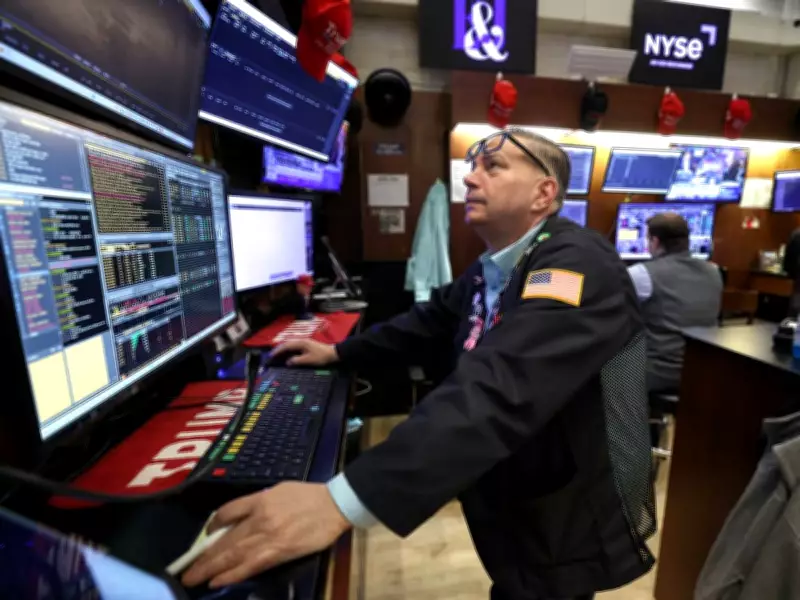
Equity markets are hitting new highs, signaling Wall Street is largely looking past the predictably volatile situation in Iran. That isn't the case for individual companies.
As first-quarter report cards are rolling in, evidence is building that the war's impact is stretching beyond the firms that move goods — and people — around the world. Most recently, the conflict raised costs for the container manufacturer Sonoco Products Co. and weighed on sales for industrial conglomerate Honeywell International Inc.
The list goes on, creating a worrisome setup for the market where gains in the biggest technology companies — largely shielded from geopolitical risks — have offset worries around the conflict down the market-cap spectrum. As traders brace for the busiest earnings week on Wall Street, there's a risk that more bitter surprises are ahead.

Canaries in the Coal Mine
“Those are the canaries in the coal mine,” said Mark Malek, chief investment officer at Siebert Financial. “The market's ignoring them for now, trading straight up. I'm constructive, but I'm very cautiously constructive here.”
Almost two months since the war in the Middle East began, the Strait of Hormuz remains effectively shut. That's keeping prices high for commodities exported through the region, exacerbating the pain caused by rising logistics costs.
Earnings reports across industrial, materials and energy sectors have highlighted these headwinds. Honeywell said on Thursday that the war had caused weakness in one of its business lines, contributing to a second quarter profit outlook that came short of estimates. And on Friday, oilfield services company SLB Ltd. said that disruptions from the war weighed on its results.
Rising Costs and Vulnerable Sectors
Energy, freight and petrochemical costs are rising quickly for Sonoco, the maker of paperboard products that envisions up to US$10 million in new expenses in the current quarter. For jet-engine maker General Electric Co., the risk is that demand from airlines falters as a result of disruptions to travel or the strain of higher fuel prices. The company's assumption is that the war and its impacts last through the summer, chief executive officer Larry Culp told investors last Tuesday.
“The consumer sectors are most vulnerable,” said Melissa Brown, head of investment decision research at Simcorp. “Higher oil prices divert spending from other discretionary items as people have to drive and may also drive up prices as input costs rise.”
Even when stocks were beaten up coming into their reports, investors haven't always been in a forgiving mood. Shares of Southwest Airlines Co. dropped after the airline struck a cautious tone on the impact of higher fuel costs, widening the decline since early March to 20 per cent. Meanwhile, Carnival Corp. cut its guidance citing the conflict in the Middle East, which extended the share-price decline since the war began to 14 per cent.