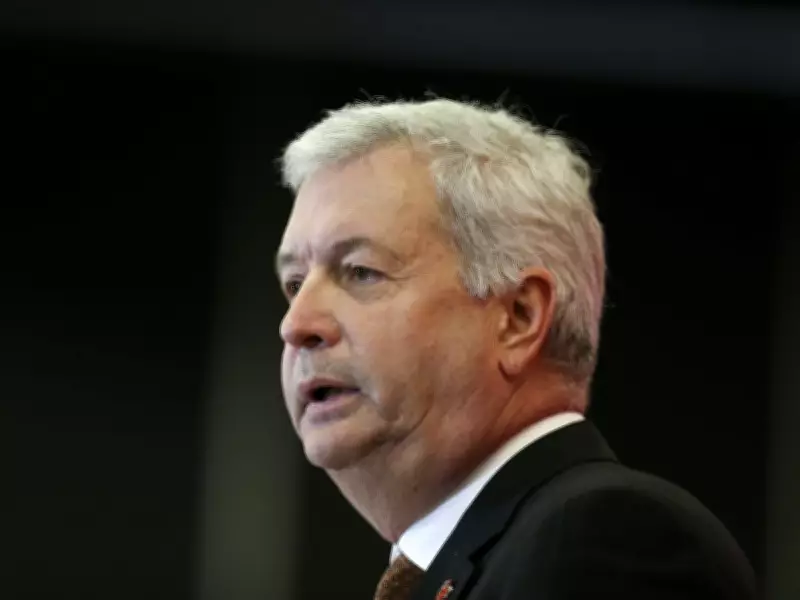
Air Canada CEO's Retirement Announcement Follows Intense Scrutiny Over Language Controversy
Air Canada's chief executive Michael Rousseau will step down by the end of the third quarter of 2026, the Montreal-based airline announced this week. This decision comes just days after Rousseau faced severe criticism for delivering an English-only condolence video regarding a fatal collision at New York's LaGuardia Airport that claimed the lives of two Air Canada pilots.
Governance Experts: A Predictable Landmine Ignored
Corporate governance specialists assert that Rousseau's failure to learn from previous language missteps likely sealed his fate. "He stepped on a landmine that was entirely predictable," said John Gradek, a former Air Canada employee of 18 years and current lecturer at McGill University. "This is not about political correctness or wokeness. It's about a fundamental skill required for leading a national airline in a bilingual country."
Richard Leblanc, a York University professor specializing in corporate governance, emphasized the broader implications: "This might be a teachable moment for other boards of directors in Quebec. Directors will now ask what happens during a crisis and whether their CEO should learn French to a reasonable degree."

The Controversial Condolence Video
In the four-minute video addressing the tragic accident, Rousseau spoke only two words in French: "bonjour" at the beginning and "merci" at the conclusion. The remainder of his statement was delivered entirely in English with French subtitles. This approach proved particularly insensitive given that one of the deceased pilots, Capt. Antoine Forest, hailed from Coteau-du-Lac southwest of Montreal, and many passengers and crew on the affected Montreal-bound flight were Quebec residents.
Rousseau later apologized, stating: "Despite many lessons over several years, unfortunately, I am still unable to express myself adequately in French."
A Pattern of Language Missteps
This incident marked the second significant controversy regarding Rousseau's language abilities. In 2021, he delivered a speech at the Montreal Chamber of Commerce almost entirely in English, drawing criticism at that time as well. Governance experts suggest this repeated pattern proved damaging beyond repair.
"What happens after a second misstep is the incumbent CEO diminishes his credibility in front of stakeholders," Leblanc explained. He acknowledged that learning French later in life presents challenges but noted that even minimal effort—such as reading a prepared French statement as a gesture of respect—could have significantly altered the outcome.
Changing Times and Corporate Expectations
Gradek contrasted the current situation with historical precedent: "In the 1990s, Air Canada hired English-speaking CEOs from the United States during difficult times without significant backlash. But today's environment is different, especially with Quebec elections approaching this fall."
The governance experts emphasized that corporate leaders must now navigate increasingly complex cultural expectations. "Other boards of directors will need to be careful about what they do and how they do it," Gradek warned, suggesting that Rousseau might have weathered the storm had he not released the controversial video.
Leblanc concluded with practical advice for corporate boards: "Directors should ask themselves whether their CEO possesses the necessary skills for crisis communication in all relevant languages. This case demonstrates that linguistic capability isn't merely symbolic—it's a fundamental requirement for effective leadership in culturally diverse regions."