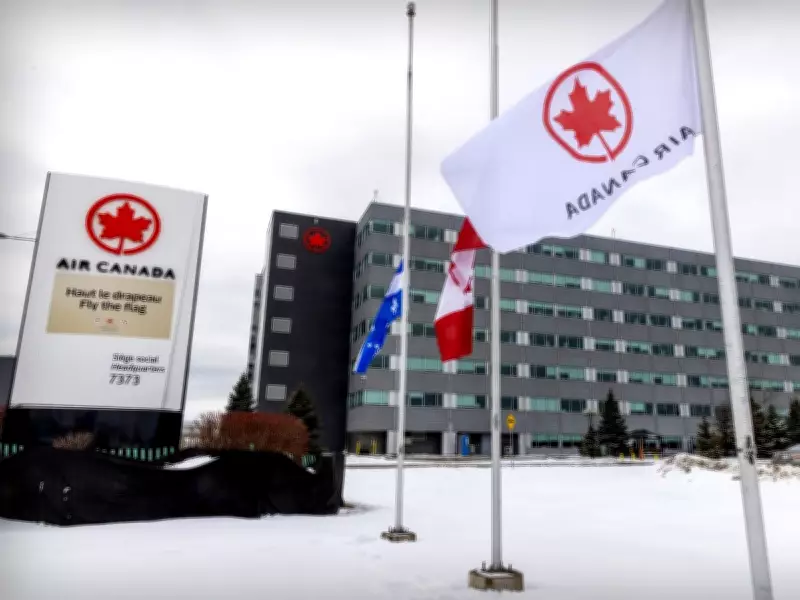
It appears that Michael Rousseau, the CEO of Air Canada, has a penchant for igniting tensions around Canada's official languages, seemingly indifferent to the resulting inferno of public discontent. For the second time in just five years, the airline's top executive has found himself at the center of a storm due to his perceived insensitivity toward the French language.
A Repeated Pattern of Linguistic Neglect
The latest incident occurred this week when Rousseau released a unilingual English video statement following a tragic accident that claimed the lives of two Air Canada employees, including 30-year-old Quebec pilot Antoine Forest, and injured dozens of passengers. Many of those affected were Quebecers, as the flight had originated from Montreal. This comes after Rousseau first drew widespread criticism in 2021 for delivering a speech exclusively in English at the Chamber of Commerce of Metropolitan Montreal.
Broken Promises and Questionable Commitment
The recurring nature of these incidents suggests a troubling refusal to learn from past mistakes. After the 2021 controversy, Rousseau publicly apologized and pledged to learn French. However, in light of recent events, doubts have emerged about the sincerity of those regrets and the claimed nearly 600 hours of language learning that Air Canada asserts he undertook.

Ultimately, the CEO's French proficiency was apparently deemed insufficient for delivering such a crucial message. This raises serious questions about his commitment to linguistic respect within a bilingual nation.
The Weight of Corporate Responsibility
When Rousseau speaks publicly, he is not merely a private citizen or an out-of-touch executive. He represents the face and voice of Air Canada, the country's flag carrier and a corporation bound by the Official Languages Act. This role carries significant responsibilities and clear obligations that extend beyond mere corporate governance.
The implications of his English-only statement are profound. What message does this send to the family of the young Quebec pilot who died while serving the airline? How does it resonate with the more than 40 injured passengers hospitalized after the incident and the many others who experienced trauma? What signal does it transmit to millions of French-speaking customers across Canada?
A Failure of Basic Human Decency
Rousseau had one primary responsibility: to demonstrate compassion and humanity toward the victims and their loved ones. By failing to make even minimal efforts to address all affected parties in their language, he fell lamentably short of this basic expectation.
The statement was pre-recorded, making the omission even more glaring. A few sentences in French, read from a prepared script, could have prevented the backlash and spared the company another reputational crisis. At minimum, it would have shown awareness and sympathy—what is commonly understood as "paying your respects."
The Broader Implications for Canadian Unity
While some social media reactions suggest the issue is trivial or exaggerated, for many Quebecers and francophones nationwide, it represents a significant concern. Consider a hypothetical reverse scenario: a unilingual French-speaking CEO delivering a French-only statement after an incident involving Alberta pilots and passengers on a Toronto-Chicago flight. The outrage would likely be immediate and intense, with media commentators dissecting the issue for days and elected officials demanding explanations or resignations.
This fictional example, though unlikely to occur, reflects a reality that persists in 2026 regarding French language treatment in Canada—not just at Air Canada. It perpetuates a perception that French, while officially recognized, is treated as a second-class language.
As Canadians navigate different cultural and historical backgrounds, disagreements about the French language's importance may arise. However, with Canadian unity facing renewed tests amid discussions of Quebec sovereignty, acknowledging and respecting linguistic diversity becomes crucial. If an issue matters deeply to a substantial portion of the population, can't we simply extend that basic respect?

The pattern established by Rousseau's actions suggests that, for some in positions of power, the answer remains disappointingly unclear. As the controversy continues to unfold, it underscores ongoing tensions in Canada's linguistic landscape and the corporate responsibilities that come with operating in a officially bilingual nation.