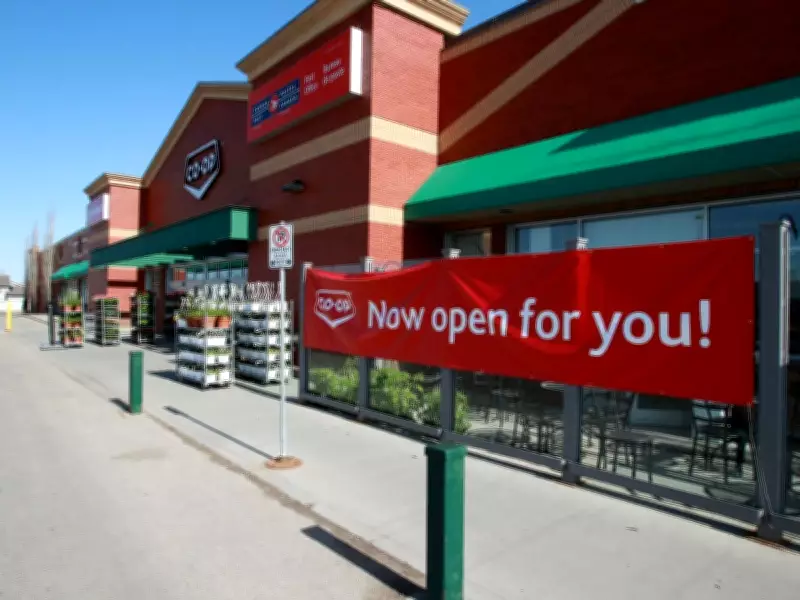
Imagine a Canada where grocery shopping isn't dominated by a handful of for-profit corporations. Picture a network of community-owned stores operating on socialist principles, with customers as shareholders electing boards and receiving profits directly. This vision, often promoted as a novel solution to food inflation, overlooks a century-old reality already thriving in Western Canada.
The Co-Op Reality: A Century of Community Ownership
The customer-owned Co-Op grocery chain has been serving communities for a full century. With 275 affiliated stores across Canada's four westernmost provinces, primarily on the prairies, plus additional independent locations like those in Calgary that left the network in 2020, Co-Op represents exactly the communitarian model some politicians describe as revolutionary.
Inflation Spares No One
Despite its non-profit structure and socialist origins, Co-Op faces the same economic pressures as corporate competitors. Rising operational costs inevitably get passed along to consumers, whether they're equity-holding members or regular shoppers. The microscopic profit margins characteristic of the grocery industry affect all players equally, regardless of ownership structure.

Western Canadians familiar with Co-Op stores often react with amusement to political proposals for new cooperative grocery systems. Many families, including the author's parents in Lloydminster, maintain Co-Op memberships and shop regularly at these established community institutions.
The Political Blind Spot
Remarkably, some political figures advocating for grocery socialism appear unaware of Co-Op's existence. NDP leader Avi Lewis, dubbed "Grocer Avi" in the original column, promotes thousands of words about how cooperative grocery models could transform Canada while seemingly ignoring the extensive Co-Op network already operating successfully.
His supporters point to international examples like Mexico and even the U.S. military commissary system while overlooking the domestic success story in their own backyard. The argument that individual communities might start co-ops but would inevitably face distribution challenges ignores Co-Op's historical solution to exactly that problem a century ago.
Beyond Groceries: An Integrated Network
The Federated Co-operatives Ltd. network extends far beyond simple grocery stores. These community-owned enterprises operate refineries, lumber lots, fertilizer terminals, and agricultural feed stores—exactly the integrated infrastructure some claim would be impossible for cooperative systems to develop.
This represents a living achievement of the Canadian socialist movement that current political inheritors appear to have overlooked. The Co-Op model demonstrates that communities can indeed "just do things" when organized around shared principles and practical solutions.
Economic Realities Versus Political Narratives
Economists and commentators questioning the viability of non-profit grocery alternatives often share the same blind spot regarding Co-Op's existence. Their valid observations about industry-wide microscopic profit margins apply equally to cooperative models, suggesting that ownership structure alone doesn't shield consumers from broader economic pressures.
The Co-Op experience demonstrates that while community ownership provides different governance and profit distribution, it doesn't eliminate the fundamental economic realities affecting all food retailers. Rising costs from suppliers, transportation, labor, and other factors impact Co-Op stores just as they affect corporate chains.
This century-old experiment in grocery socialism continues to serve Western Canadian communities while offering important lessons about what cooperative models can—and cannot—achieve in addressing food inflation and consumer costs.