A prominent credit rating agency has issued a critical assessment of Manitoba's recently unveiled budget plan, declaring it inconsistent with the province's current economic growth path. This evaluation raises significant concerns about the fiscal strategy outlined by the provincial government under Finance Minister Adrien Sala.
Budget Presentation and Immediate Scrutiny
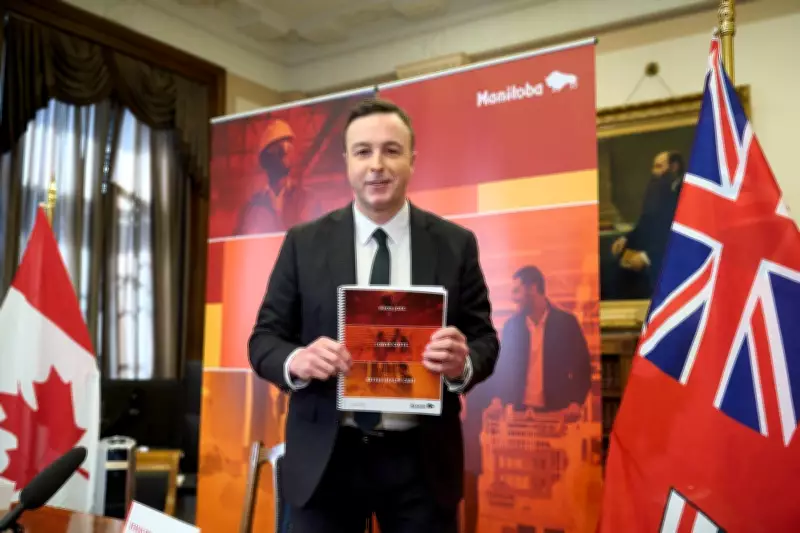
Finance Minister Adrien Sala presented the provincial budget to the media at the legislature in Winnipeg on Tuesday, March 24, 2026. The budget, which outlines Manitoba's spending and revenue projections for the upcoming fiscal period, was met with immediate analysis from financial institutions. While the government has promoted the plan as a balanced approach to supporting public services and managing debt, external auditors have identified potential flaws in its alignment with macroeconomic indicators.
Credit Agency's Critical Analysis
The credit rating agency, whose name was not specified in the initial report but is understood to be a major player in sovereign and sub-sovereign debt assessment, conducted a thorough review of the budget documents. Their analysis concluded that the fiscal measures and projections contained within the plan do not adequately support or correlate with Manitoba's economic growth forecasts. This inconsistency could potentially impact the province's creditworthiness and borrowing costs in the long term.

Key points of concern highlighted by the agency include:
- Discrepancies between projected revenue growth and realistic economic expansion rates.
- Spending commitments that may outpace the province's ability to generate sustainable income.
- A lack of robust contingency planning for potential economic downturns or external shocks.
Implications for Manitoba's Financial Future
This critical assessment from a credit rating agency carries substantial weight. Credit ratings directly influence the interest rates Manitoba pays on its debt, affecting everything from infrastructure projects to public service funding. A lower credit rating or negative outlook can increase borrowing costs, diverting funds away from essential programs and into debt servicing.
The agency's report suggests that without adjustments, Manitoba's fiscal health could face challenges. Investors and bond markets closely monitor such evaluations, and a perception of fiscal misalignment can lead to reduced confidence in the province's financial management.
Government Response and Next Steps
As of the report's publication, the office of Finance Minister Adrien Sala has not issued a formal, detailed response to the credit agency's criticism. The budget, as presented, emphasizes investments in healthcare, education, and infrastructure, with the government asserting it maintains a responsible path to balance.
However, the external critique underscores the delicate balance provincial governments must strike between ambitious spending and fiscal prudence. The coming months will likely see increased scrutiny from opposition parties, financial analysts, and the public regarding how the government addresses these concerns and whether it will revise its fiscal strategy to better align with economic realities.
This development places significant pressure on Minister Sala and the governing party to demonstrate that their budget plan is not only socially responsive but also economically sound and sustainable for Manitoba's long-term prosperity.