Global Markets Mostly Higher and Oil Prices Gain Ahead of Planned U.S.-Iran Ceasefire Talks
Global financial markets exhibited cautious optimism on Friday, with most major indices trending upward and oil prices climbing as investors reacted to news of planned ceasefire negotiations between the United States and Iran. The developments come amid ongoing regional tensions in the Middle East, which have historically influenced energy markets and global economic sentiment.
Market Movements Reflect Hope for De-escalation
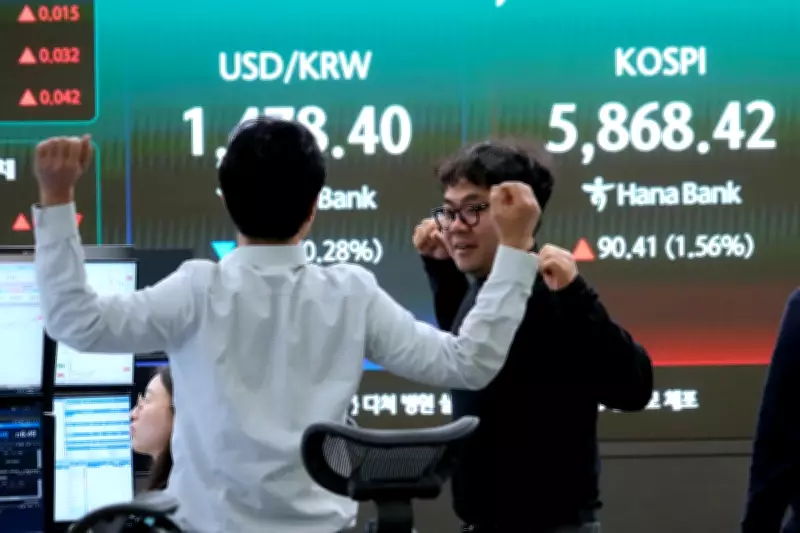
Stock markets across Asia and Europe showed mostly positive movement, with notable gains in several key indices. In Seoul, traders at the Hana Bank headquarters monitored screens displaying the Korea Composite Stock Price Index (KOSPI) and foreign exchange rates, reflecting the interconnected nature of global financial systems. The anticipation of diplomatic talks appears to have temporarily eased investor concerns about potential supply disruptions in the critical oil-producing region.
Oil prices experienced a significant uptick, with Brent crude and West Texas Intermediate both rising by approximately 2-3% during early trading sessions. This increase directly correlates with the scheduled ceasefire discussions, as markets price in the possibility of reduced geopolitical risk. However, analysts caution that volatility may persist until concrete agreements are reached, given the complex history between the negotiating parties.

Broader Economic Context and Regional Implications
The planned talks occur against a backdrop of diverse global economic news. In Canada, the TSX experienced a slight decline while U.S. markets rose, highlighting mixed investor reactions to Middle East developments. Meanwhile, diesel prices are projected to remain elevated for months, potentially impacting consumer costs more significantly than gasoline prices in certain markets.
Regional tensions continue to influence market psychology, with any diplomatic progress viewed as potentially stabilizing for energy supplies and trade routes. The ceasefire negotiations, if successful, could alleviate pressure on inflation concerns linked to transportation and manufacturing costs worldwide. Financial institutions are closely monitoring currency fluctuations and commodity prices for signs of sustained market confidence.
Investor Sentiment and Future Outlook
Market participants appear to be adopting a wait-and-see approach, balancing optimism about diplomatic efforts with awareness of persistent regional challenges. The upcoming talks represent a critical juncture for energy markets and global economic stability, with potential implications for monetary policy and corporate earnings across multiple sectors.
As negotiations proceed, analysts emphasize that market reactions will likely remain sensitive to any developments, whether positive or negative. The broader financial landscape continues to navigate multiple variables, including central bank policies, technological advancements in artificial intelligence for weather forecasting, and evolving consumer trends, all while responding to geopolitical shifts in real-time.