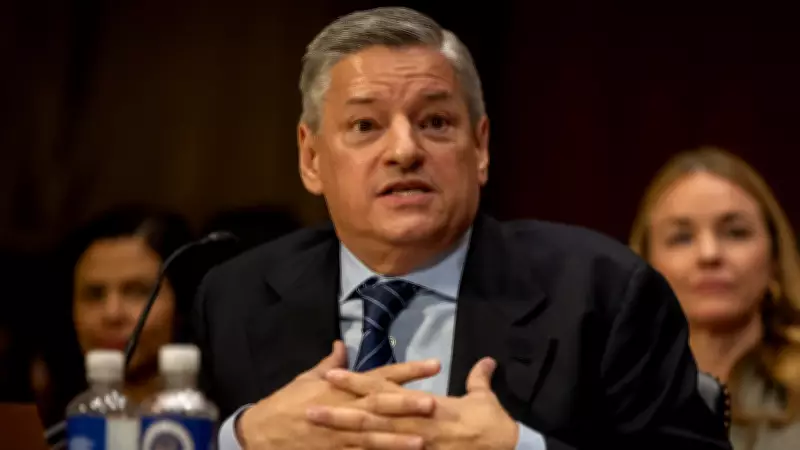
Netflix Executive Faces Intense Senate Scrutiny Over Major Media Merger
In a contentious Capitol Hill session, Senate Republicans launched a sharp critique against Netflix co-CEO Ted Sarandos regarding the streaming giant's ambitious bid to acquire Warner Bros. film and streaming divisions. The Tuesday hearing before the Senate Judiciary Subcommittee on Antitrust, Competition Policy, and Consumer Rights became a forum for broader cultural and political grievances, with lawmakers repeatedly labeling Netflix as a left-wing company dedicated to promoting wokeness and propaganda.
A Tense Exchange Over Political Bias and Corporate Influence
The typically composed entertainment executive appeared visibly flustered as he fielded a barrage of pointed questions focused on diversity initiatives, alleged political bias, and transgender representation in programming. Senator Ted Cruz of Texas set the tone early, asserting that Netflix has long been a left-wing company. Cruz connected his criticism to recent cultural events, referencing the politically charged Grammy Awards broadcast on rival network CBS, which is owned by Paramount Skydance—another contender in the battle for Warner Bros. Discovery.
After highlighting Netflix co-founder Reed Hastings' history as a significant Democratic donor, Cruz turned his attention to one of Warner Bros.' most prominent assets. How can audiences feel remotely confident, he demanded of Sarandos, that a merger between Netflix and Warner Bros. wouldn't transform both entities into a combined propaganda outlet? Cruz specifically targeted CNN, calling the news network a dumpster fire that has abandoned objectivity and journalistic standards.

Defending Entertainment Versus Activism
In his defense, Sarandos emphasized Netflix's fundamental identity as an entertainment business. He told Cruz that subscribers primarily tune in to be entertained, suggesting that pushing any political agenda would constitute a bad business decision. The executive maintained that the platform serves diverse viewer interests without partisan alignment.
The cultural critique extended beyond Cruz's questions. Missouri Republican Senators Josh Hawley and Eric Schmitt pressed Sarandos on what they described as the streamer's overwhelming commitment to woke content. Schmitt argued that Netflix programming does not reflect what American audiences truly want to see, claiming the company has made a habit of promoting DEI (Diversity, Equity, and Inclusion) initiatives and what he termed the modern phenomenon of race swapping characters.
Content Moderation and Parental Controls
Hawley took a different approach, questioning why Netflix platforms children's programming that he said promotes a transgender ideology. Sarandos pushed back against both lines of inquiry, telling the Missouri senators that Netflix offers programming across the political spectrum and provides parents with sophisticated tools to manage what their children watch. We have a great deal of programming on Netflix for all left, right and center, he asserted, highlighting the company's commitment to viewer choice and parental oversight.
Political Dimensions of the Proposed Merger
The hearing wasn't entirely confrontational. Sarandos seized opportunities to offer measured praise, particularly regarding former President Donald Trump's scrutiny of the proposed $83 billion deal. He stated that Trump has shown legitimate interest in protecting and creating American jobs, expressing confidence that the merger would ultimately stand on its merits.
This comment followed Trump's apparent alignment with Paramount Skydance in the competition for Warner Bros. Discovery. After Paramount Skydance made a hostile $108.4 billion bid in December, Trump told reporters that any deal should include commitments to overhaul CNN, which he described as being run by a very dishonest group of people.
The Senate hearing revealed deepening political divisions over media consolidation and content creation, placing Netflix at the center of debates about corporate influence, cultural representation, and antitrust regulation in the evolving digital entertainment landscape.