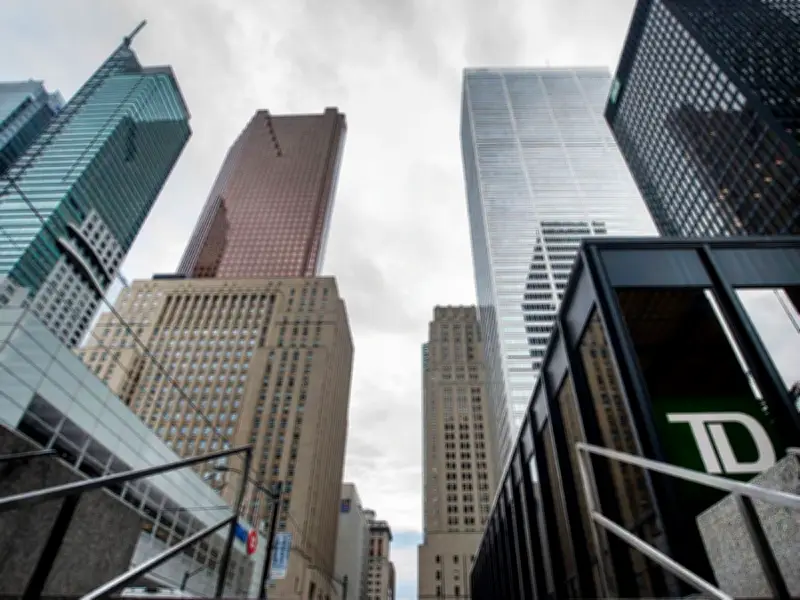
Canada's top banking regulator, the Office of the Superintendent of Financial Institutions (OSFI), announced on Friday a reduction in the capital buffer that major banks must maintain to absorb unexpected financial shocks. This marks the first such cut in three years, lowering the buffer to three percent.
Lowering the Domestic Stability Buffer
OSFI also reduced the range of the domestic stability buffer (DSB) by one percentage point, setting it at zero percent to three percent. The DSB is a requirement for the Big Six lenders to hold capital reserves to ensure they can continue lending to households and businesses during periods of financial stress. It is measured as a percentage of risk-weighted assets, such as mortgages or credit card loans.
Encouraging Lending and Economic Adaptation
OSFI Superintendent Peter Routledge stated that by lowering both the level and the top end of the DSB range, the regulator enables the banking sector to deploy excess capital in support of Canada's economic adaptation to new opportunities. The decision aims to encourage more lending, particularly in the current economic climate.

Earlier this month, the C.D. Howe Institute's Domestic Stability Buffer Council had recommended maintaining the DSB, citing worsening economic conditions due to high energy prices and ongoing trade uncertainty. However, the council noted insufficient evidence to justify a reduction.
In the previous review in December, Routledge highlighted that the big banks hold a higher-than-required cushion, providing ample capacity to continue growing and profiting. The DSB, introduced in 2018, is a component of the common equity Tier 1 (CET1) capital requirements, which compare a bank's capital to its assets. Canadian banks must now maintain their CET1 ratio, including the DSB, above 11 percent, with the Big Six averaging comfortably above that threshold.