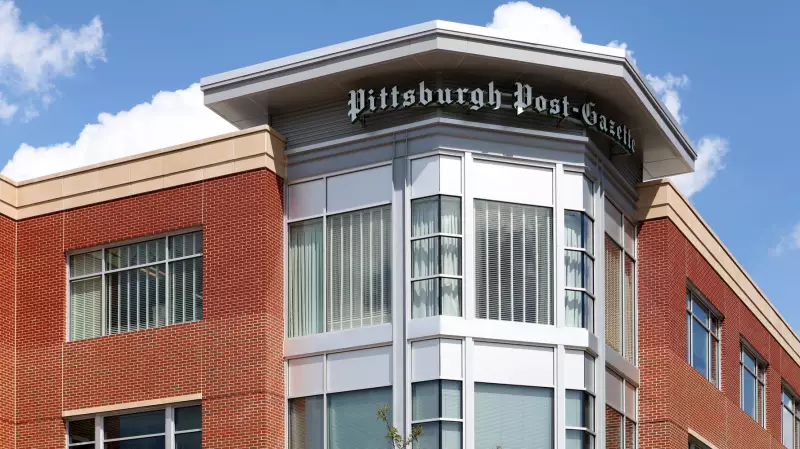
The owners of the Pittsburgh Post-Gazette, one of the oldest newspapers in the United States, announced on Wednesday they will shutter the publication this spring. The final edition is scheduled for May 3, 2024, ending a legacy that dates back to 1786.
A Legacy Ended by Financial Realities
Block Communications, the Toledo, Ohio-based media company that owns the paper, stated it has lost approximately $350 million operating the Post-Gazette over the past two decades. The company called continued financial losses at this scale unsustainable, pointing to the severe challenges facing the local journalism industry.
"We deeply regret the impact this decision will have on Pittsburgh and the surrounding region," the company said in its official statement.

Supreme Court Setback Precedes Announcement
The closure announcement came on the same day the U.S. Supreme Court delivered a legal blow to Block Communications. The high court refused the company's request to block a lower court order that would force it to reinstate a union-negotiated healthcare plan for employees.
This ruling was the latest development in a years-long battle between the company and the NewsGuild-CWA, the union representing Post-Gazette staff. Union President Jon Schleuss condemned the decision to close the paper as "retaliatory" and "stupid."
"This comes after [they] spend millions of dollars hiring union-busting attorneys, rather than just paying to provide the health insurance that they collectively bargained with employees," Schleuss told HuffPost.
A Broader Crisis for Local News
The demise of the Post-Gazette reflects a national trend where communities are losing their local news outlets. A report from Northwestern University's Local News Initiative in October 2023 found that more than 130 newspapers closed in the preceding year alone.
Post-Gazette employees waged a three-year strike over cuts to healthcare and benefits, only recently returning to work after an appeals court ordered the company to honour the collective bargaining agreement. Federal labour officials had also pursued an injunction against Block Communications for unilaterally changing work conditions.
Schleuss emphasized that even with the paper's closure, the union expects the company to repay workers for healthcare cost increases that violated their contract. He praised the striking journalists, stating, "Journalists at the end of the day have to hold power to account, and that means holding the boss to account when the boss breaks the law."
Block Communications, which also owns the Toledo Blade, argued that court decisions would force it to accept "outdated and inflexible operational practices." The closure marks a sombre moment for Pittsburgh and underscores the precarious state of traditional local journalism across North America.