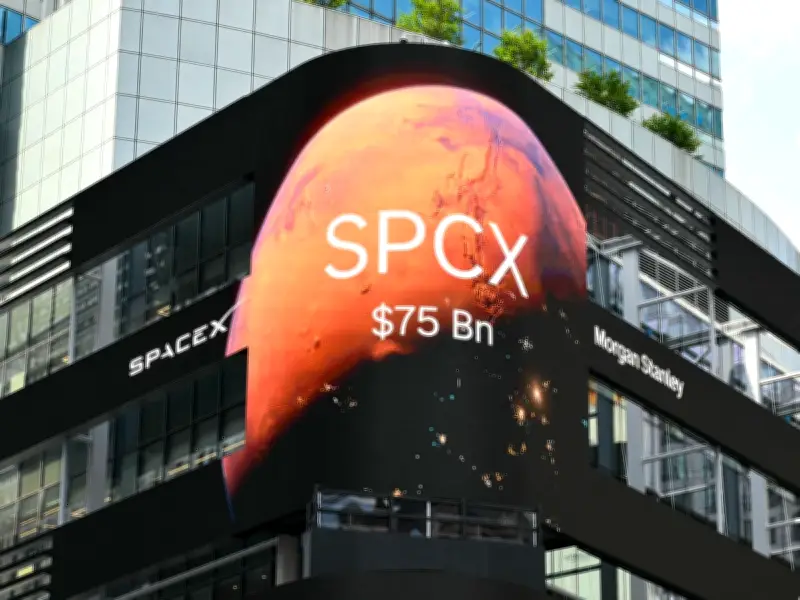
SpaceX is seeking to raise between US$20 billion and US$25 billion from a debut bond offering on Tuesday, after attracting about US$30 billion of investor orders even before the sales process had formally begun, according to people with knowledge of the matter. At that size, the deal would rank among the biggest of the year, according to Bloomberg-compiled data.
Moody's Rating Raises Questions
Last week, Moody's gave Elon Musk's SpaceX a Baa1 investment-grade rating, despite a limited public financial record, “sustained negative free cash flow” and years of heavy capital spending still to come. The rating matches the one Moody's assigned to Nvidia Corp. almost a decade ago, when Nvidia had relatively light debt and more than US$1 billion of free cash flow after 16 years as a public company.
SpaceX lacks some hallmarks of a typical high-grade borrower. It is spending heavily, burning through cash and relying on future growth to make the numbers work. The rating is, in many ways, a testament to just how much trust credit markets are putting in Musk and the scope of his ambitions: reusable rockets, a globe-spanning satellite network, artificial intelligence and even data centres in space.

Unusually Complicated Rating Debate
Balancing those risks against SpaceX’s market position made for an unusually complicated rating debate, Naveen Sarma, S&P’s primary analyst for SpaceX, said on a webinar, calling it “one of the more interesting committees I’ve had in my 20 years at S&P.” S&P grades SpaceX one notch lower than Moody's at BBB, expecting the company to remain cash-flow negative until 2030, with the burn rate rising sharply next year and again in 2028. To help finance that gap, SpaceX is expected to lean much more heavily on debt, with borrowings climbing to US$132 billion in 2028, up from close to zero now after adjusting for cash and lease liabilities, according to S&P.
For Moody's, and likewise S&P Global Ratings and Fitch Ratings, the investment-grade case rests more on what SpaceX does have that few borrowers can match: a dominant launch provider central to the US space program, a Starlink satellite network throwing off billions in recurring revenue and access to enough liquidity to keep funding its AI expansion.
Skepticism from Investors
“This should be a phenomenal opportunity in the equity side over the next 10 or 20 years,” said Sal Naro, chief investment officer of Coherence Credit Strategies. “On the fixed-income side, it appears that the agencies are giving them a lot of leeway and a lot of positivity for events that are going to happen in the near- or middle-term.”
In equities, that kind of leap is routine. Buyers pay for big stories in hopes of explosive gains. Yet it’s far rarer in investment-grade credit, a corner of Wall Street built around steady cash flows, manageable leverage and dependable, albeit more modest, returns. The quickfire rating has brought out skeptics who question whether SpaceX's financials justify the high-grade status.