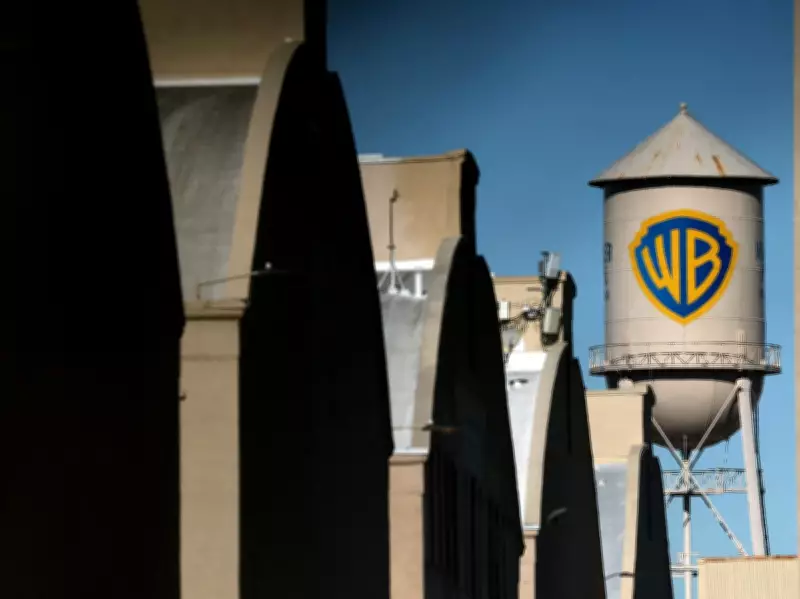
Warner Bros. Discovery Deal Presents Rare Arbitrage Opportunity Amid Market Skepticism
The recent acquisition battle for Warner Bros. Discovery Inc. has concluded with Paramount Skydance Corp. emerging victorious over streaming giant Netflix Inc., but the financial markets are telling a different story. Despite Paramount's agreed purchase price of $31 per share, Warner Bros. Discovery stock has fallen more than seven percent from its February peak to approximately $27 per share, creating a substantial $4 gap that represents a classic signal of market doubt about deal completion.
Market Mispricing Creates Unusual Profit Potential
While it's common for target company stocks to trade slightly below acquisition prices due to inherent deal risk, traders and analysts argue the current spread in the Warner Bros. Discovery transaction appears significantly overdone. According to market specialists, this discrepancy creates an unusually attractive opportunity for merger arbitrage strategies that could yield substantial returns if the deal closes as planned.
"I think it's mispriced," stated Frederic Boucher, a merger arbitrage analyst at Berenberg Capital, echoing sentiments shared by several market participants who believe the transaction is much more likely to close than current pricing suggests.

The Mechanics of the Arbitrage Opportunity
Merger arbitrage involves profiting from the gap between a stock's current market price and the price a buyer has agreed to pay upon deal completion. In this specific case, if Paramount's acquisition of Warner Bros. Discovery closes by the September 30 deadline as stipulated in the agreement, investors purchasing shares at the current $27 price would receive $31 per share upon completion.
This represents a nearly 30 percent annualized return for investors, significantly exceeding the typical three to four percentage point premium above overnight borrowing rates that arbitrage strategies normally yield. The $111 billion deal, one of the largest in entertainment industry history, concluded last month after Paramount sweetened its offer to $31 per share, prompting Netflix to withdraw from the bidding war.
Regulatory Considerations and Deal Protections
The transaction now faces regulatory scrutiny, though Paramount argued during the takeover competition that its proposal would encounter fewer antitrust obstacles from the Trump administration compared to Netflix's potential bid. David Ellison, who controls the Paramount media empire, and his team have actively advocated for the deal in Washington, with additional support coming from his father, Oracle Corp.'s Larry Ellison, who maintains a friendship with President Donald Trump.
On the financial front, the elder Ellison, ranked among the world's wealthiest individuals, is personally backing Paramount's acquisition bid. The agreement includes substantial protections: a $7 billion termination fee if regulatory approval isn't secured, plus a "ticking fee" of 25 cents per share per quarter beginning after September 30 should the transaction experience delays.
Analyst Perspectives on Deal Probability
"Clearly there's a higher chance of this deal closing than the market is pricing in," emphasized Brian Lombardi, a merger arbitrage strategist at FBN Securities. Lombardi estimates that current market prices reflect approximately an 80 percent probability of deal completion, while he believes the true odds are closer to 90 percent.
While acknowledging potential political complications that could extend the timeline, Lombardi and other specialists suggest the unusually wide spread relates more to Warner Bros. Discovery's substantial market capitalization and the deal's enormous size. These factors dilute the influence of the arbitrage community, who can only commit limited capital compared to smaller transactions. Additionally, current market turbulence related to geopolitical conflicts may be contributing to the pricing discrepancy.
The combination of these elements creates what analysts describe as a potentially lucrative opportunity for investors willing to bet on the deal's completion, with returns that substantially exceed typical merger arbitrage profits in today's market environment.