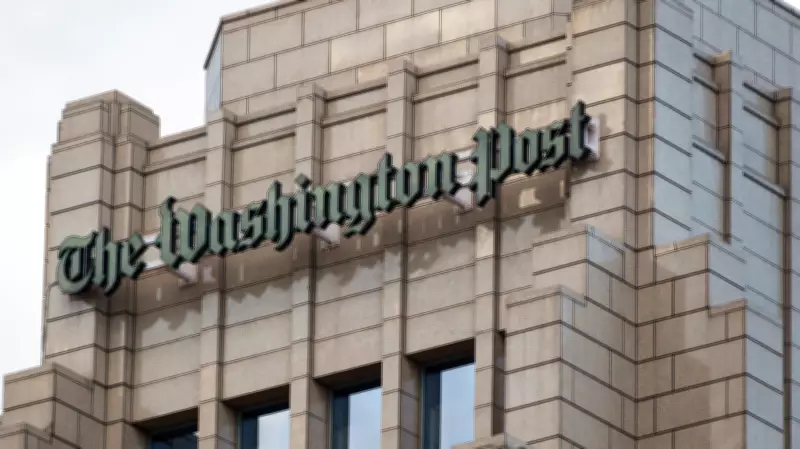
Washington Post Announces Sweeping Layoffs and Strategic Reset
The Washington Post, one of America's most storied newspapers, announced sweeping layoffs on Wednesday in a seismic move that has drawn significant backlash from staff and a legendary former editor. The announcement came during a Zoom call with employees, where executive editor Matt Murray detailed what he described as "a broad strategic reset" that would lead to "a significant staff reduction."
Major Changes to Newsroom Structure
In practice, this reset means the closure of the sports section "in its current form," the elimination of the Books section, a shrinking of the international team, a restructuring of the Metro section, and the suspension of the Post Reports podcast. These changes effectively gut a legendary newsroom famed for breaking the Watergate scandal, as the publication attempts to respond to evolving patterns in how news is consumed by the public.
The cuts reportedly represent approximately one-third of the staff being laid off, though the exact number of total employees at the newspaper remains unclear. Early reports suggested that around 300 jobs would be eliminated, marking a substantial reduction in the workforce.

Backlash from Staff and Former Leadership
The announcement prompted immediate condemnation from various quarters. Marty Baron, a legendary former editor of The Post who served from 2012 until his retirement five years ago, joined the chorus of criticism, calling it one of the "darkest days" in the newspaper's illustrious history. Baron specifically criticized what he termed an "ill-conceived" decision by owner Jeff Bezos to end the paper's tradition of endorsing presidential nominees during the 2024 election, labeling it a "gutless order" that he claimed cost the publication hundreds of thousands of subscribers.
Baron further asserted that "Bezos's sickening efforts to curry favor with President Trump have left an especially ugly stain of their own. This is a case study in near-instant, self-inflicted brand destruction." The Washington Post is believed to have about 2 million subscribers currently.
Employee Reactions and Guild Response
Many Post reporters took to social media to express their anger and frustration over the layoffs, with one describing the situation as "a massacre." Among those affected is Caroline O'Donovan, the Amazon reporter who holds Bezos's retail giant to account, who wrote, "I'm out, along with just a ton of the best in the biz. Horrible."
Another reporter, Emmanuel Felton, who covers race and ethnicity, confirmed on social media platform X that he was among the staff cut, adding, "This comes six months after hearing in a national meeting that race coverage drives subscriptions. This wasn't a financial decision, it was an ideological one." Sydney bureau chief Michael Miller also stated he was losing his job, noting, "Worse, millions of readers will lose my colleagues' brilliant coverage. At a time of tumult, we need more info, not less."
The Washington Post Guild condemned the latest round of cuts, asserting that the layoffs were not "inevitable" and warning that "a newsroom cannot be hollowed out without consequences for its credibility, its reach and its future." The guild also called for Bezos to be replaced if he is not willing to invest adequately in the publication.
Historical Context and Company Statement
Jeff Bezos, the billionaire owner of Amazon, has overseen a reduction in the newsroom's size and a dramatic shift in its focus since purchasing the newspaper in 2013. According to The Washington Post Guild, the workforce has already shrunk by approximately 400 people over the past three years, indicating a trend of downsizing prior to this latest announcement.
In a statement, a Post spokesperson said the company is "taking a number of difficult but decisive actions today for our future, in what amounts to a significant restructuring across the company." The spokesperson added, "These steps are designed to strengthen our footing and sharpen our focus on delivering the distinctive journalism that sets The Post apart and, most importantly, engages our customers."

This restructuring at The Washington Post reflects broader challenges facing the media industry, including shifting consumer habits, economic pressures, and political dynamics. The layoffs and strategic reset mark a pivotal moment for a publication with a rich history, as it navigates an uncertain future in the digital age.