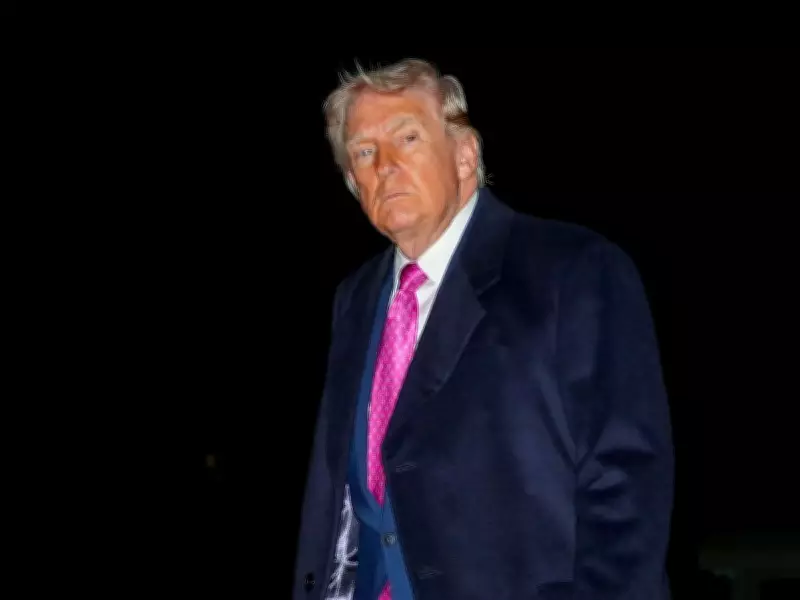
Canada's Economic Strategy Mirrors Trump's Government Intervention Approach
Amid global speculation about the economic consequences of U.S. President Donald Trump's foreign policy maneuvers, a parallel development has emerged: Canada's enthusiastic adoption of government-directed economic planning that reflects core Trumpian economic principles. Despite political rhetoric opposing Trump, Canadian policymakers have embraced the belief that state intervention is essential for economic salvation.
The Shift Toward Government-Led Economic Planning
Long before President Trump initiated his international regime change efforts in Venezuela, Cuba, and Iran, Canada's policy establishment was already preparing for comprehensive government-directed reforms of the nation's economic structures. Following Trump's 2025 trade war declaration against Canada and Mexico, the Mark Carney Liberal government, alongside labor and business organizations, turned to state-directed economic planning as the primary alternative.
The Institute for Research on Public Policy (IRPP) outlined a model for interventionist planning last September, urging Ottawa and provincial governments to advance aggressively with their own initiatives as Trump fueled economic uncertainty. "It is hard to see a path forward for the Canadian economy that does not include governments making big investments to address important challenges and capture new opportunities," the IRPP emphasized.

Major Government Investment Initiatives
With Mark Carney's return to Canada—highlighted by his appearance at the Junos to present Joni Mitchell with a lifetime achievement award—the nation appears to be accelerating its pursuit of nationalist, state-directed industrial policy.
In Toronto, Carney joined Premier Doug Ford and the city's mayor to announce a $10.2-billion housing development subsidy program. Carney claimed these funds—essentially cash transfers to municipalities to offset tax losses—could reduce new home prices by up to $200,000. He further promised billions more for Toronto public transit improvements and the Quebec-Toronto high-speed train project.
Carbon Pricing and Industrial Strategy
Carney has also collaborated with Alberta Premier Danielle Smith on implementing carbon pricing—commonly known as a carbon tax—on industry. Smith indicated to the Calgary Herald that an agreement could be finalized within days, though consensus remains elusive on additional plans to invest billions in carbon capture and storage initiatives.
This carbon tax and storage arrangement is marketed as part of a broader industrial strategy. According to Carney's office, the objective is "to foster the conditions necessary for infrastructure, including pipelines, rail, power generation, a strong and integrated transmission grid, ports and other means that will unlock and grow natural resource production and transportation in Western Canada." The strategy aims to help Canada achieve international export targets, develop new technologies like Artificial Intelligence, and become a clean energy source to reduce global greenhouse gas emissions through innovation and intergovernmental cooperation.
Defense and Automotive Industrial Strategies
A defense industrial strategy proposes rebuilding Canada's military capacity, but only if it "maximizes growth, job creation and economic benefits for all Canadians." However, economists and military strategists question whether such benefits exist. Roy Rempel, defense advisor to former Prime Minister Stephen Harper, warned that pursuing this strategy would require a comprehensive, detailed plan—something the Carney government has yet to develop.
Similarly, government plans to reorient Canada's auto industry away from the United States remain vague. Finance Minister François-Philippe Champagne is currently in China working to strengthen trade relations and secure Chinese investment to counter anticipated declines in U.S. trade and investment. Beyond general notions of allowing China to export electric vehicles to Canada or establish manufacturing plants, Ottawa has not formulated a coherent automotive strategy.

The Canadian economic approach increasingly mirrors Trump's belief in government as the pathway to economic salvation, despite political opposition to the former U.S. president. From housing and transit investments to carbon pricing and industrial strategies, Canada has embraced state intervention as its primary economic tool, creating a paradoxical alignment with Trumpian economics while maintaining political distance.