Canada's Economic Reality: Stagnation Amidst Moral High Ground
In a recent address in Toronto, International Trade Minister Dominic LeBlanc emphasized that Canadians share a common understanding of the nation's current economic challenges. These issues extend beyond the complexities of Donald Trump's presidency and trade policies to encompass a broader decline that has prompted serious scrutiny.
The Stark Comparison: Canada vs. Alabama
Recent analyses, including work by University of Calgary economist Trevor Tombe and the International Monetary Fund, reveal a troubling economic landscape. When measuring GDP per capita adjusted for purchasing power, Alabama outperforms several Canadian provinces: Quebec, Manitoba, Prince Edward Island, Nova Scotia, and New Brunswick. In fact, when combined with Mississippi, these regions represent the six poorest jurisdictions across North America.
Alberta stands as Canada's wealthiest province by this metric, yet it still trails behind 19 U.S. states. New York, for instance, boasts a GDP per capita nearly 40 percent higher than Alberta's, underscoring the widening economic gap.

Political Responses to Economic Challenges
During a fireside chat at an Economic Club of Toronto event, Minister LeBlanc refrained from citing these specific data points but echoed sentiments expressed by Prime Minister Mark Carney and other officials. He described President Trump's re-election as a significant "rupture" in the global order, signaling lasting implications rather than a temporary disruption.
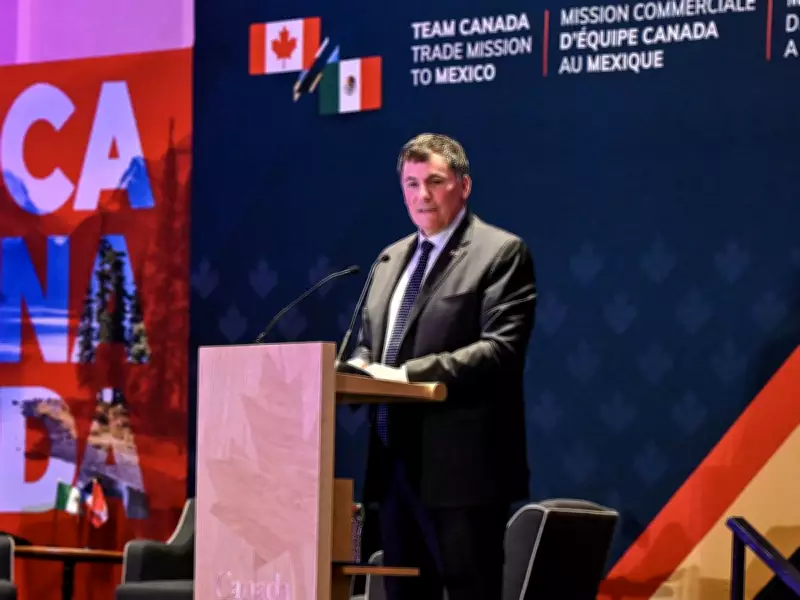
This perspective has driven proactive measures, such as LeBlanc's recent trade mission to Mexico and Carney's extensive international travels aimed at securing commerce in challenging markets like Beijing and New Delhi. LeBlanc stressed the urgency for collaboration among business leaders, associations, and governments to identify trading and foreign direct investment opportunities.
"If we can't control some of the challenges in the trilateral trade agreement in CUSMA, we can certainly control how hard we work, how diligent we are, and how compelling we are," LeBlanc asserted, highlighting a focus on actionable efforts within Canada's control.
Conservative Perspective on Sovereignty and Control
Conservative Leader Pierre Poilievre, speaking at a concurrent Economic Club of Canada event, reinforced the theme of focusing on domestic capabilities. He emphasized that while Canada cannot dictate foreign decisions or global volatility, it holds power over its own economic resilience.
"The path to sovereignty is focusing relentlessly on what is within our power," Poilievre declared, advocating for a shift from dependency to self-reliance and proactive nation-building.
The Paradox of Complacency and Moral Superiority
Despite these economic indicators pointing to stagnation or decline, Canadians continue to exhibit a robust sense of moral superiority over their American counterparts. This complacency, as noted in discussions, persists even as metrics suggest a need for urgent economic revitalization. The juxtaposition of economic challenges with unwavering national pride creates a complex narrative for Canada's future trajectory.
As political leaders navigate trade policies and domestic strategies, the balance between acknowledging economic realities and maintaining cultural confidence remains a critical focal point in national discourse.