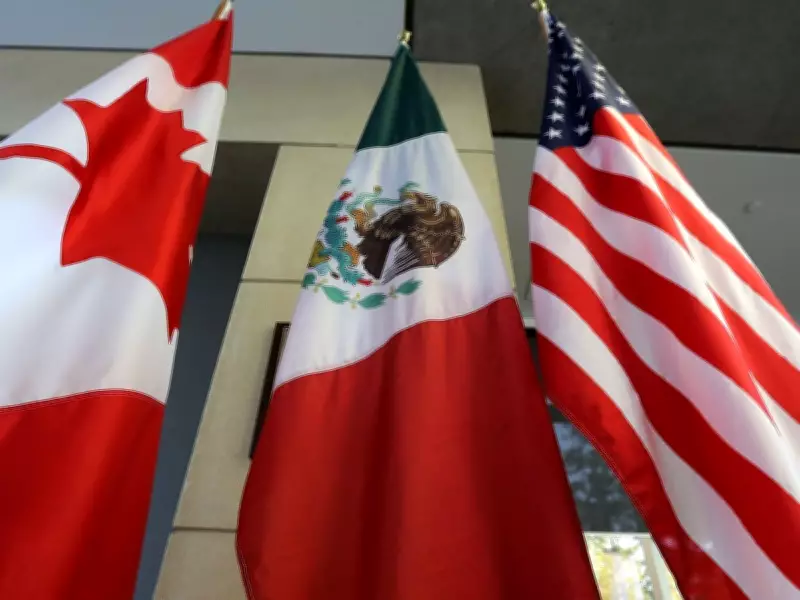
Poll Reveals Canadians Underestimate CUSMA Termination Risks to Economy
A recent poll has uncovered a concerning disconnect between Canadian public perception and the stark economic realities surrounding the Canada-U.S.-Mexico Agreement. According to an Abacus Data survey conducted in February with 1,500 Canadian respondents, fewer than half of Canadians believe that terminating CUSMA would negatively impact the country.
The survey results indicate that only 45 percent of respondents expressed concern about potential harm to Canada if the trade agreement were to end. A majority of those polled either believed termination would make no significant difference or might even prove beneficial for the nation.
Market Realities Versus Public Perception
From a financial management perspective, this public complacency represents a significant risk factor. Markets operate independently of public opinion, focusing instead on tangible outcomes and economic fundamentals. When substantial economic risks like CUSMA termination are misunderstood, minimized, or ignored entirely, the potential for material losses increases dramatically, even in traditionally stable investment areas.

The timing of this public perception gap is particularly concerning given CUSMA's upcoming formal review this June. Under the agreement's established rules, the United States maintains unilateral authority to withdraw completely with proper notice or shift toward a bilateral framework on its own terms. This process requires neither congressional gridlock nor multilateral consensus, making cancellation or downgrade a distinct possibility.
Canada's Geographic Trade Concentration
Canada's economic trade structure presents particular vulnerabilities in this scenario. Approximately three-quarters of Canadian goods exports flow to the United States, with 85 to 90 percent of these currently entering American markets duty-free under CUSMA provisions.
Without the agreement's protections, Canadian trade would default to World Trade Organization most-favoured-nation tariffs. This shift would expose Canada to various U.S. trade-remedy mechanisms including Section 232, Section 301, anti-dumping measures, and countervailing duties. Even minimal tariffs could create substantial disruption in the high-volume, low-margin, just-in-time trade that characterizes much of Canada-U.S. commerce.
Economic Impact Projections
Private-sector economic modeling suggests that CUSMA termination would likely reduce Canada's real gross domestic product by one to two percent over several years. This decline would stem from diminished export competitiveness, weakened investment patterns, and significant supply-chain disruptions.
While these percentages might appear manageable in isolation, they become more concerning when viewed against Canada's recent economic performance. During the fourth quarter of 2025, Canada recorded the worst real GDP performance among G7 nations with a 0.2 percent contraction.
The historical context further illuminates Canada's economic position. Following World War II through the 1970s, Canada's GDP per capita reached approximately 90 percent of U.S. levels. Today, that figure has declined to between 65 and 75 percent, representing the widest sustained economic gap between the two nations since the post-war era.
Broader Economic Consequences
Trade disruption would likely trigger additional economic challenges, including potential weakening of the Canadian dollar and stagflation-like dynamics. Higher import costs and tariffs would create short-term inflationary pressures, exacerbating Canada's existing affordability crisis.
Canada currently experiences some of the worst food inflation rates in the developed world, nearly double that of Japan, the next closest G7 country. Additional trade-related inflationary pressures would further strain household budgets across the nation.
The gap between public perception and economic reality regarding CUSMA termination represents a significant vulnerability for Canadian markets and economic stability. As the June review approaches, understanding these risks becomes increasingly crucial for both policymakers and investors navigating Canada's economic landscape.