Early Lagarde Exit Set to Narrow Field in Race to Lead European Central Bank
A premature departure by Christine Lagarde from her role as European Central Bank president could significantly narrow the field of candidates vying to succeed her, potentially giving established front-runners a decisive advantage in the leadership race.
Potential Early Departure Timeline
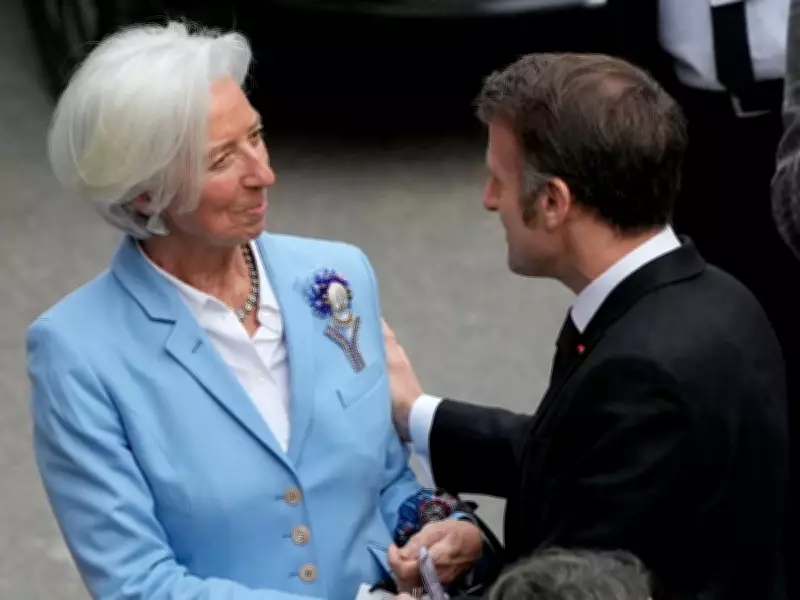
According to reports from the Financial Times, Lagarde may step down before her official term concludes in October 2027. This accelerated timeline would allow French President Emmanuel Macron to participate in selecting her replacement ahead of French elections that could potentially bring far-right political forces to power. While the ECB has officially stated that Lagarde remains "totally focused on her mission" and "has not taken any decision regarding the end of her term," the institution's comments suggest she is indeed considering shortening her mandate.
Front-Runners Positioned for Advantage
Analysts polled by Bloomberg identify two primary front-runners who would benefit most from an early succession process: former Dutch central-bank chief Klaas Knot and Spain's Pablo Hernandez de Cos, who currently leads the Bank for International Settlements. Both candidates have already established significant campaigning and lobbying advantages over other potential contenders, including Bundesbank President Joachim Nagel and ECB Executive Board member Isabel Schnabel.

"Timing wise, Knot has not taken a new big job yet, while de Cos has," noted Nick Kounis, an economist at ABN Amro. "So an early appointment may favor Knot on the margin."
Political Considerations and European Dynamics
The succession process gained momentum last month when a replacement was found for Lagarde's deputy, Luis de Guindos. An accelerated departure for Lagarde would likely trigger a broader reshuffling of ECB leadership positions as part of a comprehensive package deal negotiated between European Union member states.
Spain has already signaled its readiness for an accelerated timetable, with Economy Minister Carlos Cuerpo emphasizing his country's desire "to play a leading role in the new Executive Board once the opening vacancies are renewed."
Diverging European Perspectives
European finance ministers have expressed differing views on the appropriate timeline for the leadership transition. Austrian Finance Minister Markus Marterbauer has advocated for maintaining the standard appointment schedule, while German counterpart Lars Klingbeil emphasized that "the ECB has timetables, and we are going to stick with them."
French Finance Minister Roland Lescure declined to address the timing question directly, instead praising Lagarde as "obviously a great president of the ECB."
Questions About Report Accuracy
Some European officials have expressed skepticism about the reports regarding Lagarde's potential early departure, noting that the information came from an unidentified source. Bank of France Governor Francois Villeroy de Galhau characterized the report as speculative, telling lawmakers in Paris: "I've read a rumor concerning Madame Lagarde. It doesn't seem to be information to me and I'll let the ECB comment. It seems like a rumor to me."
Despite these doubts, financial analysts and political observers continue to assess how an accelerated leadership transition might reshape the European Central Bank's future direction and the broader European economic landscape.