Gas Price Surge Sparks Sharpest Inflation Spike in Decades, Complicates Fed Policy
WASHINGTON — The largest monthly jump in gasoline prices in six decades triggered a dramatic spike in inflation during March, presenting formidable challenges for the Federal Reserve's inflation-fighters and amplifying political pressures on the White House over escalating living costs.
According to Friday's report from the Labor Department, consumer prices surged 3.3% in March compared to the same period last year. This represents a significant acceleration from February's 2.4% annual increase. On a monthly basis, prices climbed 0.9% from February to March, marking the most substantial single-month rise in nearly four years.
Core Inflation Shows Modest Increase
When excluding the volatile food and energy categories, core prices increased 2.6% in March from a year earlier, up slightly from 2.5% in February. However, core prices rose just 0.2% last month, suggesting that the gasoline price shock has not yet permeated broadly across other consumer categories.

The gasoline price surge, stemming from geopolitical tensions in Iran, has fundamentally altered inflation's trajectory. Instead of continuing its gradual decline, inflation has taken a sharp upward turn, moving further away from the Federal Reserve's 2% target. Consequently, the central bank will almost certainly postpone any interest rate cuts for several months.
Visible Impact on Consumer Confidence and Politics
Gasoline prices represent a highly visible expense that exerts disproportionate influence on both consumer confidence and political sentiment. Nationwide, gas prices averaged $4.17 per gallon on Thursday, representing a 69-cent increase from just one month earlier.
Economists had anticipated this inflationary pressure, forecasting a 3.4% annual increase for March. The actual 3.3% reading confirms their predictions of significant price acceleration. The monthly 0.9% increase represents the largest since 2022, reversing what had been a modest moderating trend in inflation since last autumn.
Historical Context and Economic Comparisons
The critical question for both consumers and the broader economy is whether this surge in oil and gasoline prices will trigger sustained, widespread inflation similar to the post-pandemic period of 2021-2022, when inflation peaked at 9.1% in June 2022.
However, economists note several key differences in the current economic landscape. The job market and consumer spending are comparatively weaker, with no substantial government stimulus checks circulating to boost demand. While the unemployment rate remains low at 4.3%, companies are not aggressively hiring as they did during the pandemic recovery, when firms offered substantial pay increases to attract and retain workers.
"That's where this really differs," explained Alan Detmeister, an economist at UBS. "We aren't seeing anywhere near the strength of demand. In 2021 and 2022, income growth was increasing really strongly. We aren't seeing that now."
Federal Reserve's Policy Dilemma
The dramatic inflation increase has already shifted the debate within the Federal Reserve. At the beginning of the year, officials anticipated implementing at least a couple of interest rate cuts. Now, a growing number of Fed officials are considering potential rate hikes if core inflation fails to cool significantly.
Most officials are expected to maintain the Fed's key interest rate at approximately 3.6% in the coming months as they assess economic developments. Investors have adjusted their expectations accordingly, now anticipating no rate cuts until late 2027.
Broader Economic Implications
Higher gasoline prices present a complex challenge for the Federal Reserve because they can simultaneously slow economic growth by constraining consumer spending, potentially leading to increased unemployment. Typically, the Fed would lower interest rates to stimulate spending during rising unemployment, while raising rates to combat inflation.

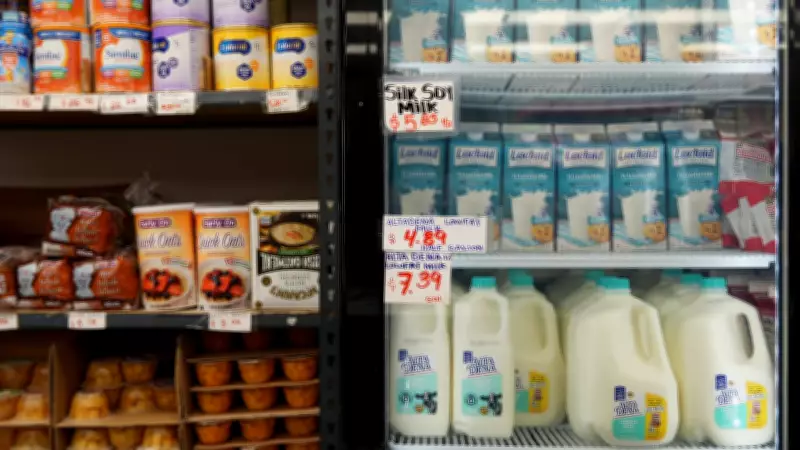
The gasoline price spike is also likely to elevate grocery prices, adding further strain to consumers who have already endured approximately 25% food cost increases since the pandemic. Nearly all groceries are transported by diesel-fueled trucks, and diesel prices have risen even more sharply than regular gasoline. However, analysts do not anticipate immediate acceleration in food prices, expecting a delay of one to two months.
For now, economists predict that the inflationary impact in March and April will primarily affect energy-intensive industries such as airlines, package delivery services, and public transportation. The U.S. economy has become significantly less dependent on oil and gasoline compared to previous decades, offering some buffer against broader economic disruption.