Oil Price Surge Threatens Quebec Grocery Bills While Farmers Struggle
As war in the Middle East drives oil prices upward, Quebec consumers are facing a dual economic challenge: rising fuel costs at the pump and impending increases at grocery store checkouts. The ripple effects of elevated oil prices are beginning to permeate the supply chain, with transportation costs threatening to inflate food prices across the province.
Immediate Impact on Consumer Goods
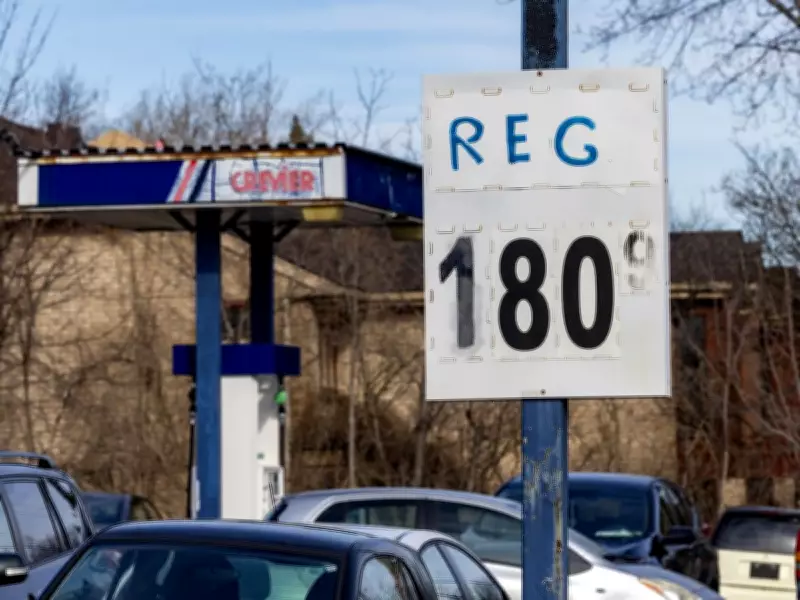
Gasoline prices in the Montreal area surged to an average exceeding $1.71 per litre recently, marking the highest level since summer 2024 and representing a 23-cent increase from the previous week. According to Saibal Ray, a supply chain management professor at McGill University, this spike directly impacts transportation costs that will inevitably transfer to consumer goods.
"As soon as the oil price increases, there is a direct impact at the pump, but very soon, if it goes long and if the impact on price is high, it will get into every other item and it will mostly impact low-income people," Ray explained. He emphasized that relatively low-cost products like food experience the most noticeable price increases because transportation constitutes a larger percentage of their final price compared to expensive items.

Ray noted that while shipping an iPhone and a head of broccoli costs roughly the same, that transportation expense represents a much larger portion of the broccoli's retail price. This disproportionate effect makes food items particularly vulnerable to oil price fluctuations.
Transportation Dynamics and Food Prices
The transportation method and distance significantly influence how oil prices affect different food categories. Produce imported from Central and South America, typically transported long distances by truck, faces greater price pressure than grains shipped by sea. Karl Littler, senior vice-president for public affairs at the Retail Council of Canada, confirmed that fuel price impacts manifest quickly in the supply chain.
"A truck leaving California today with a load of fruit bound for Canada is going to have its fuel tank filled at today's gas price," Littler stated. He added that trucking and logistics companies have fuel adjustment mechanisms built into contracts with grocers, ensuring price increases will be passed along if sustained.
Littler explained that grocers typically operate on narrow profit margins of two to three percent on food items, making them particularly sensitive to transportation cost increases. "It's enough to ensure that the prices will rise correspondingly if it's sustained for any significant period of time," he warned.
Quebec Farmers Caught in the Squeeze
While consumers face higher prices, Quebec farmers confront a different dilemma: rising production costs without corresponding increases in what they receive for their products. John McCart, a corn and soybean grower near Grenville-sur-la-Rouge and president of the Quebec Farmers' Association, reported that fuel prices at his supplier have jumped 25 percent while commodity prices have remained stagnant for months.
"The cost of production just this year is going to be super high, with the cost of fertilizers and everything already, so add on the cost of the fuel there, it's going to be tough," McCart lamented. For grain producers like McCart, prices are determined by the Chicago Board of Trade commodities exchange, applying uniformly across North America without reflecting regional cost increases.
McCart noted that fertilizer costs have risen more than 25 percent this year without any increase in grain prices. For smaller operations, elevated fuel prices could mean thousands in additional expenses, while larger farms might face hundreds of thousands in extra costs. "Nothing moves without a mode of transportation," McCart emphasized, highlighting how fuel touches every aspect of farming operations.
Broader Economic Implications
Jean-Thomas Bernard, a visiting professor at the University of Ottawa who studies energy economics, noted that while the current oil price shock may have less impact than the 1970s crises due to Quebec's transition from oil heating to electricity, transportation remains overwhelmingly dependent on petroleum products.

"Everything we consume has an element of transport," Bernard observed. "So it will be affected by this because almost all the modes of transport still depend almost exclusively on oil."
Paradoxically, Bernard pointed out that higher oil prices benefit Canada's economy overall since the country exports more than four million barrels daily. Alberta producers and governments receiving royalties and taxes will gain, though consumers bear the brunt of increased costs. "Because we're an exporter, it's good news. It's not good news for consumers, but overall, for the economy, it's good news," he concluded.
The duration of oil price elevation will determine the ultimate impact on Quebec's food prices. Transportation companies typically base operations on oil prices of $70 to $80 per barrel. While increases to $90-$95 may have minimal effect, sustained prices above $100 per barrel for a month or more would trigger significant food price increases, disproportionately affecting lower-income households already struggling with inflation.