Supreme Court Decision on Trump Tariffs Sends Ripples Through Financial Markets
The United States Supreme Court has delivered a significant blow to former President Donald Trump's trade policies, ruling against the legality of his controversial tariffs. This landmark decision has immediately impacted financial markets, with U.S. stock futures experiencing a noticeable decline in early trading sessions. The ruling underscores the judiciary's role in shaping economic policy and has created a climate of uncertainty among investors and traders worldwide.
Immediate Market Reactions and Global Responses
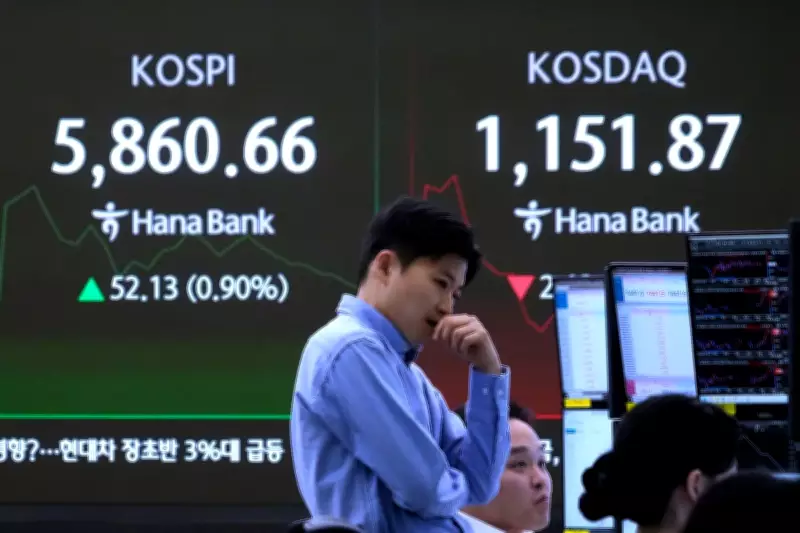
Following the Supreme Court's announcement, U.S. stock futures slipped, reflecting investor concerns about the potential economic ramifications of overturning these trade measures. The decision has led to a mixed performance in global markets, with some regions showing resilience while others exhibit volatility. In Seoul, South Korea, currency traders were observed reacting to the news at the Hana Bank headquarters, where screens displayed fluctuations in the Korea Composite Stock Price Index (KOSPI) and the U.S. dollar-South Korean won exchange rate. This visual representation of market movements highlights the interconnected nature of international finance and how policy shifts in one major economy can trigger widespread effects.
Background and Implications of the Tariff Ruling
The tariffs in question were implemented during Trump's administration as part of a broader strategy to address trade imbalances and protect domestic industries. However, legal challenges argued that these measures exceeded presidential authority, leading to the Supreme Court's intervention. The court's decision to nix these tariffs not only nullifies specific trade barriers but also sets a precedent for future executive actions on economic policy. This development comes amid ongoing debates in Congress, where some U.S. lawmakers have pledged further pushback against what they describe as "chaotic" tariff policies, indicating that political divisions on trade issues remain pronounced.

Economists and market analysts are closely monitoring the situation, as the removal of these tariffs could influence international trade dynamics, corporate earnings, and inflationary pressures. The mixed response in world markets suggests that investors are weighing the potential benefits of reduced trade restrictions against the uncertainties of a shifting policy landscape. As businesses and governments adjust to this new reality, the long-term effects on global economic stability and growth trajectories will become clearer in the coming months.