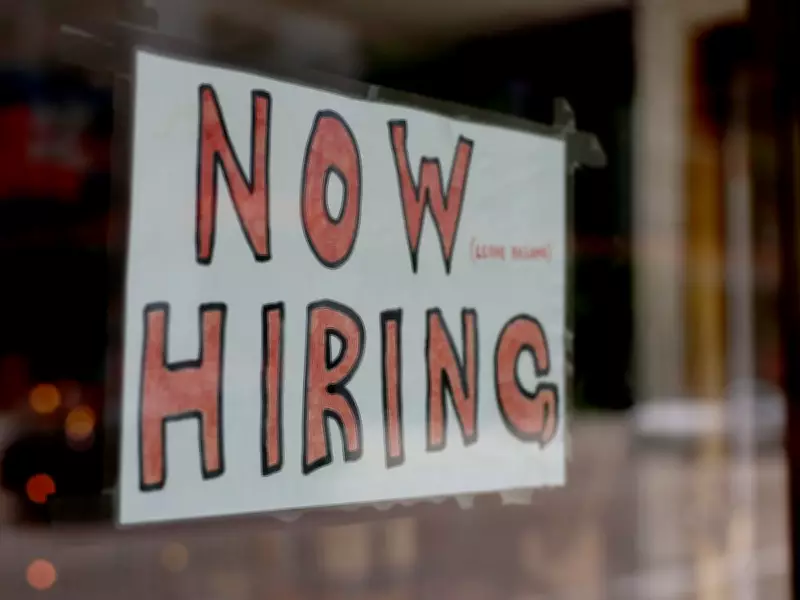
Unprecedented 'Jobless Boom' Challenges U.S. Economic Expansion Limits
The United States economy is generating substantial wealth, yet it is failing to produce a corresponding increase in employment opportunities. This paradoxical situation is creating what economists are terming an unprecedented 'jobless boom', testing the very limits of the nation's economic expansion.
Strong GDP Growth Amidst Stagnant Employment
Forecasters anticipate that Friday's gross domestic product report will reveal the U.S. economy expanded by 2.7 percent in 2025, a robust pace by any standard for a developed nation. However, employment growth remained minimal during this period. This combination is drawing inevitable comparisons to the infamous 'jobless recovery' of the early 2000s that followed the collapse of the technology bubble.
There is, however, one critical distinction that makes the current economic divergence even more unusual. The episode in the 2000s commenced with a recession. This time, the 'jobless boom' is occurring without any preceding economic downturn, marking a first in the postwar era for the United States.

An Unusual and Unstable Economic Position
'We have never seen anything later in an expansion like what we are seeing today, and that’s what makes it so unusual and hard to judge about where we are going,' stated Diane Swonk, the chief economist at KPMG. 'At the end of the day we are sitting on a one-legged stool, which is not the most stable place to be.'
This instability is underscored by data showing that the nationwide headcount essentially flatlined in 2025. This occurred despite the strength of GDP and amid a broad-based pullback in hiring across multiple industries.
Political and Economic Context
U.S. President Donald Trump is expected to highlight these strong GDP numbers during his annual State of the Union address to Congress on February 24. The economy in 2025 was supported by resilient consumer spending, rising stock prices, and a significant pickup in business investment, largely driven by the ongoing artificial intelligence boom. This growth persisted despite considerable uncertainty introduced by drastic changes in trade and immigration policies.
Recent data confirmed that business investment concluded 2025 on a high note, and manufacturing output increased in January by the most substantial margin in nearly a year. President Trump and his allies are concurrently urging the United States Federal Reserve to reduce interest rates. They argue the central bank should emulate the strategy of former chairman Alan Greenspan, who in the 1990s predicted that rising productivity could enable faster growth without triggering higher inflation.
Echoes of a 'Jobless Recovery'
Nevertheless, the contemporary economy is beginning to resemble the post-2000s period more than the 1990s. This era was identified by then-Fed Governor Ben Bernanke in a 2003 speech addressing the 'jobless recovery'. A major focus of Bernanke's analysis was the significant loss of manufacturing jobs, which had been in a decades-long decline and were further impacted by China's emergence as a global manufacturing powerhouse.
Between 2001 and 2005, the segment of the workforce employed in office and administrative support roles experienced job losses on a scale similar to the decline in production roles. The tech boom's aftermath led to the shedding of approximately 1.3 million positions in administrative support, alongside a 1.7 million decline in production roles. This historical precedent underscores the complex and often painful adjustments within labor markets during periods of technological and economic transformation, a dynamic that appears to be resurfacing in the current 'jobless boom'.