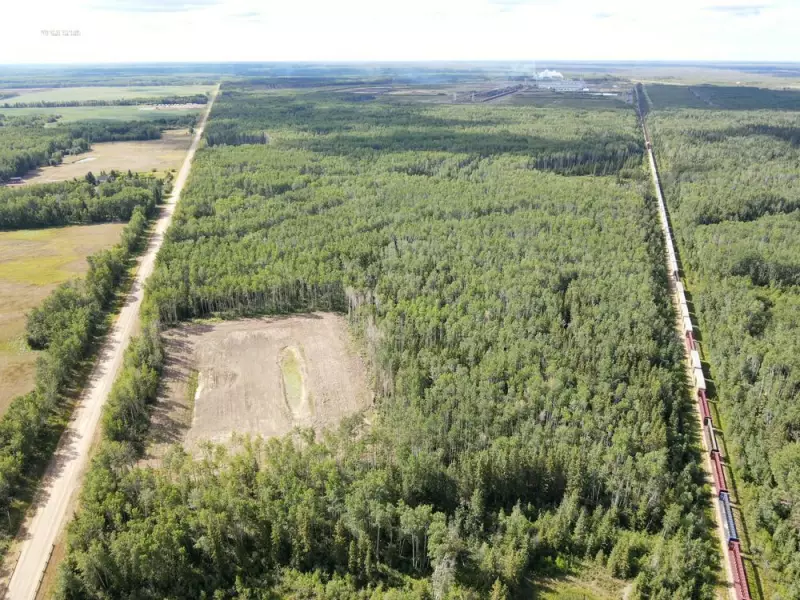
In a strategic move to bolster Canada's renewable energy export capabilities, Calgary-based PowerWood Canada Corp has finalized a significant land acquisition in northern Alberta. The company has purchased 175 acres of land from Mackenzie County for CAD$1.1 million, a deal that paves the way for critical infrastructure to support a new generation of biofuel production.
Building a Vital Link for Green Energy Exports
The primary purpose of the land acquisition is the construction of a 3.5-kilometre (11,400-foot) rail spur. This infrastructure will be looped and linked to the county's main freight rail system within the Mackenzie Highway Industrial Area near High Level. The development will include loading and locomotive depots designed to handle open-top unit trains, each consisting of up to 100 cars.
This rail link is essential for transporting advanced black pellets from two planned production facilities to Canada's seaports for international export. Plans indicate the spur will connect to the Canadian National Railway Company's Hay River Line, which runs between Hay River, Northwest Territories, and Roma Junction, Alberta.

Powering Up Canada's First Advanced Black Pellet Plants
The rail spur will service two groundbreaking production facilities set to be built by PowerWood Canada Corp. The first, named the 'Peace River' plant, will be located east of La Crete. The company plans to break ground in late spring 2026. This facility alone is projected to produce 350,000 tons of advanced black pellets annually using proprietary steam explosion technology.
A second facility, the 'Hay Meadow' plant south of High Level, is scheduled for construction in 2027. The land purchase for the rail spur represents the final asset needed to commence the Peace River plant's construction, marking a major milestone for the project.
A Major Economic Boost and a Sustainable Fuel Solution
David Peters, CEO of PowerWood Canada Corp, emphasized the deal's significance for the region. "The purchase enables us to integrate an essential rail spur into the development of two black pellet production facilities in the county, and connect them to Alberta’s freight railway system and Canada’s seaports," Peters stated. He highlighted the project as a "substantial long term investment into Mackenzie County" that is expected to create a significant and sustained boost to the local economy and employment.
The company has already secured a 10-year 'take or pay' offtake agreement for the Peace River plant's annual production with a leading Japanese energy corporation, ensuring market stability for the new venture.
The advanced black pellets produced will be a "next-generation" biofuel. Created through steam explosion, they offer superior mechanical strength, bulk density, and water resistance compared to traditional white or torrefied wood pellets. Crucially, they are considered a true direct "drop-in" replacement for coal in power generation, requiring no modifications to existing storage, handling systems, or furnaces at generating stations.
When operational, PowerWood Canada's facilities will be the only ones in Canada utilizing this specific advanced steam explosion technology, positioning the country as a key player in the global transition towards sustainable, renewable solid fuels.