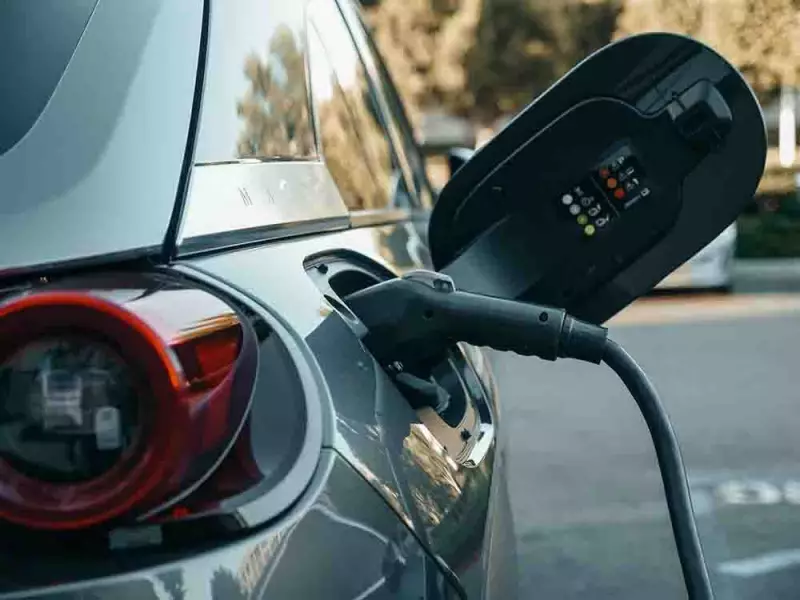
The global surge in electric vehicle (EV) adoption presents a clear and present warning for Alberta's economic future, according to experts. While predictions of oil's decline have come and gone, the current shift driven by EVs is fundamentally different and poses a very real threat to the province's cornerstone industry within the next decade.
The Unstoppable Rise of Electric Vehicles
The transition to electric transportation is no longer a niche trend but a global structural shift. Key markets are leading the charge: China surpassed a 50% EV market share for new vehicle sales in 2025, a monumental milestone for the world's largest auto market. South Korea is progressing toward 20% adoption this year, and Japan has mandated 100% zero-emission vehicle sales by 2035. Major emerging economies like Brazil and India are also actively embracing electric mobility.
This shift is powered by compelling advantages. EVs are becoming cheaper to purchase and operate, offer superior performance, and benefit from fewer moving parts and advanced software integration. Crucially, falling battery prices are making electric cars increasingly affordable, a trend rooted in economics and physics rather than political ideology.

Alberta's Vulnerable Position in a Changing Market
More EVs on the road translates directly into less future demand for Alberta's oil. In a declining demand scenario, high-cost producers are the most vulnerable. The stark reality is that Saudi Arabia can extract oil for roughly $10 per barrel, while Alberta's oilsands production typically costs between $40 and $60 per barrel. This makes the province's industry exceptionally exposed to a shrinking global market.
This exposure is magnified by a critical dependency. Almost all of Alberta's oil exports go to a single customer: the United States. Consequently, the province's jobs, public revenues, and community well-being are increasingly tied to U.S. oil consumption patterns. Alberta's economic fate will hinge on the pace of American EV adoption—a process over which the province has zero control.
A Narrow Window for Strategic Diversification
Some may hope to offset a U.S. demand drop with exports to Asia or Europe. However, these are precisely the markets moving fastest away from oil. China's EV transition has already passed its tipping point, and Europe reached approximately a 25% EV market share in 2025.
A potential slowdown in U.S. EV adoption due to political factors might offer temporary relief, but it would only delay the inevitable. Technology transitions often start slowly before accelerating rapidly. Betting Alberta's future on the unpredictability of U.S. politics, rather than acknowledged global consumer and technological trends, is a high-risk strategy akin to investing in Blockbuster as Netflix emerged.
Despite this, Alberta continues to double down on high-risk oil investments, promoting new pipelines and expanded production even as global demand nears its peak. Simultaneously, the province has placed barriers on cost-efficient solar and wind development—industries it should be cultivating. The most damaging outcome, warn analysts, would be to look back in a few years and realize Alberta had the warning, the resources, and the time to act, but chose not to.
The message from experts Milind Kandlikar and David Boyd is clear: Alberta has roughly a ten-year window before electric vehicles fundamentally reshape the oil market. The time to strategically invest in a diversified economic future is now.