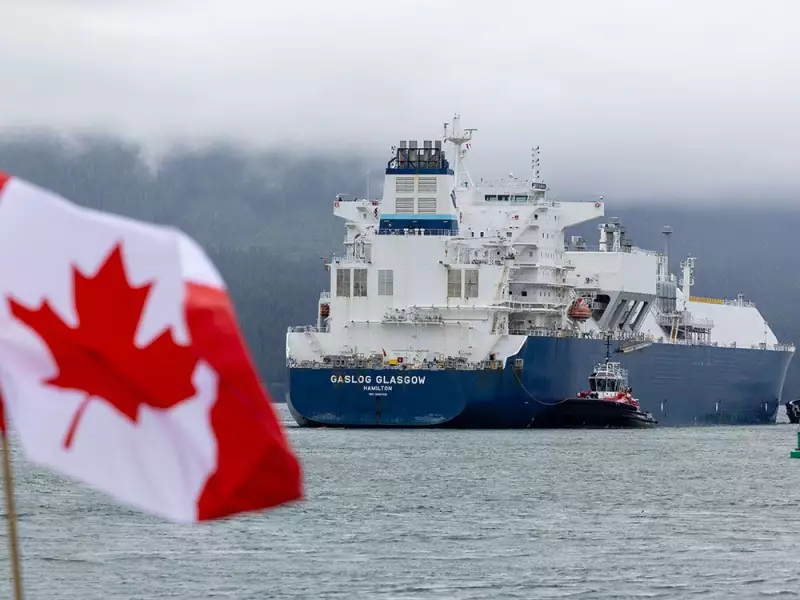
The first budget from the Carney government delivers a clear message: Canada's economic future depends on selling its efficiently produced resources to international markets beyond the United States.
Global Energy Security Demands Canadian LNG
According to Shannon Joseph, author of a recent paper for the Canadian Global Affairs Institute titled "Waiting for Canada to 'Build, Baby, Build,'" Canada possesses a significant LNG export opportunity that aligns with global energy security needs. This opportunity carries economic, environmental, and geopolitical weight at a time of heightened international tensions from Ukraine to Taiwan, where energy plays a central role.
Despite having enormous energy resources, Canada's lack of export infrastructure has limited its influence. Joseph argues that delivering energy security for allies must become a guiding priority for the nation.

Learning from the Global Scramble for Gas
Russia's 2022 invasion of Ukraine triggered a massive energy price spike and a worldwide scramble for LNG. Europe attempted to reduce its dependence on Russian piped natural gas, while Asian nations found themselves unable to compete with Europe as spot prices soared to 10-15 times their pre-pandemic levels.
Canada committed to adding 300,000 barrels per day of oil and natural gas equivalent to the global market to help lower prices. However, this amount was minimal compared to the roughly 2.6 million barrels per day Russia supplied to Europe in 2021, and it did not reach Europe directly.
Canada's Strategic Advantage for Key Allies
Wealthy but energy-poor nations like Japan, Korea, and Taiwan (JKT) depend entirely on energy imports. Their ability to power homes, sustain transportation, and maintain national defense hinges on reliable trading partners. Situated near an assertive China, a nuclear North Korea, and a sanctions-seeking Russia, these countries now view diverse energy suppliers as a core component of their national security.
While the United States has become the top global LNG supplier by capitalizing on this diversification, Canada is also on the radar. The country has just begun exporting to Japan and Korea via LNG Canada Phase I in Kitimat, B.C. Two smaller projects are under construction, while LNG Canada Phase II and the Ksi Lisims LNG project are advancing toward final investment decisions.
Canada offers a shorter shipping route, higher environmental standards, and greater reserves than many competitors. The new climate competitiveness strategy accompanying the budget is designed to facilitate project development while protecting the environment. The call to action is clear: with the budget finalized, it is time to start building.