The mood at Calgary's holiday business gatherings this year carried a distinct and upbeat tone, a stark contrast to recent years. Conversations were dominated by a renewed sense of optimism, largely centered on a landmark agreement between Ottawa and Alberta that has reinvigorated the city's economic spirit.
A Deal That Changed the Conversation
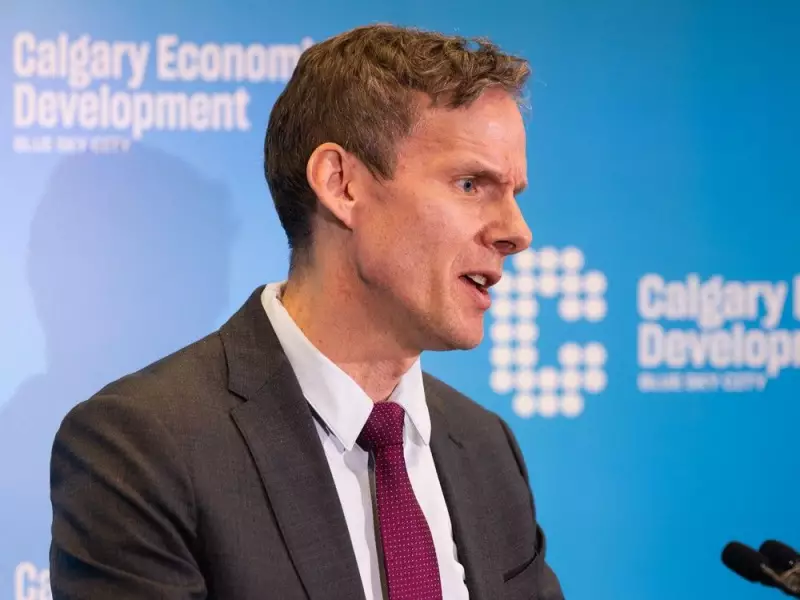
Deborah Yedlin, Chief Executive of the Calgary Chamber of Commerce, noted the shift was palpable. "Everywhere you go, everybody's talking about the MOU," Yedlin said, referring to the memorandum of understanding between the federal and Alberta governments that could pave the way for a new oil pipeline to the British Columbia coast. She emphasized that this topic was absent from discussions just one year prior, highlighting how the deal has struck a chord with the oil-rich province's business community by sending positive signals to the energy sector.
While this has given Calgary "a bit of a swagger back," as business groups described it, significant uncertainties loom on the horizon. Key challenges include potential fluctuations in tariffs and trade, especially with a scheduled review of the Canada-United States-Mexico Agreement (CUSMA) in July 2026. Furthermore, the proposed pipeline faces staunch opposition from B.C. Premier David Eby and coastal First Nations, meaning a final green light is not yet guaranteed.

Optimism Tempered by a 'Wait-and-See' Reality
In Edmonton, Chamber of Commerce CEO Doug Griffiths echoed a sentiment of resounding optimism, feeling that Alberta's needs are being recognized by the federal government like never before. However, this hopeful outlook is balanced by a dose of economic realism.
Mark Parsons, chief economist at Alberta's ATB Financial, provided a crucial perspective, stating that despite the improved sentiment, the energy industry remains in a "wait-and-see mode." Parsons acknowledged that the federal government's array of nation-building projects and its historic pact with Alberta are driving the improved mood. He characterized 2025 as a year marked by trade turmoil and economic uncertainty but framed the coming year differently.
2026: The 'Year of Execution'
"We moved the needle in providing industry with more policy certainty," Parsons said in a year-end assessment. "But what the industry is looking for is whether this framework can be translated into concrete actions." He declared that 2026 must become a "year of execution."
For Parsons and industry observers, those concrete actions hinge on two major developments:
- The official approval and launch of the world's largest carbon capture and storage network, a multi-billion dollar project proposed by the oilsands consortium known as the Pathways Alliance.
- Actual construction commencing on a new oil pipeline, turning the political memorandum into physical reality.
The collective sentiment across Alberta suggests that while Calgary has rediscovered its confidence in 2025, the durability of this renewed swagger will be tested in the year ahead. The business community's hope is that the promising conversations of today will evolve into the tangible investments and projects of tomorrow.