Canada Announces Temporary Suspension of Federal Fuel Excise Taxes
In a significant move aimed at easing the financial burden on consumers, the Canadian government has declared a temporary suspension of federal excise taxes on gasoline, diesel, and aviation fuel. This measure, set to take effect from April 20, 2026, and continue until Labour Day, is designed to provide immediate relief at the pumps during a period of escalating global fuel costs.
Details of the Tax Cut Initiative
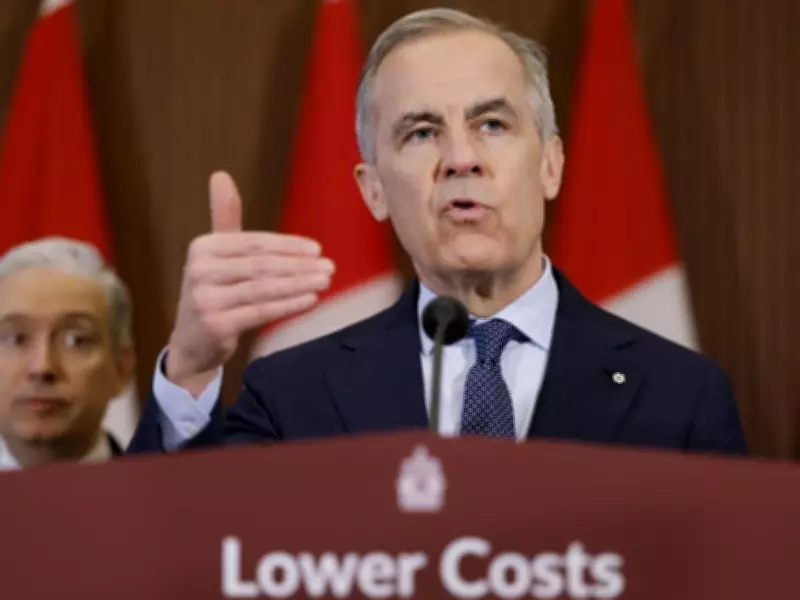
Prime Minister Mark Carney, alongside Finance Minister Francois-Philippe Champagne, unveiled the policy during a press conference on Parliament Hill in Ottawa. The suspension will result in a reduction of ten cents per litre for gasoline and four cents per litre for diesel. Carney emphasized that this action is part of a broader strategy to enhance affordability for Canadian households, particularly in light of recent price surges linked to international conflicts, such as the war with Iran.
"Because of the war with Iran, fuel prices have increased sharply around the world, including right here in Canada," Carney stated. "With the minister of Finance and the minister of Natural Resources, I’m announcing today that Canada’s new government will temporarily suspend the federal fuel excise tax from next Monday until Labour Day."

This latest initiative builds upon previous efforts, including the removal of the consumer carbon tax last year. According to Carney, these combined policies have lowered fuel prices by an average of 28 cents per litre, offering some respite to drivers across the nation.
Expert Criticism and Broader Implications
Despite the government's intentions, some analysts argue that the tax cuts may not go far enough to address the root causes of affordability issues. Dan McTeague, a prominent gas analyst, expressed skepticism about the impact of the diesel tax reduction, noting that a four-cent decrease is minimal compared to current prices, which have ranged between $2.30 and $2.40 per litre.
"I’m not sure how dropping four cents, with the HST, is going to alleviate what has been a tremendous increase in the price of diesel," McTeague commented. "How does he alleviate that on a temporary basis? The drop in diesel prices is only four cents—that’s a rounding error every day on the gas price predictions that I give."
McTeague further highlighted that the government's approach overlooks more substantial factors contributing to high costs, such as the Goods and Services Tax (GST) and provincial taxes. He suggested that suspending the GST on fuel would have a more meaningful effect, as it accounts for a larger portion of the total price. Additionally, he pointed to broader economic policies, including green net-zero initiatives and pipeline restrictions, as underlying drivers of inflation in the energy sector.
Political Context and Alternative Proposals
The announcement comes in the wake of recent byelection victories that secured a majority mandate for the Liberal government. However, the opposition Conservatives have proposed a more extensive plan, calling for the suspension of not only excise taxes but also the GST and the seven-cent Clean Fuel Standard. This contrast underscores ongoing debates about the most effective ways to tackle affordability challenges in Canada.
McTeague reiterated that while temporary tax relief may benefit individual drivers, the high cost of diesel has far-reaching consequences, affecting shipping expenses and ultimately increasing consumer prices for goods and services. "The real elephant in the room is the GST," he asserted, emphasizing that a comprehensive approach is necessary to address the multifaceted nature of fuel affordability.
As the tax suspension period approaches, Canadians will be watching closely to see how these measures impact their daily expenses and whether further actions will be taken to mitigate the economic pressures of rising fuel costs.