How Environmental Policies Handed Iran Strategic Control Over the Strait of Hormuz
Iran did not create the strategic leverage it currently holds over the Strait of Hormuz, one of the world's most critical maritime chokepoints. That accomplishment belongs to environmental activists and policymakers who, over decades, have spent tens of billions of dollars opposing fossil fuel development across Western nations in the name of preventing climate catastrophe.
The Avoidable Energy Dependency
Fossil fuels aren't found exclusively in the Middle East or a handful of other regions. They exist in abundance across Western Europe and most other parts of the world. According to a comprehensive 2013 Energy Information Administration study that focused on emerging shale technologies in 42 countries, "globally, 32 percent of the total estimated natural gas resources are in shale formations alone while 10 percent of estimated oil resources are in shale or tight formations." The fundamental problem is that European nations and others deliberately chose not to develop these substantial energy resources.
The United States shale revolution demonstrates that Europe's current dependency on oil and gas imports, and thus on the Strait of Hormuz, was completely avoidable. Until the shale revolution took hold in the 2010s, America was the world's largest importer of oil and natural gas. But once regulatory and environmental barriers eased and hydraulic fracturing scaled commercially, the U.S. transformed into the world's top producer of both oil and natural gas and the leading exporter of liquefied natural gas.

The dramatic shift resulted in:
- Net imports of petroleum products plunging to historic lows
- Domestic energy prices falling significantly
- Washington gaining substantial diplomatic leverage instead of ceding it
That same kind of energy abundance was readily available to Western Europe. But Europe systematically rejected it through policy decisions.
European Nations That Chose Energy Dependence
The United Kingdom placed onshore fracking for shale gas under a moratorium in 2019, ignoring a major 2013 EIA assessment showing that the Bowland Shale Formation alone holds roughly 26 trillion cubic feet of technically recoverable shale gas and 0.7 billion barrels of shale oil. Last year, the UK followed up the moratorium with an outright ban. For additional emphasis, the newly-elected Labour government also banned new licensing for oil and gas fields in the North Sea, pursuing net-zero targets despite the UK's long history as a major producer. Aggressive development would have made Britain a major producer and possibly restored its past status as a significant energy exporter.
France took an even more extreme position in 2011 when it became the first country to ban fracking nationwide. In 2017, France also banned all new oil and gas exploration and required an end to fossil fuel production by 2040. Yet France sits atop the largest assessed shale resources in Western Europe — 137 trillion cubic feet of technically recoverable shale gas, enough for decades of consumption, and 4.7 billion barrels of shale oil. Aggressive development could have transformed France from a major net energy importer into a major net exporter.
Germany's experience mirrors France's. Its 2016 ban on fracking, part of the broader "Energiewende" policy that also phased out coal and nuclear power, left its 17 trillion cubic feet of shale gas and 0.7 billion barrels of shale oil completely undeveloped. This self-inflicted dependence on imported oil and gas left Germany brutally exposed after Russia's energy became unavailable following that country's invasion of Ukraine.
The Netherlands, also once a conventional gas exporter via the Groningen field, imposed a shale-gas moratorium in 2013 that has become effectively permanent. Its West Netherlands Basin holds an estimated 26 trillion cubic feet of shale gas and 2.9 billion barrels of shale oil — substantial resources left in the ground as the country shifted to net-importer status for gas.

The Strategic Consequences
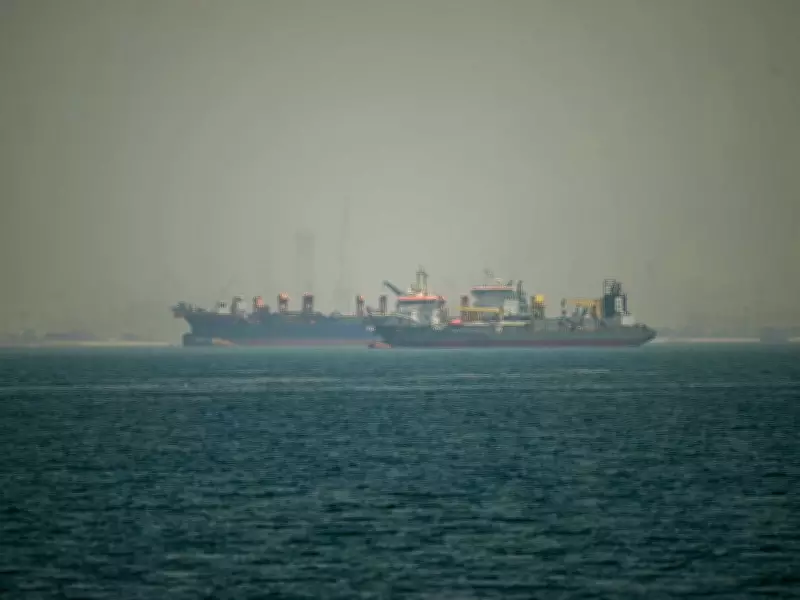
These collective policy decisions across Western Europe have created a dangerous energy dependency that gives Iran significant strategic leverage over global energy markets through its control of the Strait of Hormuz. The chokepoint handles approximately one-fifth of the world's petroleum consumption and about one-third of all seaborne traded oil. By choosing not to develop their own abundant fossil fuel resources, European nations have effectively transferred geopolitical power to Middle Eastern producers, particularly Iran, which can threaten to disrupt this critical shipping lane.
The environmental lobby's decades-long campaign against fossil fuel development, while aimed at addressing climate concerns, has inadvertently strengthened Iran's position as a regional power with disproportionate influence over global energy security. This outcome highlights the complex trade-offs between environmental goals and geopolitical realities in energy policy decisions.