Canadian Gas Prices Already Rising as Iran Conflict Enters Fifth Day
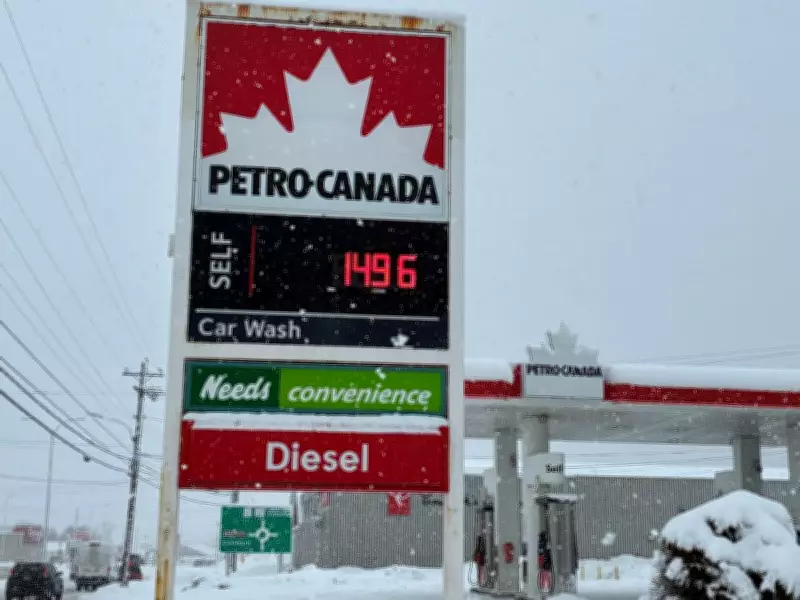
Gas prices across Canada have surged by nine cents per litre since Saturday, with further increases expected this week as military attacks on Iran continue into their fifth day. Dan McTeague, president of Canadians for Affordable Energy and a former Liberal MP, accurately predicted the initial spike and warns that more price hikes are imminent.
Immediate Price Increases and Future Projections
In a social media post on Wednesday morning, McTeague cautioned that gasoline prices could jump another three cents per litre on Thursday, while diesel costs might rise even more dramatically by eleven cents per litre due to the ongoing conflict. He noted that world oil prices had already been climbing in anticipation of potential attacks on Iran, with what he described as a "war premium" factored into trades since February.
"There had been a war premium already factored into trades going back a couple of weeks in February," McTeague explained. "And I think that's probably why the response, although shocking, is somewhat muted."

Current Price Landscape Across Canada
As of Wednesday morning, the price landscape showed significant regional variation:
- Toronto averaged $1.42 per litre
- The national average stood at $1.38 per litre according to the Canadian Automobile Association
- Vancouver recorded the highest price at $1.71 per litre
- Peterborough, Ontario showed the lowest price at $1.26 per litre
Broader Economic Consequences Beyond the Pump
McTeague emphasized that the impact extends far beyond personal vehicle expenses. If the conflict persists into a second week, Canadians should anticipate upward pressure on various goods throughout the economy. Diesel and gasoline are essential for both manufacturing processes and transportation networks across the country.
"It's going to meander into pretty much every other aspect of the economy," McTeague warned, citing a weak Canadian dollar and limited capacity to serve as a swing supplier of petroleum products to global markets. The Canadian dollar currently sits at approximately 73 cents against the U.S. dollar, continuing a five-year decline.
Transportation and Delivery Cost Implications
The diesel price increases carry particularly significant consequences for transportation and logistics. McTeague calculated that a long-haul transport truck with a thousand-litre tank could face an additional $60 expense each time it refuels.
"If this goes on for another week, you will be getting everyone who uses diesel fuel, from aviation companies to transport companies to deliveries, now adding in a fuel surcharge," he predicted. "It won't happen tonight. It probably won't happen this week, but if this goes on for a few more weeks, and the price continues to escalate, seemingly on a daily basis, that's one of the potential outcomes is that we see much higher delivery costs."
Seasonal Factors and Comprehensive Economic Impact
Compounding the geopolitical pressures, McTeague noted seasonal transitions that typically affect fuel prices. The switch from winter to summer gasoline formulations typically adds about eight cents per litre, while warmer weather encourages increased driving for longer road trips.
The expert stressed that energy costs permeate virtually every sector of the economy: "It doesn't just stop at transportation. We use diesel and energy for mining, we use it for manufacturing, we use it for refining other products. There's a whole pile of uses for energy, and if the price goes up, then it has to be borne by someone else. Ultimately, it's a customer holding the bag, and for the fight against inflation? Well, it's just taken a severe hit."
As the Iran conflict continues with no immediate resolution in sight, Canadian consumers face not only higher fuel costs at the pump but potentially broader inflationary pressures across multiple sectors of the economy.