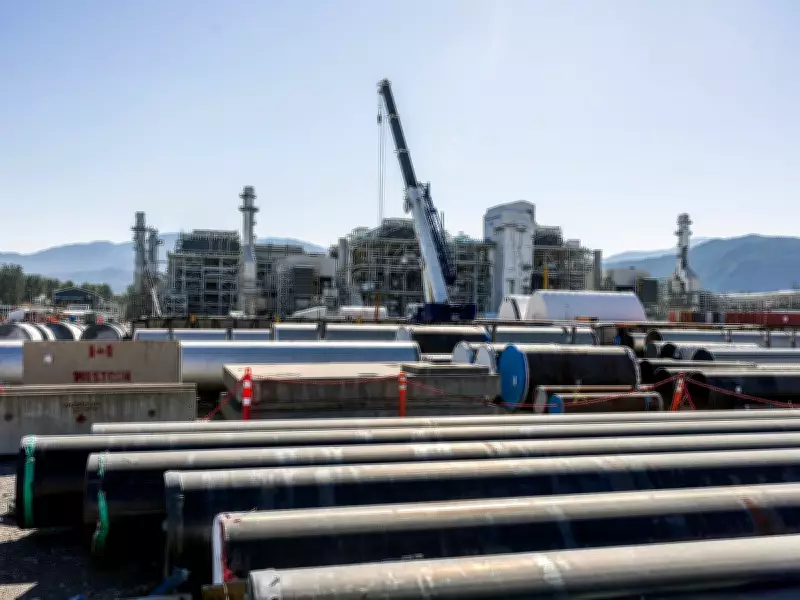
LNG Canada Signs Key Pipeline Agreement Required for Phase Two Expansion
The owners of the Coastal GasLink pipeline have announced a significant agreement with LNG Canada to progress a potential doubling of the pipeline's capacity. This expansion is essential for supplying a second phase of the liquefied natural gas export facility located in Kitimat, British Columbia, pending a final investment decision.
New Execution Model for Pipeline Expansion
If the project moves forward, the pipeline's expansion will be constructed under a novel execution model involving both LNG Canada and Coastal GasLink, which is operated by TC Energy Corp. According to a statement released on Wednesday, LNG Canada will take the lead as the execution manager for the construction, while TC Energy-backed Coastal GasLink will assume a technical support role.
This strategic shift is designed to transfer a greater share of construction and cost overrun risks to the owners of the LNG facility. TC Energy emphasized in its statement that the commercial structure includes limits on Coastal GasLink's capital commitments and overall liability for construction cost and schedule risks, aligning with TC Energy's objectives to mitigate project execution and capital allocation risks.

Background on Coastal GasLink and Expansion Details
TC Energy completed the original Coastal GasLink project in 2023, which faced substantial challenges over its five-year construction period, resulting in costs more than double the initial budget. Following this, TC Energy sold a majority stake in the 670-kilometre pipeline to private equity firm KKR & Co. and the Alberta Investment Management Corp., with an option for a 10% equity stake offered to Indigenous communities.
The pipeline currently transports 2.1 billion cubic feet per day of natural gas from northeastern British Columbia and northwestern Alberta to the LNG Canada facility in Kitimat. Expanding its capacity to approximately five billion cubic feet per day is crucial for the proposed second phase of the LNG project. Analysts suggest that this phase could receive approval later this year.
Economic and Global Implications
François Poirier, chief executive of TC Energy, highlighted the broader economic benefits in a statement. He noted that doubling the transmission of natural gas through the existing pipeline will enhance Canada's role as a reliable supplier to global LNG markets. Poirier added that increasing LNG exports presents a transformative opportunity for the economy, potentially positioning Canada as the leading LNG exporter to Asia.
This agreement marks a critical step in advancing Canada's energy infrastructure and supporting its competitive stance in the international natural gas market.